

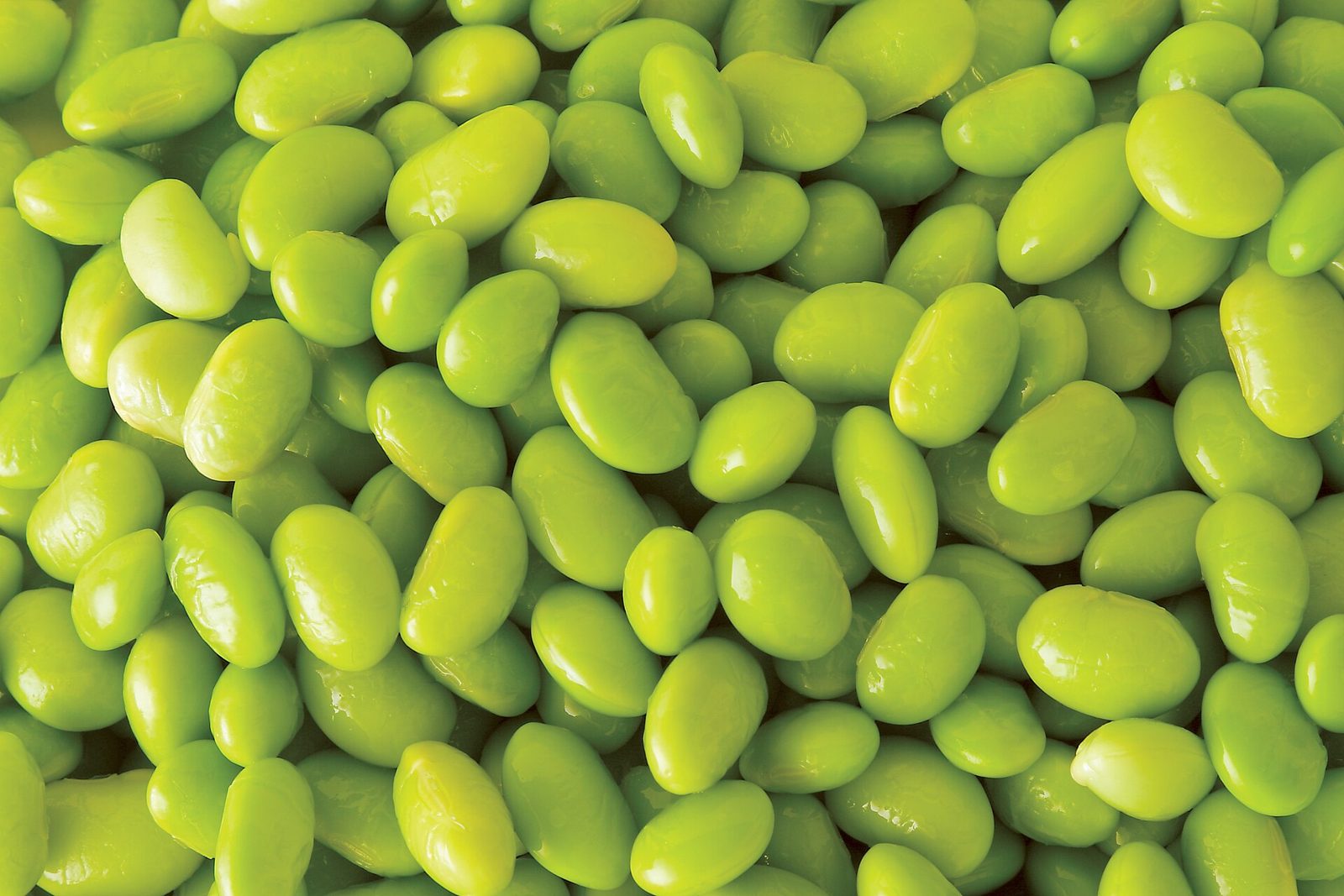
Pick edamame when the pods are green and full, usually 70 to 90 days after planting. Iowa State says edamame is harvested when the combination of sugar, amino acid content and pod fill is optimal, and that it is usually picked at 85 percent pod fill. Chill the beans within hours of picking. This supporting guide goes with our full edamame growing guide, which covers sowing and care.
When is edamame ready to harvest?
Two clocks apply: the calendar and the pod.
- The calendar. Utah State says edamame pods are ready to harvest from 70 to 90 days after planting. Count forward from sowing to know when to start looking.
- The pod. Iowa State says to harvest when the optimum combination of sugar, amino acid content and pod fill is obtained, and that edamames are usually harvested at 85% pod fill.
The calendar tells you when to start checking, and the pod tells you when to pick. In the Iowa State trial, pods were harvested when green and full: one picking, on August 21, 2002, took place when pods were green and full, and plantings made between May 30 and June 14 were harvested from August 21 to September 14.
What a good pod looks like
Iowa State says pod color and size can be used as quality indicators, and that high-quality pods have 2 to 4 seeds per pod and a pod length around 2.5 inches (6 cm). In practice:
- Color: green. The goal is green and full, not yellowing.
- Fill: the pod is plump, with the beans pressing against the pod wall. Iowa State’s benchmark is about 85 percent pod fill.
- Count and length: 2 to 4 seeds, around 2.5 inches (6 cm).
- Condition: Iowa State says insect- and disease-free pods should be harvested, so leave damaged pods behind.
Our sources do not describe how to measure pod fill without opening a pod, and they give no time frame for how fast quality changes once the pods are ready. So the practical answer is to check often: feel the pods, open one or two as a test, and pick the rest when most look plump and green.
Why the window is narrow, and how to manage it
The Iowa State guidance ties harvest to a moment when sugar, amino acids and pod fill peak. It does not give the length of that window in days, so we cannot say how narrow it is, but the way it is worded makes clear that timing matters. Two simple tactics follow.
Check every few days. Begin at the early end of the 70 to 90 day range and look at the pods.
Stagger your sowing. The Iowa State trial’s plantings, from May 30 to June 14, were harvested over a longer span, from August 21 to September 14. That is our reading of the dates, not a recommendation in the report, but it shows how a two-week spread in sowing becomes a harvest stretched over about three and a half weeks. If you sow all your edamame in one day, all your pods tend to be ready together; spreading sowings over a couple of weeks spreads the work and the eating.
How to harvest edamame
- Count from sowing. Start looking 70 to 90 days after planting (Utah State).
- Check the pods. Look for green, full pods at around 85 percent pod fill, 2 to 4 seeds, about 2.5 inches (6 cm) long (Iowa State).
- Pick the best pods. Harvest insect- and disease-free pods, as Iowa State says.
- Chill them quickly. Chill the beans for 3 to 10 hours after harvest to limit sugar and amino acid degradation (Iowa State).
How to store edamame
The one storage figure our sources give is Iowa State’s: chilling beans for 3 to 10 hours after harvest helps limit sugar and amino acid degradation. That means the first step after picking is to cool the beans, not to leave them in a warm kitchen or a sunny basket. The sources do not say how long picked edamame keeps in the refrigerator or freezer, so we do not give a number. Eat or process what you pick promptly.
Harvest mistakes to avoid
- Picking too early. Pods that are not yet full are below the 85 percent benchmark.
- Waiting too long. Iowa State describes an optimum, which implies quality falls on either side of it. Check often once the window opens.
- Picking damaged pods. Leave insect- and disease-damaged pods behind.
- Leaving the beans warm. Chill them within hours of picking.
If you want to see how this fits the whole growing season, from sowing after the last frost to the 70 to 90 day count, read the edamame pillar guide.
Frequently asked questions
How do you know when edamame is ready?
Pods should be green and full. Iowa State says edamame is usually harvested at 85 percent pod fill, and that pod color and size can be used as quality indicators.
How many days from planting to harvest?
Utah State says edamame pods are ready from 70 to 90 days after planting.
How big should an edamame pod be?
Iowa State says high-quality pods have 2 to 4 seeds per pod and a pod length around 2.5 inches (6 cm).
What should you do with edamame right after picking?
Chill it. Iowa State says chilling beans for 3 to 10 hours after harvest helps limit sugar and amino acid degradation.
Sources
- Organic Edamame Variety Trial (2002), Iowa State University Extension
- What Is Edamame and Should I Grow It?, Utah State University Extension