

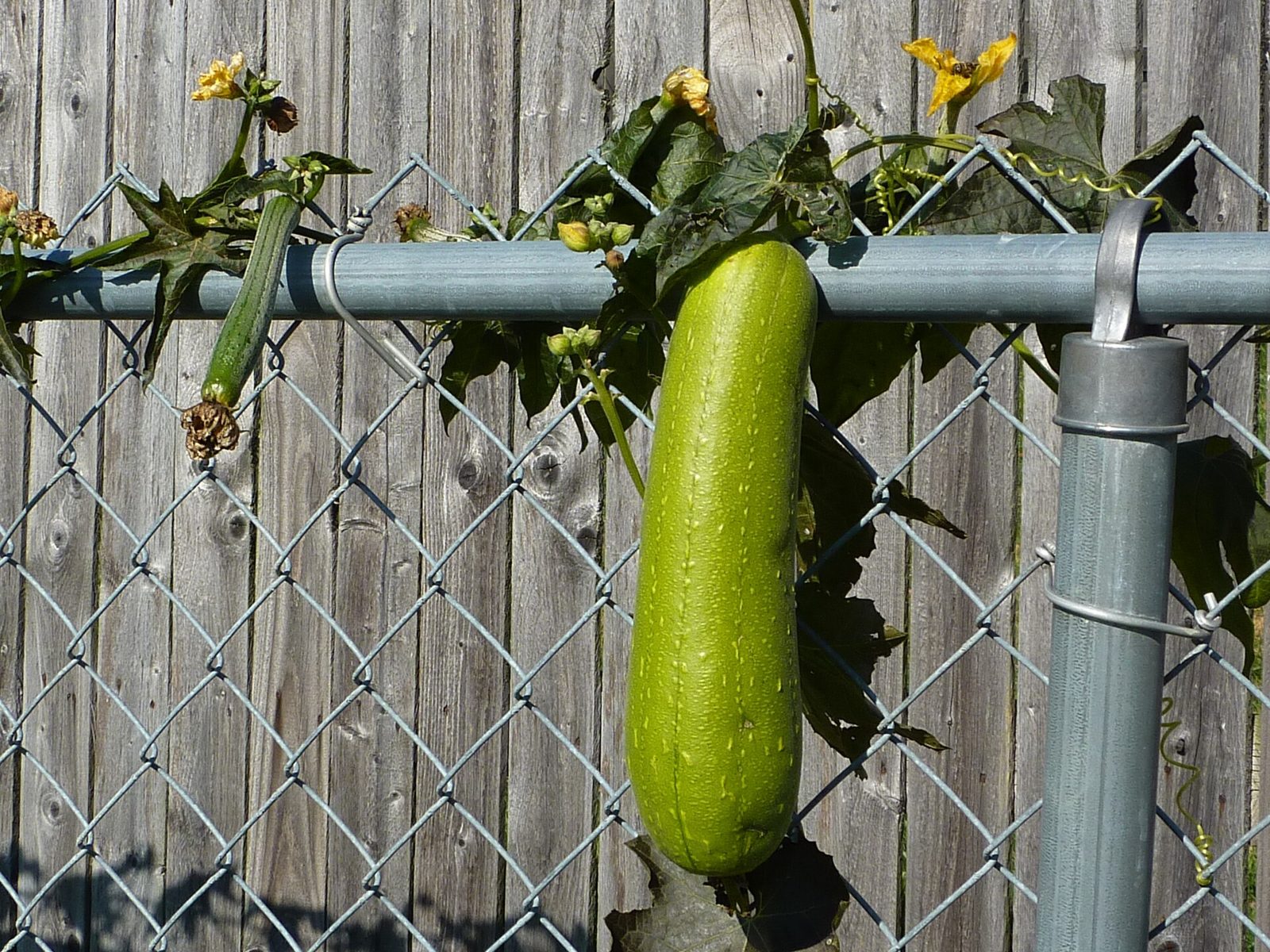
You can grow luffa in most of the US if your season is long enough: it needs a frost-free growing season of at least four months, and gourds can take up to 200 days to mature. In cooler zones, start seeds indoors 6 to 8 weeks before your last frost date, give the vines a sturdy trellis and at least 6 hours of full sun, and harvest before frost. Pick the gourds young, around 6 to 8 inches (15–20 cm), to cook like zucchini, or leave them on the vine to dry into sponges. The challenge is the calendar, not the growing.
- Sun
- At least 6 hours of full sun
- Water
- High
- Origin
- Asia
- Container friendly
- Yes
- Frost-free season
- At least 4 months
- Days to maturity
- Up to 200 days
- Spacing
- Plants 3 ft (0.9 m) apart, rows 6 ft (1.8 m)
- Support
- Sturdy trellis
- Eat young
- 6–8 in (15–20 cm) long
- Container size
- 2–5 gallons (8–19 L)
Why grow luffa
Luffa, also spelled loofah, does two jobs. Picked young, it is a squash-like vegetable. Left to mature, the inside becomes the fibrous sponge sold as a “loofah.” The University of Illinois describes the dry gourds as “the multiuse sponge material we see marketed as loofas.” The vines are vigorous, and Clemson says the fast-growing vines need a sturdy trellis to keep the luffas off the ground so they don’t rot before they are ready to harvest. If you have a fence or arbor and a warm summer, you have the main requirements.
Where can you grow luffa?
Luffa is a warm-season vegetable. NC State says sponge gourd requires a frost-free growing season of at least four months, with warm temperatures for proper flowering and fruiting, and Illinois warns that the cold can ruin unharvested loofas. The gourds can take up to 200 days to mature, so the length of your season decides your approach:
- Long, warm seasons (Florida, the Gulf Coast): UF/IFAS says to plant seeds from March through July in a full-sun location with well-drained soil.
- Cooler zones: start seeds indoors 6 to 8 weeks before the last frost date after soaking the seeds in water for 24 hours (Illinois). Our guide to growing luffa from seed has the full routine.
Our sources give no USDA zone range, so judge by season length, not by zone.
Eating luffa or sponge luffa? Decide first
The two uses ask different things of your season. Eating luffa is picked young, at around 6 to 8 inches (15–20 cm), so your sources set no long wait for it. Sponge luffa is the demanding one. Illinois says gourds left to become loofas may reach up to 2 feet (60 cm) in length, requiring the long growing season to gain size and slowly dry out on the vine, and can take up to 200 days to mature. If your frost-free season is short, plan on eating luffa first and treat sponges as a bonus, and start seeds early either way.
Our arithmetic shows why. Seeds started indoors on March 1 reach 200 days on September 17. Seeds sown outdoors on May 15 would reach 200 days on December 1, which is past the first frost in most of the US.
Luffa types
Clemson says the most common luffa grown for sponges is smooth luffa (Luffa aegyptiaca), which NC State also describes. Our sources do not name cultivars, so there is no variety table. Seeds are readily available through most garden catalogs (Clemson). If a packet is labeled sponge gourd, loofah or luffa, it is the same crop.
A luffa year
- Late winter or early spring: soak seeds for 24 hours and start them indoors, under grow lights if you have them (Illinois). Illinois started its seeds in March.
- After frost, in warm soil: set seedlings out or sow outdoors (Clemson).
- Summer: keep the soil evenly moist, mulch, and let the fast-growing vines climb the trellis.
- Whenever gourds reach 6 to 8 inches (15–20 cm): pick some to eat.
- Before the first frost: harvest the rest. Gourds left for sponges are ready when the skin feels loose and brittle (Clemson). Save some seeds for next year, as Clemson suggests.
Why luffa fails, and how to avoid it
Four things go wrong, and all four are covered by the sources. The season is too short: start seeds early. Fruit lies on the ground and rots: trellis and mulch. The soil stays too wet: UF/IFAS says excessive water slows growth and raises the risk of root disease. And frost arrives before the gourds are ready: Illinois says cold can ruin unharvested loofas, so pick before the first frost.
Luffa planting calendar
| Zones | January | February | March | April | May | June | July | August | September | October | November | December |
|---|---|---|---|---|---|---|---|---|---|---|---|---|
| Zone Florida: direct sow Mar–Jul | March: direct sow | April: direct sow | May: direct sow | June: direct sow | July: direct sow | |||||||
| Zone Cooler zones: sow indoors Mar–Apr; direct sow May–Jun | March: sow indoors | April: sow indoors | May: direct sow | June: direct sow |
- Sow indoors
- Direct sow
How to grow luffa
- Start early if your season is short. In cooler zones, soak the seeds in water for 24 hours and start them indoors 6 to 8 weeks before the last frost (Illinois). The Illinois gardeners used grow lights.
- Wait for warm soil. Clemson says to start luffa from seed in warm soil in late spring. Do not set out seedlings until frost has passed.
- Pick a sunny site with a trellis. NC State says sponge gourds need at least 6 hours of full sun, good air circulation and a sturdy trellis to climb.
- Space the plants. UF/IFAS says to space plants 3 feet (0.9 m) apart, with rows 6 feet (1.8 m) apart.
- Mulch around the plants. UF/IFAS says fruit rot is a problem if fruit touches the ground, and to apply mulch to help prevent it. A trellis helps even more.
Luffa care
Sun and air
Water
Soil
Support
The two soil recommendations differ, with one neutral to slightly alkaline and one a slightly acidic 6.0 to 6.5. A pH near 6.5 to 7 satisfies both, and a soil test will tell you where you are. For pots, UF/IFAS says luffa can be grown in 2- to 5-gallon (8–19 L) containers.
Growing luffa in containers
UF/IFAS says luffa can be grown in 2- to 5-gallon (8–19 L) containers. That makes a patio crop possible, with a catch: the vines still climb, so the pot needs a sturdy trellis, and the sources describe a plant that wants high moisture, so a container will need frequent checking. Excessive water is detrimental, so use a pot with drainage holes. The sources do not give a pot size for sponge-sized gourds, so treat container luffa as best for eating-size fruit.
Common luffa problems
Harvesting luffa
Eating luffa: pick at around 6 to 8 inches (15–20 cm). Sponge luffa: leave the gourds on the vine until the skin feels loose and brittle around the hardened fibers (Clemson), and harvest before frost, which can ruin unharvested loofas (Illinois). To turn a mature gourd into a sponge, Clemson says to peel off the skin, shake the seeds loose (save some for next year), soak for about an hour in 10 parts water to 1 part bleach to remove stains, and then leave it out to dry and harden. Our luffa harvesting guide covers eating and sponges, including peeling, seed removal and drying in more detail.
What our sources do not tell you
None of our five sources gives a USDA zone range, a planting depth, a minimum soil temperature or a feeding schedule, and they do not name luffa cultivars. Illinois reports a single home-garden trial. If you grow luffa far from Florida, South Carolina, North Carolina or Illinois, use your own frost dates and a local extension office.
Frequently asked questions
How long does luffa take to grow?
A long time. The University of Illinois Extension says luffa gourds can take up to 200 days to reach maturity, which is why gardeners in cooler areas start seedlings early indoors. NC State says it needs a frost-free growing season of at least four months.
Can you grow luffa in a container?
Yes. UF/IFAS says luffa can be grown in 2 to 5 gallon (8–19 liter) containers, and it still needs a sturdy trellis.
How much sun does luffa need?
At least 6 hours of full sun, according to NC State, along with well-drained, evenly moist, rich loam and good air circulation.
Can you eat luffa?
Yes, when it is young. The University of Illinois says luffa picked at around 6 to 8 inches (15–20 cm) is similar to zucchini and tender enough to eat raw or cooked, as you would squash or eggplant.
When are luffa sponges ready?
Clemson says luffa sponges are ready to harvest when the skin feels loose and brittle around the hardened fibers inside.
Sources
- Growing Luffa, Clemson Home and Garden Information Center
- Growing Loofa Gourds, University of Illinois Extension
- Luffa aegyptiaca, NC State Extension Gardener Plant Toolbox
- Luffa, UF/IFAS Gardening Solutions
- Luffa, an Asian Vegetable Emerging in Florida (HS1285), UF/IFAS Extension (EDIS)
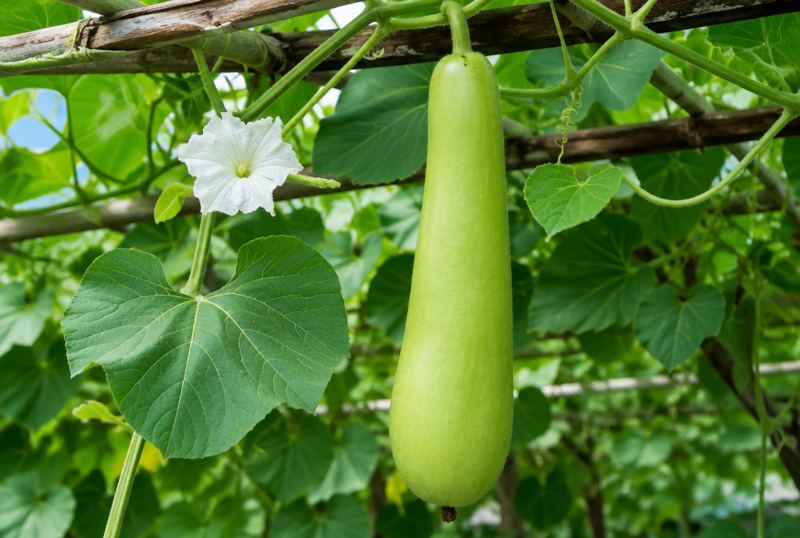 Bottle Gourd
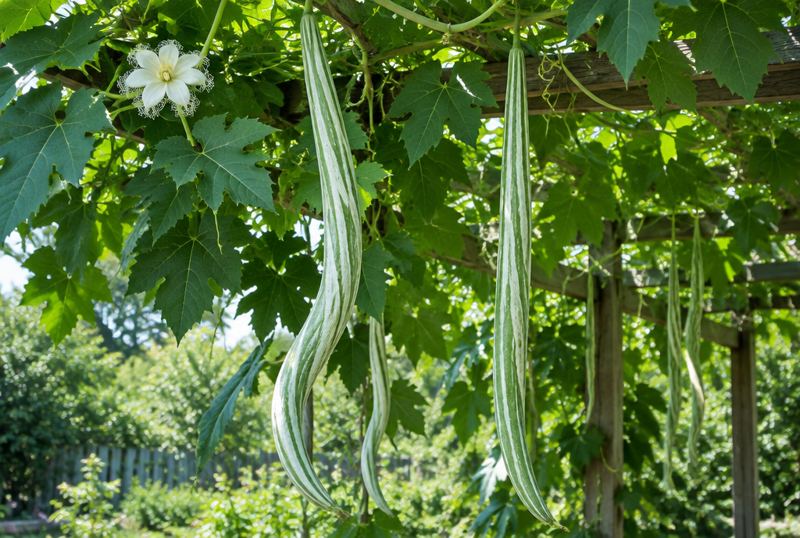 Snake Gourd
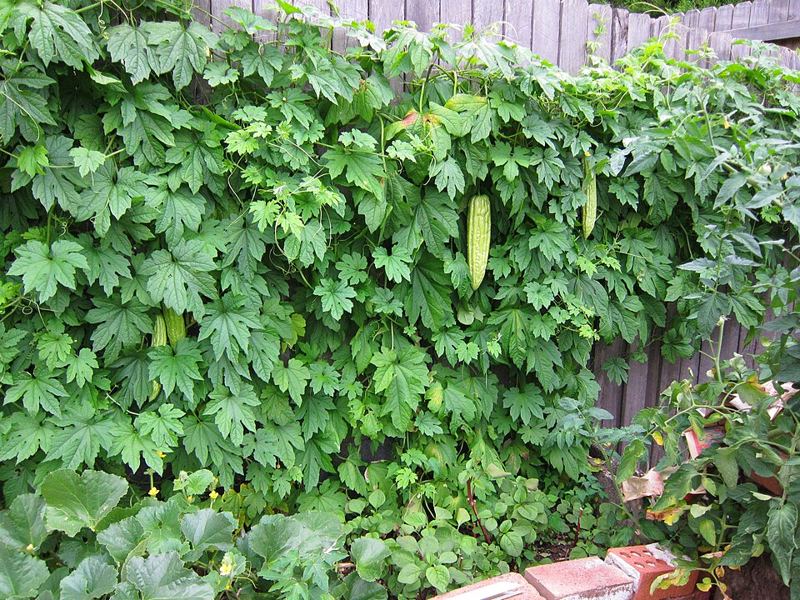 Bitter Melon
 Winter Melon