

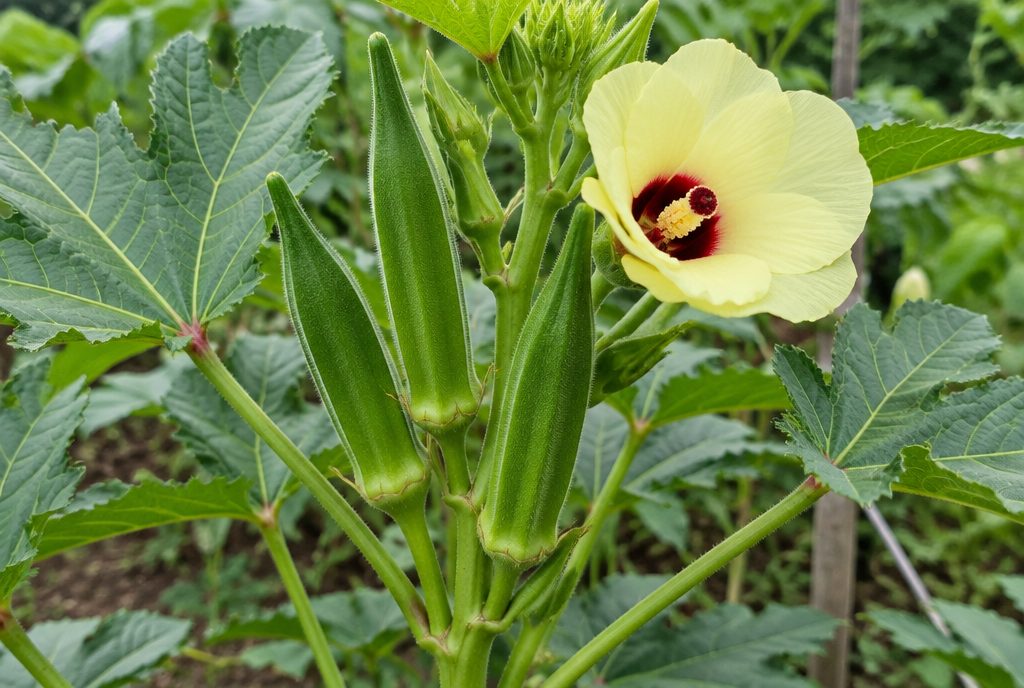
Okra is a hot-weather vegetable: sow it only after the soil reaches 65°F (18°C), thin the seedlings, and start picking 2–3 inch (5–8 cm) pods about 60 to 70 days after planting. UGA calls it a warm-season vegetable and Clemson says it grows best between 75°F and 90°F (24–32°C), so cold, wet soil is the main way to fail. Once it is growing, the main chore is picking every other day. Where sources disagree, we show each number.
- Sun
- Full sun, with good air movement
- Water
- Moderate
- Days to harvest
- 60–70 days after planting (Clemson, UGA)
- Origin
- Africa
- Planting depth
- ¾ in. (Clemson) · 1 in. (UGA, Texas A&M)
- Spacing
- Thin to 1 ft (Texas A&M) · 1.5–2 ft (UGA)
- Season
- Warm season · soil at least 65°F
- USDA zones
- Not stated by our sources
When to plant okra
The rule is soil temperature, not the date. UGA says to plant only when soils have warmed to at least 65°F at a 4 in. (10 cm) depth, and Clemson says gardeners should hold off if the soil is cooler. Clemson also gives the best germination range as 70–95°F (21–35°C). Texas A&M says to plant in spring 2 to 3 weeks after all danger of frost has passed, and that a fall crop should go in at least 3 months before the first fall frost.
NC State adds a second route for cool springs: if growing from seed, make sure temperatures stay above 55°F (13°C), or start the seed indoors. Our growing okra from seed guide covers sowing in detail.
| Zones | January | February | March | April | May | June | July | August | September | October | November | December |
|---|---|---|---|---|---|---|---|---|---|---|---|---|
| Zone S.C. Piedmont (Clemson): direct sow May–Jul; harvest Jul–Sep | May: direct sow | June: direct sow | July: direct sow, harvest | August: harvest | September: harvest | |||||||
| Zone Last frost ~Apr 15: direct sow May; harvest Jul | May: direct sow | July: harvest | ||||||||||
| Zone Last frost ~May 15: direct sow Jun; harvest Aug | June: direct sow | August: harvest |
- Direct sow
- Harvest
What the sources disagree on
Four extension sources cover okra, from South Carolina, Georgia, Texas and North Carolina, and they do not match on every figure. Here is the spread, so you can pick a number knowing what it rests on.
| Question | Answers |
|---|---|
| Seed depth | ¾ in. (Clemson) · 1 in. (UGA, Texas A&M) |
| Final spacing | About 1 ft (Texas A&M) · 1.5–2 ft (UGA) · seeds 9–12 in. apart (Clemson) |
| Row spacing | 3–6 ft (Clemson) · at least 3 ft (Texas A&M) |
| Days to harvest | 60–70 days after planting (Clemson, UGA) · about 4 months to a 3 in. pod (NC State) |
| Fridge life | About 7 days (UGA) · 3–5 days (Texas A&M) |
Wherever you land inside these ranges you are following an extension recommendation. The day-count gap is the one most worth noticing. NC State’s four months fits a slow, cool start better than a hot one, though its page does not say that.
A season in the okra bed
The sequence our sources describe runs like this.
- Soil warms to 65°F (18°C) at 4 in. depth. Seeds go in, ¾–1 in. deep (UGA, Clemson).
- Seedlings emerge and are thinned. Cold, wet soil is when root-decay diseases kill seedlings (Clemson).
- About 2 months after planting. Okra produces large flowers (Texas A&M).
- About 60 to 70 days after planting. First pods, 2–3 in. long (Clemson, UGA). Pick at least every two days from here.
- Hot weather. The plant grows best at 75–90°F (24–32°C), and Clemson says to water frequently during high heat.
Because okra only starts when the soil is warm, it suits the middle of the season, not the start. Texas A&M adds that a fall crop should be planted at least 3 months before the first fall frost.
Okra varieties
Clemson lists five varieties for South Carolina. Our sources give no days to harvest or flavor notes for them individually, apart from one detail on color.
| Variety | Best for | Days to harvest | Flavor / use | Notes |
|---|---|---|---|---|
| Clemson Spineless 80 | Listed by Clemson | Not stated | Not stated | Spineless in name; sources give no other detail |
| Lee | Listed by Clemson | Not stated | Not stated | No detail in our sources |
| Annie Oakley II | Listed by Clemson | Not stated | Not stated | No detail in our sources |
| Cajun Delight | Listed by Clemson | Not stated | Not stated | No detail in our sources |
| Burgundy | A red okra | Not stated | Red pods turn green when cooked (Clemson) | No other detail in our sources |
How to plant okra
- Wait for warm soil. At least 65°F (18°C) at 4 in. (10 cm) deep. Cold, wet soil promotes the root-decay diseases that kill seedlings (Clemson).
- Choose a sunny, drained spot. Full sun, fertile and well-drained soil (Texas A&M). Clemson says good air movement helps reduce pod rot. Follow a soil test to keep pH between 5.8 and 6.5 (Clemson).
- Sow the seed. ¾ in. deep per Clemson, 1 in. per UGA and Texas A&M. Clemson spaces seeds 9–12 in. (23–30 cm) apart in rows 3–6 ft apart, and notes that many gardeners plant several seeds per hole.
- Thin the seedlings. Leave one plant per hole (Clemson). Final spacing is about 1 ft (Texas A&M) to 1.5–2 ft (UGA).
- Water through dry spells. A deep soaking of 1–1.5 in. (2.5–4 cm) every 7–10 days when it stays dry (UGA).
Okra care
Heat
Water
Sun and air
Soil
Okra in pots is a question our sources do not answer; see what we can and cannot say in growing okra in containers.
Common okra problems
NC State also lists aphids, corn earworms, slugs, whiteflies and spider mites among okra’s insect pests.
Harvesting and storing okra
Harvest pods when they are 2–3 in. (5–8 cm) long. Clemson says they are still tender at that size, and that okra grows so quickly it must be harvested at least every two days. UGA agrees on the 2–3 in. size at 60–70 days. NC State says pods reach 3 in. approximately 4 months after sowing, so allow for slower growth in cool conditions.
Okra is not cured. Clemson says to store fresh pods in a moist environment at 45–50°F (7–10°C). UGA says okra keeps in the refrigerator for about seven days, while Texas A&M says 3 to 5. Our okra harvesting guide has more.
Okra is one of several crops that wait for warm soil. Sweet potatoes also want soil above 65°F, as explained in our sweet potato guide, and peanuts need 65°F too; see the peanut growing guide.
Frequently asked questions
When should I plant okra?
Only when the soil has warmed to at least 65°F (18°C) at a 4 in. (10 cm) depth, per UGA and Clemson. Texas A&M says to plant in spring 2 to 3 weeks after all danger of frost has passed. For a fall crop, plant at least 3 months before the first fall frost.
How long does okra take to grow?
UGA and Clemson say about 60 to 70 days after planting, when pods are 2–3 in. (5–8 cm) long. NC State is more cautious: it says pods reach 3 in. approximately 4 months after sowing.
How often should I pick okra?
Clemson says okra grows very quickly and must be harvested at least every two days. Pods 2–3 in. long are still tender.
How deep and how far apart do I plant okra seed?
Clemson says ¾ in. deep, while UGA and Texas A&M say about 1 in. (2.5 cm). Thin to about 1 ft (30 cm) apart per Texas A&M or 1.5–2 ft (45–60 cm) per UGA. Rows are 3–6 ft (0.9–1.8 m) apart per Clemson.
Does okra need a lot of water?
UGA says a deep soaking of 1–1.5 in. (2.5–4 cm) every 7–10 days is adequate in prolonged dry periods, and Clemson says to water frequently during high heat. Texas A&M says okra does fairly well in dry conditions, but yields are higher with watering every 7–10 days.
Sources
- How to Grow Okra in South Carolina, Clemson Home & Garden Information Center
- Home Garden Okra, University of Georgia Extension
- Easy Gardening: Okra (EHT-058), Texas A&M AgriLife Extension
- Abelmoschus esculentus (Okra), NC State Extension Gardener Plant Toolbox
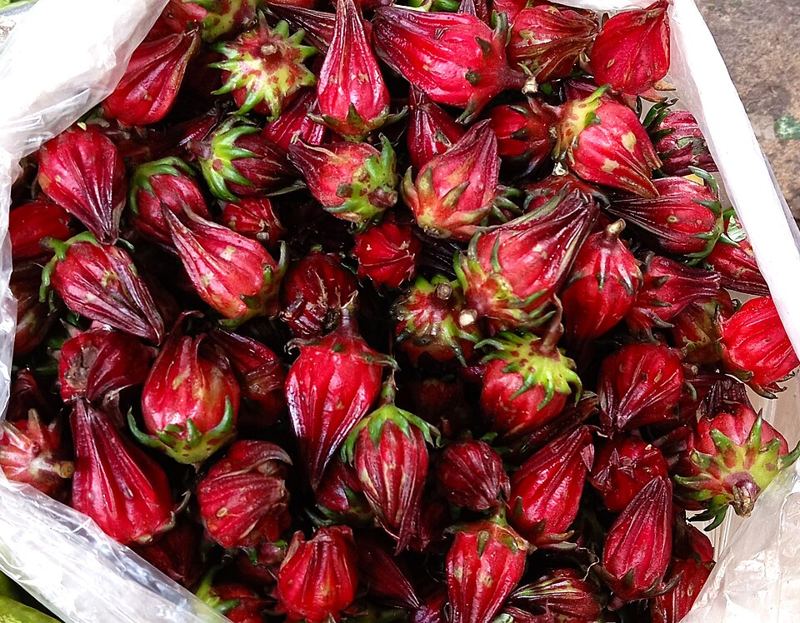 Roselle
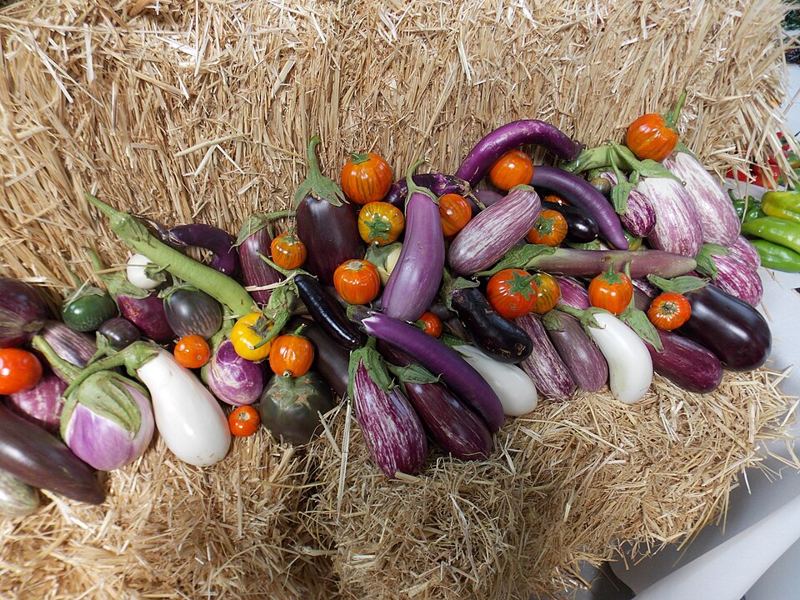 Eggplant Varieties
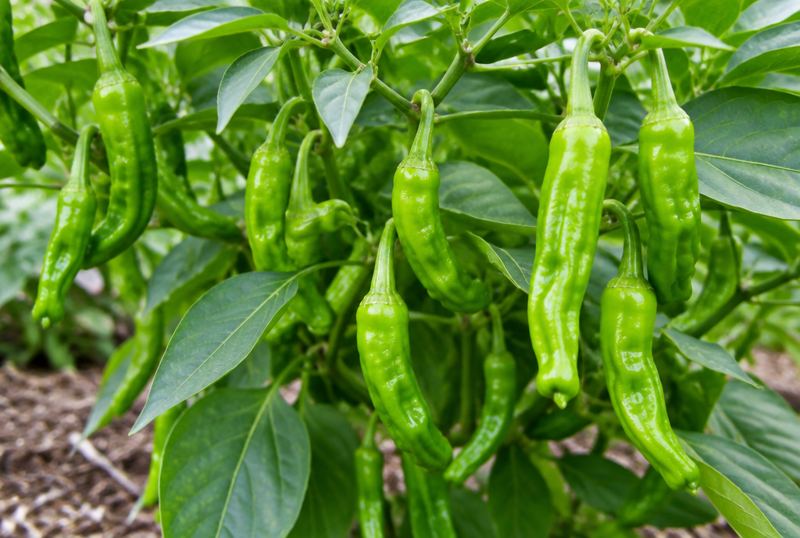 Shishito
 Aji Amarillo