

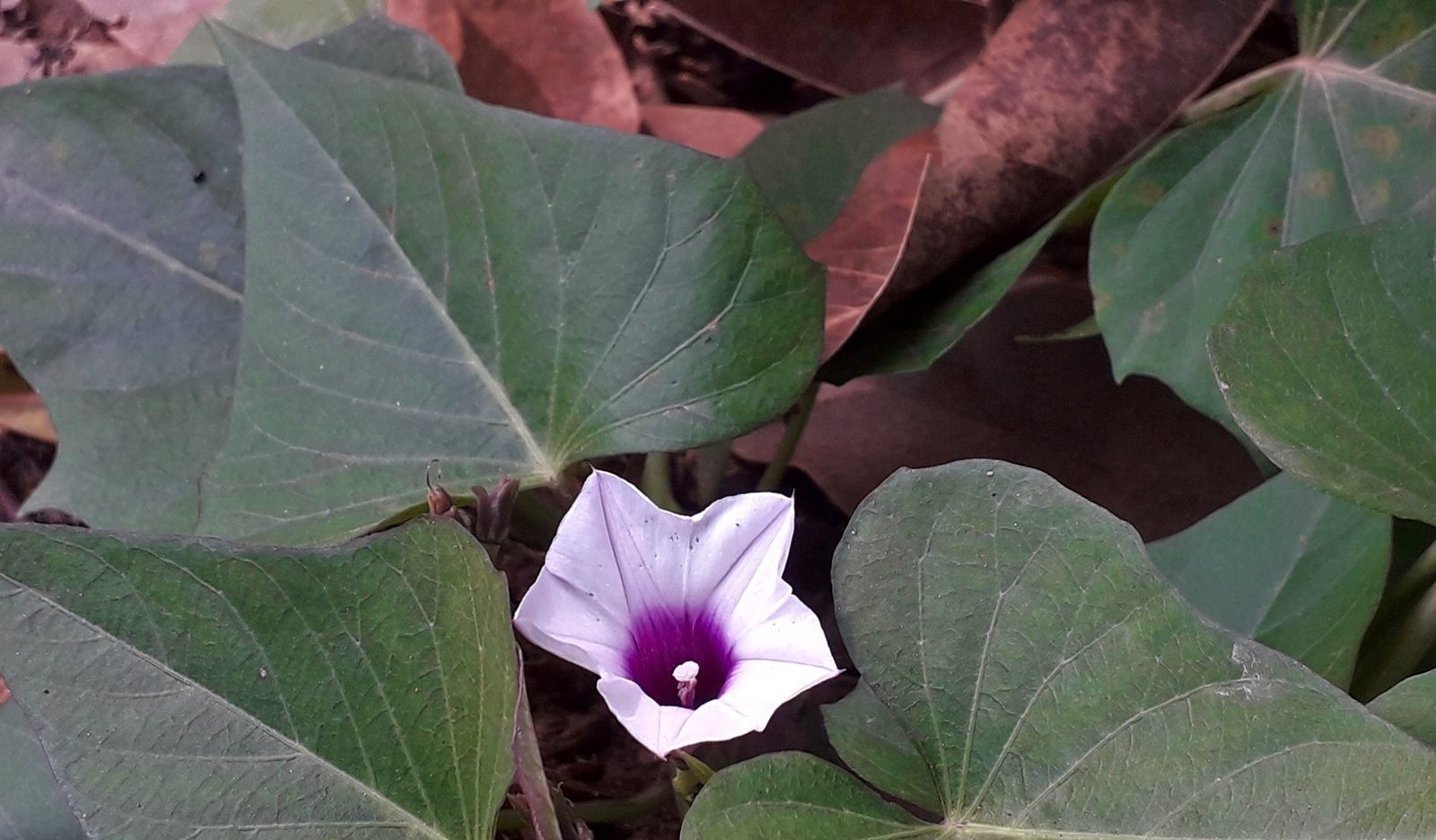
Sweet potatoes grow from slips, not seed: start the slips indoors 6–8 weeks ahead, plant them outside three to four weeks after your last frost once the soil is warm, and dig the roots 90 to 120 days later. They are a long-season, warm-soil crop, and the single biggest mistake is planting into cold ground. Penn State says the plants are very sensitive to cool soil, and that soil colder than 50°F (10°C) leads to root rot. Everything below comes from Penn State, Clemson and UGA extension; where they differ you get both numbers.
- Water
- Moderate
- Days to harvest
- 90–120 days from planting slips
- Origin
- The Americas
- Container friendly
- Yes
- Planting depth
- 3–4 in. (Clemson) · 6 in. (Penn State)
- Spacing
- 8–12 in. apart, rows 3 ft (Clemson)
- Sun
- Not stated by our sources
- Season
- Warm soil, 65–70°F+ · tender to frost
- USDA zones
- Not stated by our sources
When to plant sweet potatoes
Two numbers matter: soil temperature and the frost-free date. Clemson says the soil should be above 65°F (18°C) before planting, and Penn State also uses 65°F. UGA says the soil should reach 70°F (21°C). Penn State says to plant three to four weeks after the frost-free date, which in most of Pennsylvania falls at the end of May or the beginning of June. Your county extension office or the National Weather Service site gives your frost-free date.
Slips themselves are started well before that. Penn State says to begin six to eight weeks before planting, and our sweet potato slips guide walks through the method.
| Zones | January | February | March | April | May | June | July | August | September | October | November | December |
|---|---|---|---|---|---|---|---|---|---|---|---|---|
| Zone Last frost ~Mar 15: sow indoors Feb–Mar; transplant out Apr; harvest Jul–Aug | February: sow indoors | March: sow indoors | April: transplant out | July: harvest | August: harvest | |||||||
| Zone Last frost ~Apr 15: sow indoors Mar–Apr; transplant out May; harvest Aug–Sep | March: sow indoors | April: sow indoors | May: transplant out | August: harvest | September: harvest | |||||||
| Zone Last frost ~May 15: sow indoors Apr–May; transplant out Jun; harvest Sep–Oct | April: sow indoors | May: sow indoors | June: transplant out | September: harvest | October: harvest |
- Sow indoors
- Transplant out
- Harvest
Why slips, and where to get them
Sweet potatoes are not grown like potatoes or from seed packets. Penn State says slips are sprouts on sweet potatoes from the previous year’s crop. You can buy slips by mail order, at nurseries or at farmers’ markets, and Penn State says slips from reputable nurseries will be free of disease. You can also grow your own from a previous harvest or even from store-bought sweet potatoes, as a fun project or if you need a lot of slips. Each sweet potato gives three to five slips (Penn State).
What the sources disagree on
Three university sources cover sweet potatoes and they differ on several numbers. None of the ranges is wrong; they reflect different regions and methods.
| Question | Answers |
|---|---|
| Minimum soil temperature | 65°F (Clemson, Penn State) · 70°F (UGA) |
| Planting depth | 3–4 in. (Clemson) · 6 in. (Penn State) · 4–6 in. hole (UGA) |
| Spacing in the row | 8–12 in. (Clemson) · about 1 ft on ridges (Penn State) |
| Water | At least 1 in. a week (Clemson) · ½ in. a week after two weeks (Penn State) |
| Curing | 1 week at 85°F and 90% humidity (Clemson) · 2 weeks at 80–85°F (Penn State) |
The water gap is the widest. Penn State’s half inch is for a mulched, ridged bed in a cooler climate, which is our reading, not a stated reason. When in doubt, aim for even moisture and avoid both drought and standing water, since waterlogged soil rots the roots (Penn State).
Vines, leaves and space
Sweet potatoes are sprawlers. Penn State says most varieties root wherever the stems touch the ground, and that vines can reach 20 ft (6 m). It also says the young leaves and shoots are edible, and that you can grow them vertically on a sturdy trellis, in the garden or in large pots, to save space and make leaf harvesting easier. Sweet potatoes are naturally crawlers, not climbers, so you weave the vines through the trellis yourself. If you grow in the ground only for the roots, Penn State advises against pruning, as it can cause the roots to sprout.
Bush types such as Porto Rico and Vardaman spread much less, about 2 ft (60 cm) per plant (Penn State).
A season with sweet potatoes
- 6–8 weeks before planting: start slips indoors at about 75°F (24°C) (Penn State).
- Soil above 65°F, 3–4 weeks after the last frost: plant slips on ridges and water daily for two weeks.
- Summer: vines cover the soil and shade weeds. Clemson wants at least 1 in. of water a week.
- 3–4 weeks before harvest: stop watering to prevent splitting (UGA).
- 90–120 days after planting: harvest before the first killing frost, then cure.
Sweet potato varieties
Clemson lists three varieties with days to maturity. Our sources give no further flavor or color detail except as noted.
| Variety | Best for | Days to harvest | Flavor / use | Notes |
|---|---|---|---|---|
| Beauregard | The quickest to harvest of the three (Clemson) | 90–100 days | Light rose skin (Clemson) | Listed by Clemson |
| Covington | Sweet flavor and good yield (Clemson) | 95–110 days | Great, sweet flavor (Clemson) | From NC State (Clemson) |
| Vardaman | High yields (Clemson) · containers (Penn State) | 100 days | Not stated | Bush type per Penn State |
| Porto Rico | Containers (Penn State) | Not stated | Not stated | Bush type, spreads about 2 ft (Penn State) |
How to plant sweet potatoes
- Wait for warm soil. Above 65°F (18°C) per Clemson and Penn State, 70°F (21°C) per UGA, and three to four weeks after the frost-free date (Penn State).
- Loosen the bed. Penn State says sweet potatoes need loose, well-drained soil, and that compacted, waterlogged soil makes them rot. Adding 1–2 in. (2.5–5 cm) of compost loosens it. Soil too rich in nitrogen gives many leaves but few potatoes.
- Build ridges. Penn State makes long ridges 8–12 in. (20–30 cm) high and 12 in. wide, rows 3 ft (0.9 m) apart. Clemson also says rows 3 ft apart.
- Plant the slips. Clemson says 8–12 in. (20–30 cm) apart in the row at 3–4 in. deep. Penn State says about a foot apart on top of the ridge, 6 in. deep with at least two nodes underground. UGA says a hole 4–6 in. deep. Slips do not need roots to be planted (Penn State).
- Water daily at first. Penn State says to water newly planted slips every day for the first two weeks.
Sweet potato care
Water
Soil
Weeds
Rotation
Sweet potatoes can also be grown in containers; see our sweet potatoes in containers guide.
Common sweet potato problems
Penn State adds that voles, mice and deer can be a problem, and that raised beds or large containers keep rodents out.
Harvesting and curing sweet potatoes
Penn State, Clemson and UGA say roots need 90 to 120 days from planting. Harvest when the leaves begin to turn yellow, before a light frost (Penn State), or when 30 percent of the roots are larger than 3½ in. (9 cm) across (Clemson). The roots must come out before the first killing frost.
Cure them before storing. Clemson says the best conditions are 85°F (29°C) and 90 percent humidity for one week; Penn State says 80–85°F for two weeks. Store at 50–60°F (10–16°C), never below 50°F and never in the refrigerator (Clemson). The sweet potato harvesting guide has the full sequence.
Sweet potatoes belong to the warm-soil crowd. Okra waits for the same 65°F soil; see our okra growing guide.
Frequently asked questions
Can you grow sweet potatoes from seed?
No. Penn State says you do not grow sweet potatoes from seeds or seedlings but from slips, which are sprouts on sweet potatoes from the previous year's crop. Clemson also says to grow them from slips.
When do you plant sweet potatoes?
Penn State says plant three to four weeks after the frost-free date, because sweet potato plants are very sensitive to cool soil. Clemson says soil should be above 65°F (18°C) before planting, while UGA says 70°F (21°C).
How long do sweet potatoes take to grow?
Penn State, Clemson and UGA all say 90 to 120 days from planting the slips. Clemson lists Beauregard at 90–100 days, Vardaman at 100 and Covington at 95–110.
How deep do you plant sweet potato slips?
Sources differ. Clemson says 3–4 in. (8–10 cm), Penn State says 6 in. (15 cm) with at least two nodes underground, and UGA says a hole 4–6 in. (10–15 cm) deep.
How do you store sweet potatoes?
Cure them first, about one week at 85°F (29°C) and 90 percent humidity (Clemson), or two weeks at 80–85°F (Penn State). Then store at 50–60°F (10–16°C) and never below 50°F or in the refrigerator.
Sources
- Sweet Potatoes, a Winning Vine for Your Garden, Penn State Extension
- Sweet Potato, Clemson Home & Garden Information Center
- Growing Guide: Sweet Potatoes, University of Georgia Extension
- Home Garden Sweet Potatoes, University of Georgia Extension
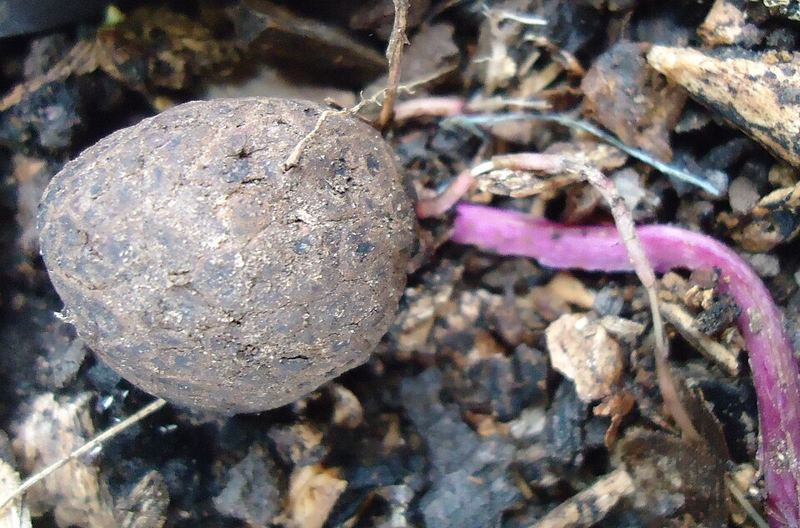 Yam
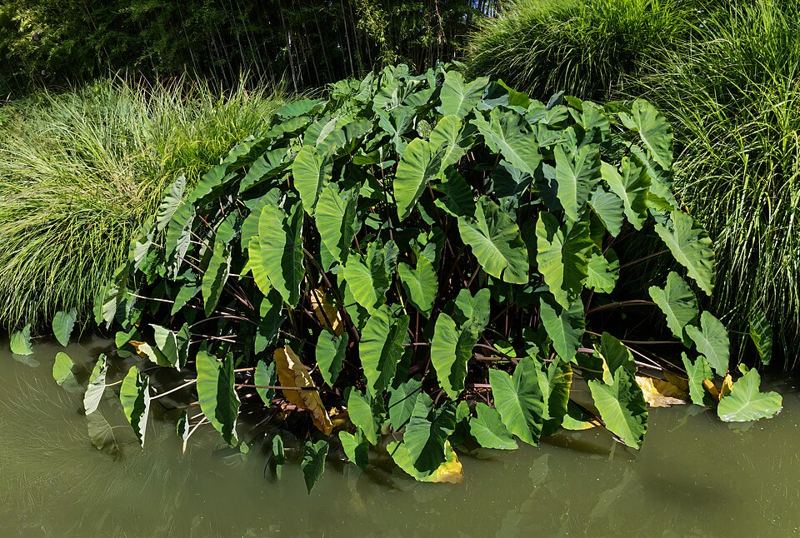 Taro
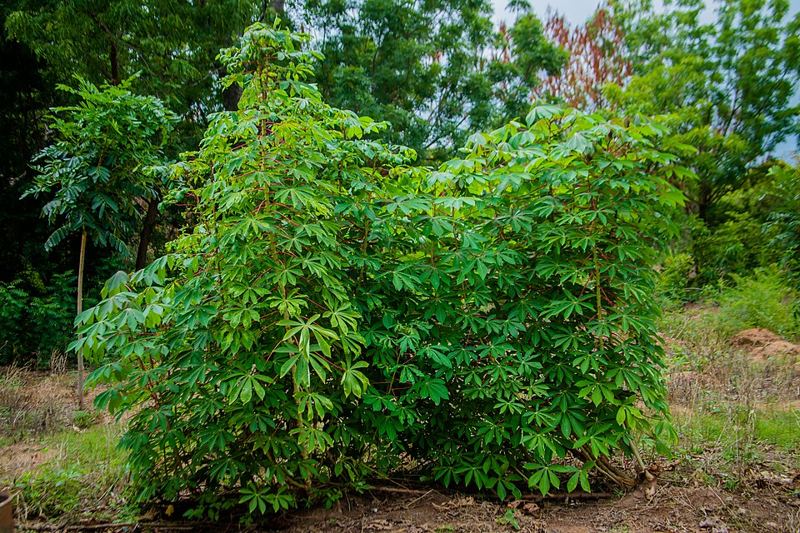 Cassava
 Jicama