

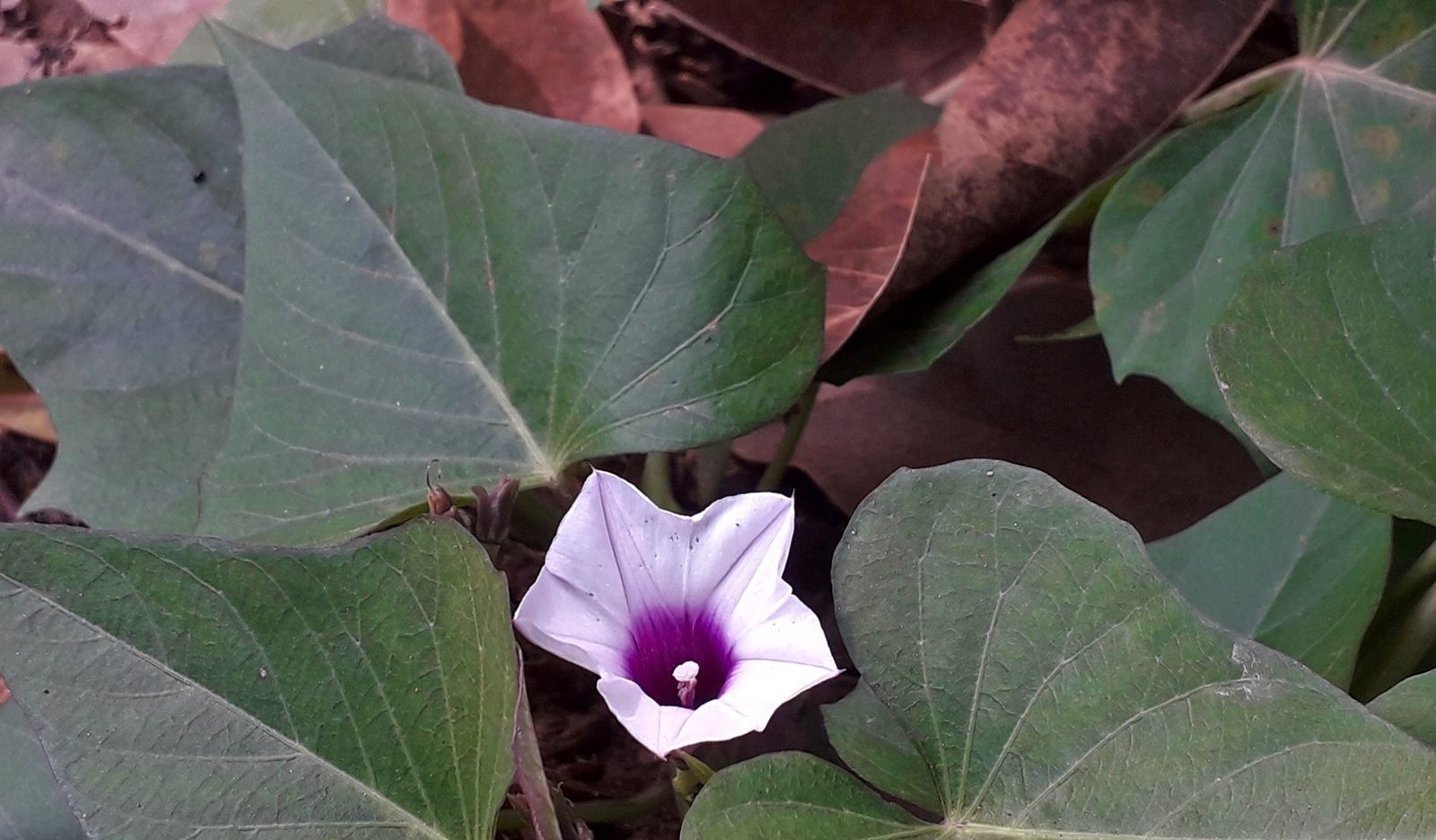
You can grow sweet potato slips from a sweet potato by burying it halfway in a box of moist soil, keeping the box at about 75°F (24°C) in a sunny room, and waiting six to eight weeks for shoots. Penn State, whose method this page follows, says each sweet potato gives three to five slips. A slip is simply a sprout; sweet potatoes are grown from slips, not seed. This is the slip-making chapter of our sweet potato growing guide.
Do you grow sweet potatoes “from potato”?
People search for “sweet potato from potato” and mean the sweet potato itself, not a white potato. The mechanism is the same either way. Penn State says you do not grow sweet potatoes from seeds or seedlings but from slips, which are sprouts on sweet potatoes from the previous year’s crop. A store-bought root can sprout slips too, if it is willing.
That “if” is real. Penn State says fresh sweet potatoes, or sweet potatoes treated with sprout inhibitors, will be harder to sprout. If you want certainty, Penn State says slips can be bought by mail order, from nurseries or at farmers’ markets, and that slips from reputable nurseries will be free of disease.
What you need
- A sweet potato. Penn State says to choose mature, small to medium roots about 1.5 in. (4 cm) in diameter and free of blemishes.
- A container with a lid. Big enough to hold the sweet potatoes and 2–3 in. (5–8 cm) of moist potting soil or sand.
- A warm, sunny place indoors. About 75°F (24°C).
- Time. Six to eight weeks before you plan to plant outside.
How to grow sweet potato slips
- Count back from planting day. Penn State says to begin six to eight weeks before planting, and to plant three to four weeks after your frost-free date. Check the date with your county extension or the National Weather Service.
- Select the roots. Mature, small or medium, about 1.5 in. (4 cm) across, no blemishes (Penn State).
- Fill the container. Put 2–3 in. (5–8 cm) of moist potting soil or sand in the bottom. The soil should be moist, not dripping wet.
- Bury the roots halfway. Place the sweet potatoes on their sides, buried halfway.
- Cover and warm them. Put the lid on to conserve moisture and keep the box in a warm (75°F), sunny place indoors.
- Remove the lid when shoots appear. Each sweet potato will provide three to five slips.
Hardening off the slips
When the slips are about 10 in. (25 cm) long, Penn State says to harden them off to acclimate them to the outdoors. Bring the box outside a little more time every day for a week or two. Start in the shade, and increase the sun exposure.
Planting out
Separate the slips from the sweet potato when you are ready to plant. Penn State says to cut off the bottom inch (2.5 cm) and plant in the garden. Slips do not need to have roots to be planted. If it is not warm enough yet, pot them up like regular seedlings, keep them in a warm, sunny place and water regularly.
The outdoor details are in the main guide: soil above 65°F (18°C) per Clemson and Penn State (UGA says 70°F), three to four weeks after the frost-free date, depth 3–4 in. at Clemson or 6 in. with two nodes underground at Penn State. See the sweet potato planting steps.
Timeline
| When | What |
|---|---|
| 6–8 weeks before planting | Bury roots halfway in moist soil, lid on, 75°F, sunny (Penn State) |
| Shoots appear | Remove the lid |
| Slips about 10 in. long | Harden off for 1–2 weeks (Penn State) |
| 3–4 weeks after frost-free date | Cut slips off, trimming the bottom inch, and plant |
| 90–120 days later | Harvest (Penn State, Clemson, UGA) |
What can go wrong
Rot. Penn State says sweet potatoes are prone to rot. Penn State recommends moist, not dripping wet, soil and blemish-free roots. The water-suspension method carries more risk of rot (Penn State), which is why we do not recommend it.
No shoots. Fresh roots, or roots treated with sprout inhibitors, are harder to sprout (Penn State). Our sources do not give a way around that. Try a different root, or buy slips.
Cold weather arrives early. Slips can wait in pots, warm and watered, until the soil catches up (Penn State).
Other points
The slip route also lets you pick a variety. Clemson lists Beauregard at 90–100 days, Covington at 95–110 and Vardaman at 100, but a store-bought root rarely tells you its variety. If days to harvest matters in a short season, buy named slips.
When the vines grow and the roots are ready, our sweet potato harvesting guide covers digging and curing. If you have no garden bed, see sweet potatoes in containers.
Ginger and turmeric also start from grocery-store pieces rather than seed: see ginger from store-bought ginger and turmeric from grocery rhizomes, or the whole regrow-from-kitchen-scraps collection.
Frequently asked questions
Can you grow a sweet potato from a store-bought sweet potato?
Yes. Penn State says you can grow your own slips from a previous harvest or from store-bought sweet potatoes, but fresh sweet potatoes, or ones treated with sprout inhibitors, are harder to sprout.
How long does it take to grow sweet potato slips?
Start 6–8 weeks before your planting date (Penn State). Keep the container at about 75°F (24°C) in a sunny spot indoors.
How many slips does one sweet potato make?
Between three and five, according to Penn State.
When are slips ready to plant?
Penn State says harden them off when they are about 10 in. (25 cm) long, then cut them from the sweet potato and plant them. Slips do not need roots to be planted.
Can I sprout a sweet potato in water?
Penn State says sweet potatoes are prone to rot, and that growing slips by suspending the sweet potato in water carries more risk of a bad outcome. Its recommended method is a box of moist potting soil or sand.
Sources
- Sweet Potatoes, a Winning Vine for Your Garden, Penn State Extension
- Sweet Potato, Clemson Home & Garden Information Center
- Growing Guide: Sweet Potatoes, University of Georgia Extension