

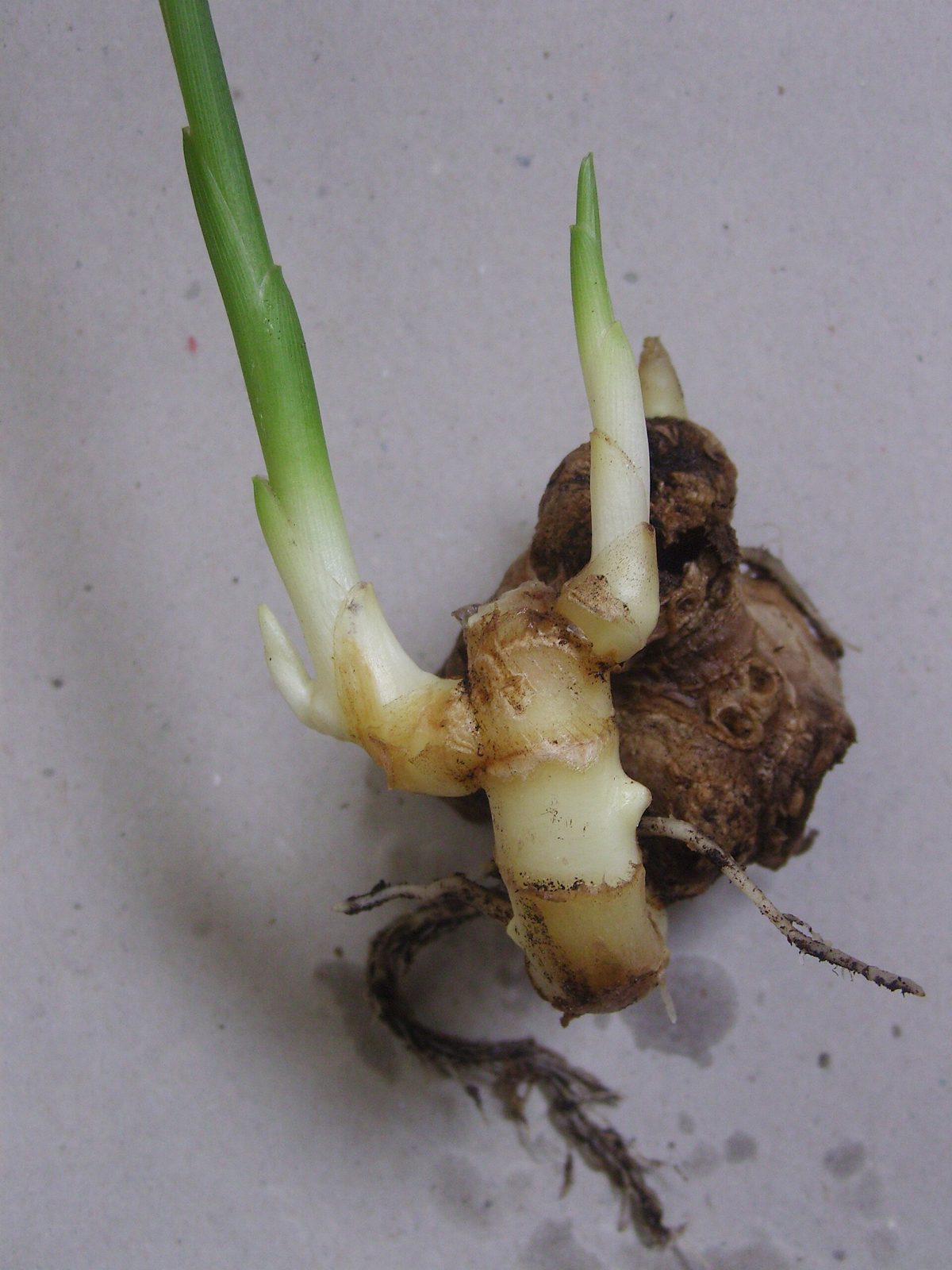
You can grow ginger from ginger: plant a plump piece of rhizome from the grocery store, buds up, in warm, loose soil and keep it damp. There is no seed involved. Ginger is propagated by pieces of rhizome, each with a couple of growth buds, and the supermarket sells exactly that. This guide covers the extra steps that matter for store-bought ginger, and sits under our full guide to growing ginger.
Why you plant a rhizome, not a seed
Ginger spreads underground through its rhizome, the thick, knobby stem you cook with. Texas A&M says rhizomes “can be planted whole or in smaller pieces with a couple of growing buds each.” CTAHR (University of Hawaii) adds that because ginger is vegetatively propagated, the seed pieces you plant should not carry bacterial wilt. A piece that looks shriveled, soft, moldy or damaged is a poor start. Choose a firm, plump rhizome with visible buds, the small bumps at the tips of the “fingers.”
Why soak store ginger first
Texas A&M gives one warning for supermarket ginger: soak the rhizomes in water overnight, because they are sometimes treated with a growth retardant. The publication does not say how to tell a treated rhizome from an untreated one, so treat every store rhizome the same way. Soak first, and if a piece is slow to sprout, give it time before you give up.
How to grow ginger from a store-bought rhizome
- Pick a plump piece with buds. Firm and heavy for its size, with growth buds at the tips. Skip anything shriveled.
- Soak it overnight. Submerge the rhizome in plain water for a night to wash out any growth retardant (Texas A&M).
- Cut it, or leave it whole. To multiply your plants, cut the rhizome into pieces 1 to 1½ in (2.5–4 cm) long, each with a couple of buds (Texas A&M). In pots, CTAHR plants pieces of about 2–3 oz (55–85 g).
- Let the cut ends callus. Leave the pieces in a cool, dry spot for a few days (Texas A&M), or overnight at the least (CTAHR), so the cut surfaces dry before planting.
- Plant buds up. Set pieces 2–4 in (5–10 cm) deep and 6–8 in (15–20 cm) apart with the growth buds pointing up. Use loamy, organic-rich soil with a pH of 5.5–6.5 (Penn State).
- Keep it warm and damp. Water so the soil does not dry out while the plant is growing, and give it 2–5 hours of direct sun (Texas A&M).
What size pot, and when to plant
For a container, Penn State recommends at least 12 in (30 cm) deep and 18 in (45 cm) across. Those are the minimums Penn State gives, so go bigger if you can, especially if you plant several pieces in one pot at 6–8 in (15–20 cm) spacing. Our ginger in containers guide covers pots, moving them outdoors and overwintering.
On timing, Penn State suggests starting in containers in early spring so the plant can go outside later, once night temperatures stay above 50°F (10°C). In Hawaii, CTAHR says planting runs from March to May. If your climate has frost, a pot you can carry in and out is the safer plan.
If it does not go to plan
- Nothing happens. Check the basics first: warmth, a pot that has not dried out and buds that point up. Our sources give no sprouting time, so patience is part of the method.
- Yellowing and curling leaves. CTAHR lists these as symptoms of bacterial wilt. Infected seed pieces produce infected plants, so remove the plant and do not replant pieces from it.
- Dry air. Texas A&M says to mist or spray plants regularly in dry areas.
- A rhizome that never sprouts. Try another. A fresh piece with visible buds from a different batch is a cheap second attempt.
What happens next
Once shoots are up, ginger needs steady moisture, and Texas A&M says to mist or spray the plants regularly in dry areas. Expect about 8 to 10 months before a full harvest; CTAHR says about 9 months. The reward comes sooner if you want young ginger: Penn State says a spring start can be moved outdoors to produce baby or green ginger. For how to dig, how to tell baby from mature rhizomes and how to store them, read our ginger harvesting guide.
A last tip from CTAHR: because wilt can travel on infected seed pieces, if a plant turns yellow and its leaves curl, do not replant pieces from it. If you like growing rhizomes from the kitchen, turmeric from grocery rhizomes works in a very similar way.
Sweet potato is the other common kitchen start, though it grows from sprouts called slips: see how to grow sweet potato slips, or browse the regrow-from-kitchen-scraps collection.
Frequently asked questions
Can you grow ginger from a piece of grocery-store ginger?
Yes. Ginger is grown from pieces of rhizome, and a store rhizome with growth buds can be planted. Texas A&M advises soaking it in water overnight first, because store ginger is sometimes treated with a growth retardant.
How long does it take for ginger to sprout?
Our sources do not give a sprouting time, so we will not guess. Keep the soil warm and evenly damp and look for shoots coming up from the buds.
Should I plant the whole piece or cut it up?
Either works. Texas A&M says rhizomes can be planted whole or in smaller pieces with a couple of growth buds each. Cutting gives you more plants from one piece, but let the cut ends callus first.
Which way up does ginger go?
Plant with the growth buds pointing upward, 2 to 4 inches (5–10 cm) deep, according to Texas A&M.
Sources
- Easy Gardening: Ginger (EHT-014), Texas A&M AgriLife Extension
- Ginger Culture in Hawaii in Pots (PD-93), University of Hawaii CTAHR
- Growing Ginger, Penn State Extension (York County Master Gardeners)