

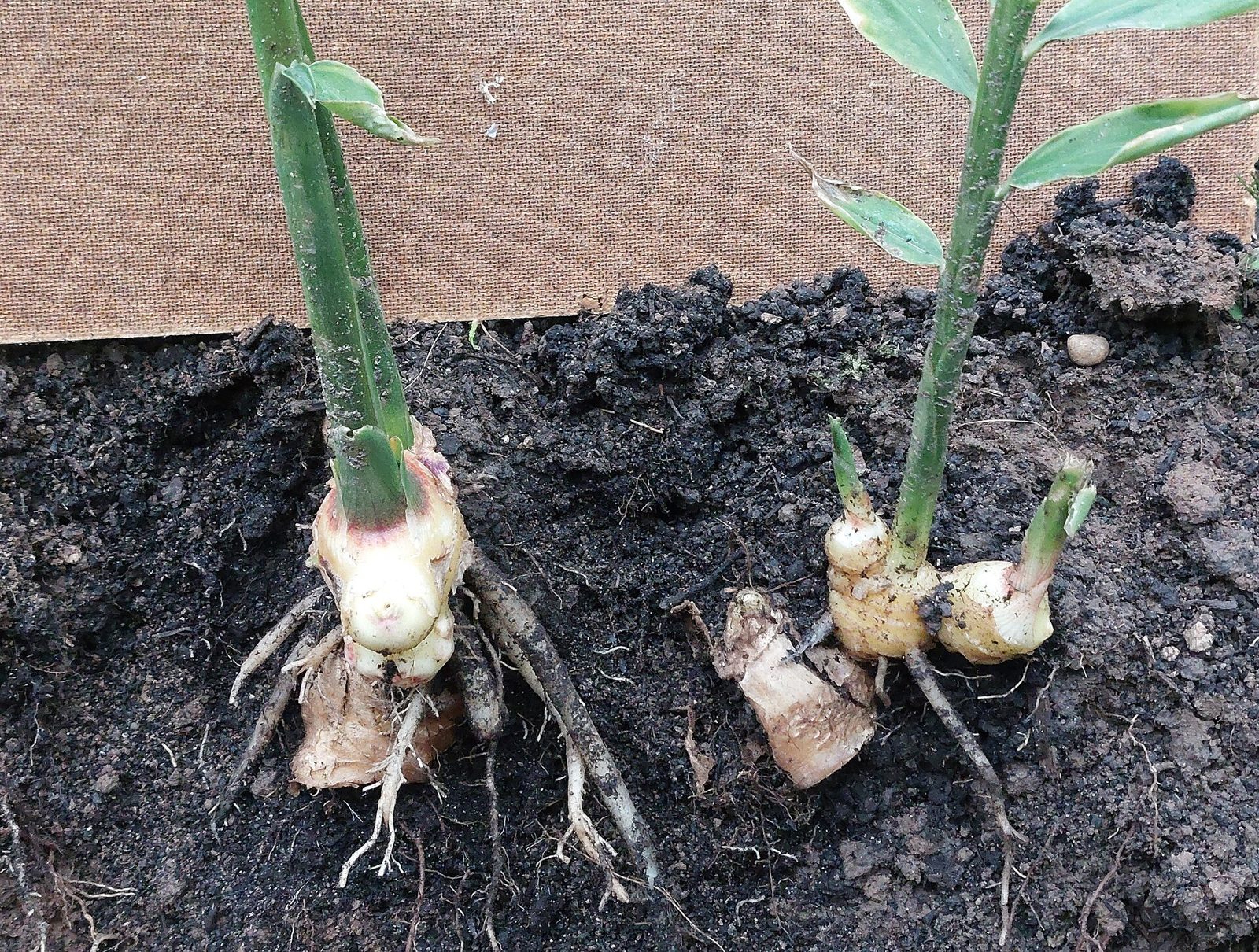
Ginger grows well in a pot, and in most of the US a pot is the best way to grow it. Use a container at least 12 in (30 cm) deep and 18 in (45 cm) across, fill it with loose, organic-rich soil, keep it warm and bright, and bring it indoors before the first frost. This guide covers the pot, the soil, the move outside and the winter, and sits under our main guide to growing ginger.
Why pots suit ginger
Ginger is a tropical plant. Penn State, writing for Pennsylvania, says that in its area ginger “can be planted in containers and later moved outdoors,” and makes the same point about timing: start early in spring, and do not put pots outside until night temperatures stay at or above 50°F (10°C). A pot gives you control over both the start and the finish. You can begin growing before the garden is warm enough and lift the whole plant indoors when cold arrives.
The University of Hawaii (CTAHR) has an entire guide to growing ginger in pots, which shows that containers are not only a fix for cold climates. CTAHR advises keeping potted ginger elevated, at least a few feet above ground level, so put the pot on a bench or sturdy stand rather than on the soil.
The right pot and soil
Pot size
Soil
Rhizome pieces
Depth and spacing
For how to prepare the pieces, including the overnight soak for store-bought rhizomes, see how to grow ginger from store-bought ginger.
Light, water and warmth in a pot
Texas A&M asks for a site with plenty of light that includes 2 to 5 hours of direct sunlight, and Penn State gives the same range for a warm place. A bright patio, or a window that gets some direct sun, fits that. Do not let the plant dry out while it is actively growing (Texas A&M). Pots dry faster than beds, so check them often, and Texas A&M also says to mist or spray plants regularly in dry areas, which includes most heated homes in winter.
Our sources give no ginger temperature range beyond the 50°F (10°C) night minimum for moving pots outside, and no watering schedule in inches or days. Use your finger as the gauge: damp, never dry, never swamped.
Growing ginger indoors
If you grow ginger indoors the whole year, the sources point to the same needs as outdoors: a warm place, 2–5 hours of direct sun, even moisture and a deep pot. The practical limit is light. A pot in a dim corner will not get the direct sun the sources recommend, so choose your brightest window. Expect the plant to behave as the sources describe, with growth through the warm months and dormancy as winter days shorten. Penn State says ginger goes dormant and loses all its stems with the onset of winter days, so a bare pot in winter is normal, not dead.
Moving ginger outside, and bringing it back in
- Start early in spring, indoors. Plant your pieces in the pot and keep it somewhere warm and bright (Penn State).
- Wait for warm nights. Move the pot outdoors only once night temperatures stay at or above 50°F (10°C).
- Keep it growing outside. Place it in a spot with 2–5 hours of direct sun, off the ground, and water so it does not dry out.
- Bring it in before the first frost. Penn State says to move pots inside before the first frost if you would like larger rhizomes.
- Let it go dormant, then harvest. The stems die back with winter days. Full harvest comes 8 to 10 months after planting (Texas A&M).
Overwintering frost-tender rhizomes
Ginger is frost-tender in practice: our sources do not give a freezing tolerance, but Penn State’s advice to bring plants inside before the first frost, and its note that the plant dies back with winter, tell you what to do. You have two options. Keep the pot indoors and let the stems die back, or lift the rhizomes and store them. For storage, Penn State says to keep them in a brown paper bag in a cool, dry place.
When you are ready to harvest, our ginger harvesting guide explains how to dig baby ginger versus mature ginger. If you like the pot-grown rhizome approach, the same techniques suit turmeric in containers, and our lemongrass in pots guide covers another frost-tender patio plant.
If you grow warm-season vegetables in pots too, note that okra has no sourced container advice, and our page on okra in containers says what we can and cannot say. The guide to vegetables in containers compares them all.
Frequently asked questions
What size pot does ginger need?
Penn State says a container at least 12 inches (30 cm) deep and 18 inches (45 cm) across.
Can I grow ginger indoors?
Yes, if it gets light and warmth. Texas A&M recommends 2 to 5 hours of direct sun, and Penn State says to bring pots in before the first frost for larger rhizomes. Mist the plants in dry indoor air.
What do I do with ginger in winter?
Ginger goes dormant and loses all its stems with the onset of winter days. Penn State says to keep the rhizomes in a brown paper bag in a cool, dry place if you store them, or to bring the pot inside before the first frost.
Will container ginger flower?
Rarely. Penn State notes that ginger grown in containers rarely flowers. The rhizome is the crop, not the bloom.
Sources
- Growing Ginger, Penn State Extension (York County Master Gardeners)
- Ginger Culture in Hawaii in Pots (PD-93), University of Hawaii CTAHR
- Easy Gardening: Ginger (EHT-014), Texas A&M AgriLife Extension