

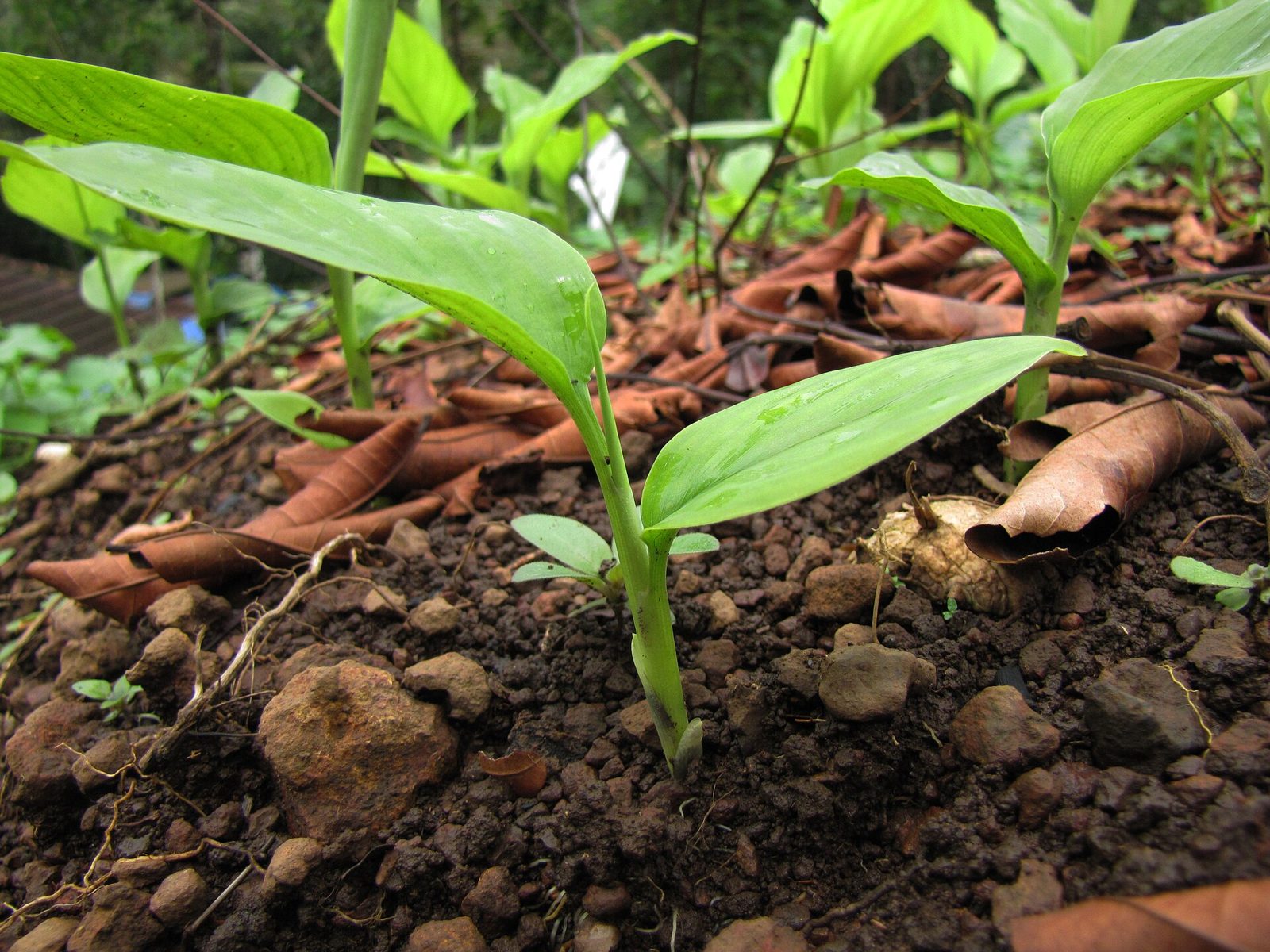
Turmeric grows in a pot, and outside USDA zones 8 to 11 a pot is the standard way to grow it. Penn State says the plant can be grown as an annual in the ground or in a container in cooler areas, and warns that the thick rhizomes may mean frequent repotting. This guide covers choosing a pot, soil, sun, water and the end-of-season dig. It is part of our main turmeric guide.
Why grow turmeric in a container
In zones 8 to 11 turmeric is a perennial (Penn State). Colder than that, a container lets you start the plant when it suits you and keep it where it gets the warmth it needs. CTAHR says turmeric grows best at 68 to 86°F (20–30°C). A container can sit on a warm patio, or in a sunny window, wherever you can hold that range.
Pot size, soil and sun
The sources do not give a pot size, so here is the reasoning they support. Penn State says the plant grows 3 to 4 feet (0.9–1.2 m) high and wide, and that the rhizomes get thick in containers, requiring frequent repotting. Both point to a large, deep container with drainage holes, and to a pot that gives the rhizomes room to expand rather than crowd the sides. CTAHR plants 3 to 4 inches (8–10 cm) deep, up to 6 inches (15 cm), so the pot must be deeper than that plus room below.
Soil
Sun
Water
Temperature
How to plant turmeric in a pot
- Pick a large, deep pot with drainage holes. The rhizomes get thick and the plant may need repotting frequently (Penn State), so start big.
- Fill it with loose, fertile mix. CTAHR says turmeric grows best in well-drained, fertile soil.
- Plant seed pieces in spring. Use rhizome pieces 1 to 1½ in (2.5–4 cm) long with at least one bud (Penn State), and plant them 3 to 4 inches (8–10 cm) deep (CTAHR). Our grocery rhizome guide covers choosing pieces.
- Water on a steady schedule. Aim for steady moisture, about every 5 to 7 days as the CTAHR guide describes for fields, and check more often in a pot.
- Place it in warm sun or morning sun. Choose a spot with full sun in the morning, or all-day sun if your summers are mild.
Repotting turmeric
Penn State says that in containers the rhizomes get thick and the plant may need to be repotted frequently. The sources do not give a schedule, so take cues from the pot: roots at the drainage holes, a crowded surface or rhizomes pushing against the side all mean it is time to move up. Choose a pot that is wider and deeper than the old one, and keep the planting depth in the same range as at the start.
Signs your pot needs attention
- Leaves wilting on a well-watered plant. Check the drainage and the rhizomes. CTAHR names Pythium, Rhizoctonia and Fusarium as causes of rhizome rot, and bacterial wilt as another documented disease.
- Rhizomes pushing up through the soil. The pot is too small, as Penn State’s warning about thick rhizomes suggests.
- A pot that dries between waterings. Water more often than the field figure of every 5 to 7 days.
Frost, winter and the end of the season
We cannot give you a frost tolerance, because none of our sources states one. The practical approach is to treat the plant as frost-tender: bring pots inside before freezing weather, or accept that it will end as an annual. Penn State says to dig the rhizomes in the fall, when the leaves begin to dry out and wilt. After harvest, store rhizomes in a cool, dry place out of the sun, at 50 to 60°F (10–16°C) and never below 50°F (CTAHR). Our turmeric harvesting guide covers the dig and the store.
Other pot-friendly herbs
If you are building a pot garden of tropical herbs, ginger in containers follows a similar routine, and lemongrass in pots is the tallest member of the group. Our sources name no extra pests for pots, but CTAHR’s rhizome rot, nematode and bacterial wilt problems apply to turmeric in general, so a clean, well-drained pot of fresh mix matters.
Frequently asked questions
Can turmeric grow in a pot?
Yes. Penn State says turmeric can be grown as an annual in the ground or in a container in areas outside USDA zones 8 to 11.
Does turmeric in a pot need repotting?
Often. Penn State warns that in containers the rhizomes get thick and the plant may need to be repotted frequently.
How much should I water turmeric in a pot?
CTAHR, in a commercial guide, says about 1.5 to 2 inches (4–5 cm) of water a week for the first 8 months, irrigating every 5 to 7 days. A pot dries faster than a field, so check it between waterings.
How big does a turmeric plant get?
Penn State says turmeric grows 3 to 4 feet (0.9–1.2 m) high and 3 to 4 feet wide.
Sources
- 2026 Herb of the Year, Turmeric, Penn State Extension
- Hawai'i Turmeric Production Guidelines (VC-9), University of Hawaii CTAHR