

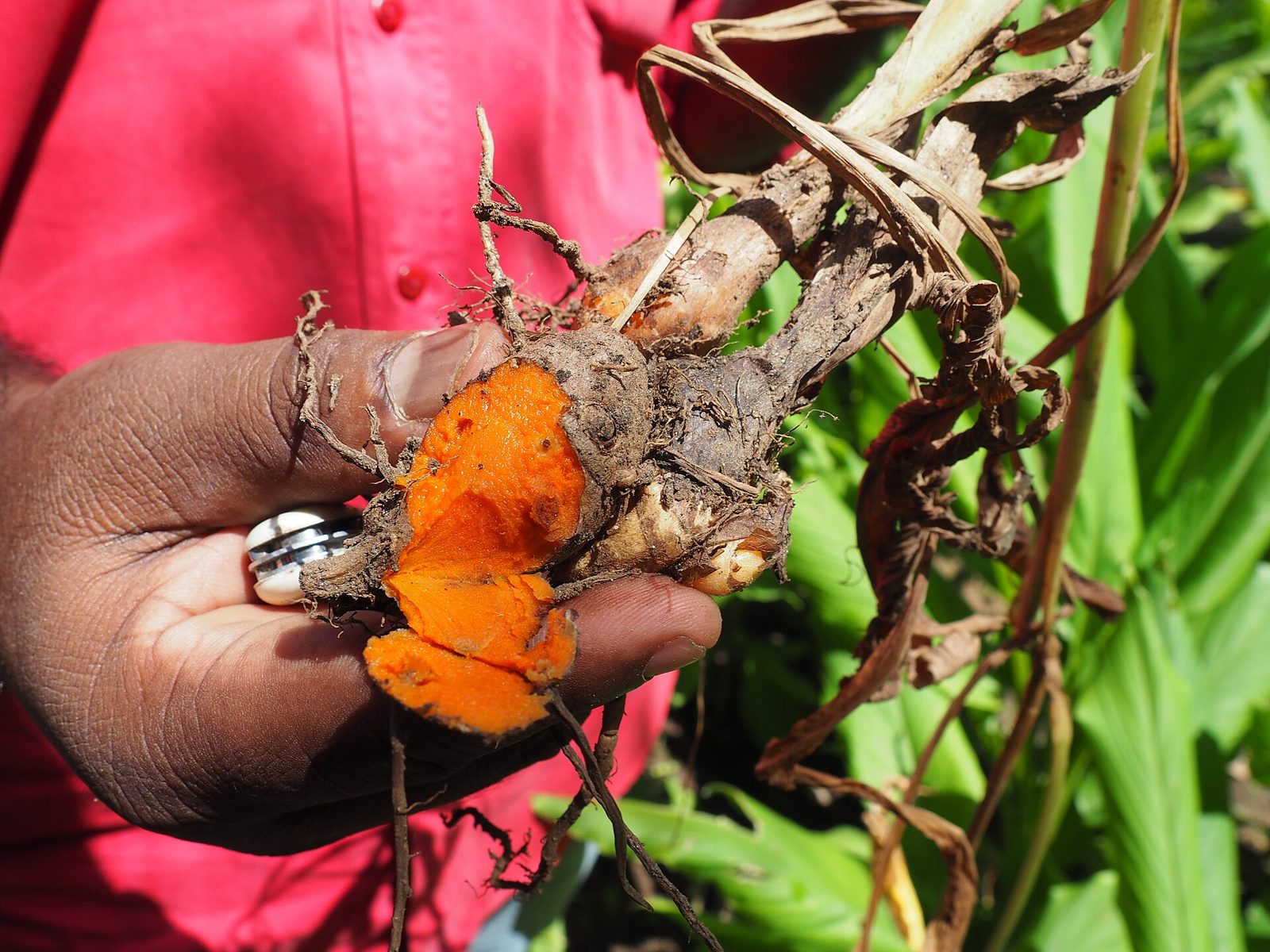
Harvest turmeric when the leaves begin to dry out and wilt, which in cooler climates means the fall. Penn State says to dig up the rhizomes at that point, and CTAHR says Hawaii growers typically harvest from January to March, when their own plants die back. The plant tells you when it is ready: the foliage declines while the rhizomes finish enlarging underground. This is a supporting guide to our full turmeric growing guide.
Why the leaves are the signal
CTAHR describes turmeric growth as similar to taro: considerable leafy growth during the first five months, followed by a decline of foliage and subsequent enlargement of rhizomes below ground. The leaves are the plant’s engine, and when they yellow and wilt, the rhizomes have been filling. That is why digging time is set by the foliage, not by a day count. No fetched source gives a number of days from planting to harvest, so we do not offer one. If you grow turmeric in a pot or in a cool climate, expect the leaves to start browning as the weather cools, and use that as your cue to get the fork ready.
Two timings: fall and Hawaii’s winter
The two sources give two different harvest windows, and they are both right for their conditions:
- Penn State: “In the fall, when the leaves begin to dry out and wilt, dig up and harvest the rhizomes.”
- CTAHR (Hawaii): turmeric is typically harvested from January to March. In Hawaii it is planted from March to June, so the plants have most of a year to grow.
If you live in a cool-winter region, follow the fall rule and watch the foliage. The Hawaii months only apply to similar tropical climates.
Harvesting early
CTAHR notes that some Hawaii producers begin harvest at the early stages of foliage die-back to get their product to market early. The trade-off: some growers have reported bitterness in young turmeric harvested early, compared with plants harvested late. For a home gardener the lesson is simple. If you want the best flavor, wait until the leaves have dried, and if you must harvest early, expect that it may taste more bitter. The sources do not give a size or color test for the rhizomes.
How to dig turmeric
- Wait for the foliage to dry and wilt. Penn State says dig when the leaves begin to dry out and wilt.
- Loosen the soil around the plant. Work a fork or trowel in from the side to avoid cutting the rhizomes.
- Lift the whole clump. If the plant is in a pot, tip the pot out and break up the soil by hand. Penn State says that in containers the rhizomes get thick, so expect a dense mass.
- Save seed pieces. Keep plump pieces with at least one bud for next spring. Penn State says mother corms are preferred for planting, since they give the highest yields.
How to store turmeric
CTAHR says rhizomes should be stored in a cool, dry place out of the sun. The recommended storage temperature is 50 to 60°F (10–16°C), and it should not be less than 50°F (10°C). Because the guide says not below 50°F, a refrigerator is likely too cold, so a cool pantry or cellar is the better home for fresh rhizomes. Keep the pieces you plan to replant in the same conditions.
Turning turmeric into spice
Penn State says the rhizomes are the edible part of the plant and are boiled, dried, peeled, and then ground to produce the spice used for cooking. The sources do not give boiling times, drying temperatures or grinding methods, so we cannot provide a recipe. If you want powder, look for a food-safety source that does, and treat the steps above as the order of operations.
Troubleshooting the dig
- Leaves yellow in midsummer, not fall. The sources describe die-back as the late-season signal. Check watering and drainage; CTAHR lists rhizome rot and bacterial wilt as documented problems in Hawaii.
- Rhizomes are small. Penn State says seed-piece size and yield are positively correlated, so plant larger pieces next year.
- Not sure it is ready. Wait until the foliage has declined. CTAHR’s growth description says that is when the rhizomes finish enlarging.
For the matching routines on its relatives, see our ginger harvesting guide and lemongrass harvesting guide, and for the next season’s start, growing turmeric from grocery rhizomes and turmeric in containers.
Peanuts are also dug on a plant signal, then dried and cured for two to three weeks (Clemson); see our peanut harvesting guide for how that compares.
Frequently asked questions
When do you harvest turmeric?
Penn State says that in the fall, when the leaves begin to dry out and wilt, dig up and harvest the rhizomes. In Hawaii, CTAHR says turmeric is typically harvested from January to March.
Can you harvest turmeric early?
Yes, but with a caveat. CTAHR says some Hawaii producers begin harvest at the early stages of foliage die-back to reach market sooner, but some growers have reported bitterness in young turmeric harvested early compared to late-harvested plants.
How do you store fresh turmeric?
CTAHR says rhizomes should be stored in a cool, dry place out of the sun, at 50 to 60°F (10–16°C), and not below 50°F (10°C).
How do you turn turmeric into spice?
Penn State says the rhizomes are boiled, dried, peeled and then ground. Our sources give no times or temperatures for those steps.
Sources
- 2026 Herb of the Year, Turmeric, Penn State Extension
- Hawai'i Turmeric Production Guidelines (VC-9), University of Hawaii CTAHR