

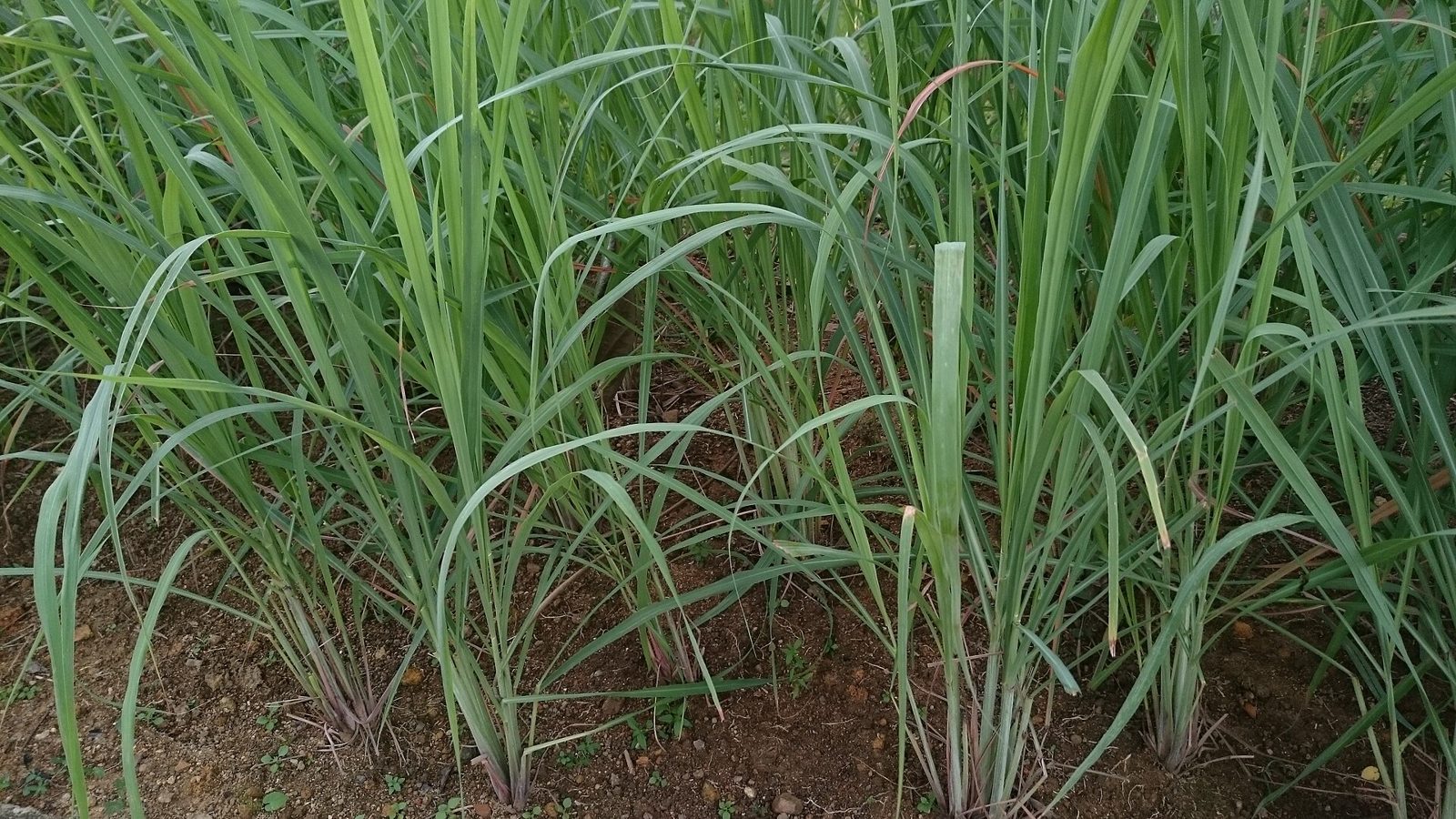
Cut lemongrass stems at ground level when they are about ½ inch (1.3 cm) thick, and harvest or dig the plant before the first freezing night. That is the whole harvest rule from the University of Wisconsin, and it is a good one: thickness, not the calendar, tells you when a stem is ready. This guide explains how to apply it, what to do at the end of the season and which questions our extension sources do not answer. It is one part of our lemongrass growing guide.
When to harvest lemongrass
Wisconsin’s advice is to harvest when the stems are about ½ inch thick. Our sources give no day count from planting, no season or month. That fits the plant: a lemongrass started from a rooted grocery-store stalk, from a division or from a nursery pot will reach that thickness at different times, depending on warmth, sun and water. Look at the stems, not at the date.
How do you measure? Hold a ruler against the base of a stem, just above the soil, and read its width. Thinner stems can wait. Our sources do not say that a thick stem must be taken immediately, but there is a hard deadline at the end of the season, which is frost.
How to cut lemongrass
- Choose a stem about ½ inch thick. Pick the thickest stems on the clump first. Thin ones can keep growing.
- Cut at ground level. Wisconsin says to cut stems at ground level, so use a sharp knife or pruners and cut at the base.
- Leave the rest of the clump growing. Cutting individual stems leaves the clump in place, and the plant keeps growing as long as it is warm and watered. It needs a great deal of water (Wisconsin).
- Keep watering after cutting. A clump that has just been cut is still a plant that needs regular water, especially in a pot.
The sources do not say how many stems you can take at once or how often. If you are unsure, take a few and watch the plant’s response before taking more.
A simple harvest-day checklist
- Check the forecast first: if freezing nights are close, plan to harvest or dig now.
- Measure a few stems at the base. Take only the ones at about ½ inch (1.3 cm).
- Cut at ground level with a clean, sharp blade.
- Water the plant afterward, since it needs a great deal of water.
- Note the date and the weather, so next year you can see how long your clump took to reach harvest size in your climate.
Harvest before frost
Frost is the real deadline. Wisconsin says frost will kill or severely damage the plants, so harvest or dig before overnight temperatures get to freezing. In a cold-winter region, that means one of three plans:
- Cut what you want and let the plant go. Treat it as an annual, as Wisconsin allows.
- Dig the clump and pot it. Penn State says to gradually acclimate the plant to indoor living. See our guide to lemongrass in pots, indoors and winter.
- Divide it. Wisconsin says division is the easiest way to propagate lemongrass, so a small division in a pot can carry the plant through winter.
Zone 8 and warmer gardeners have an easier time, since Penn State says lemongrass is hardy to zone 8, but the sources do not describe how much harvesting a plant tolerates in winter.
What about storing and drying lemongrass?
Our two sources, from Wisconsin and Penn State, do not describe storing, freezing or drying lemongrass. Rather than guess at times or temperatures, we leave the question open. A cut stem is a perishable plant part, so use or preserve it promptly, and consult a food-preservation source for methods.
After harvest: start again
Harvest time is also propagation time. Wisconsin says you may be able to root grocery store specimens in water or potting medium if enough of the root plate is left on the stem. The same logic suggests that stalks you cut from your own plant, with the base attached, are a cheaper starting point for next year than a bunch from the store, though the source does not say this directly. For the method, see how to grow lemongrass from grocery-store stalks.
If you like harvesting your own seasonings from the garden, the rhizome crops are the next step: our ginger harvesting guide and turmeric harvesting guide cover those.
Frequently asked questions
When is lemongrass ready to harvest?
When the stems are about ½ inch (1.3 cm) thick. The University of Wisconsin says to cut stems at ground level at that size.
Where do you cut lemongrass?
At ground level, according to Wisconsin, so you take the whole stem.
Should I harvest before frost?
Yes. Wisconsin says frost will kill or severely damage the plants, so harvest or dig before overnight temperatures get to freezing.
How do you store or dry lemongrass?
Our two extension sources do not cover storing or drying lemongrass, so we do not give a method. Ask your local extension office or check a food-preservation source.
Sources
- Lemongrass, University of Wisconsin-Madison Extension Horticulture
- Lemon-Scented Herbs in the Garden and the Kitchen, Penn State Extension