

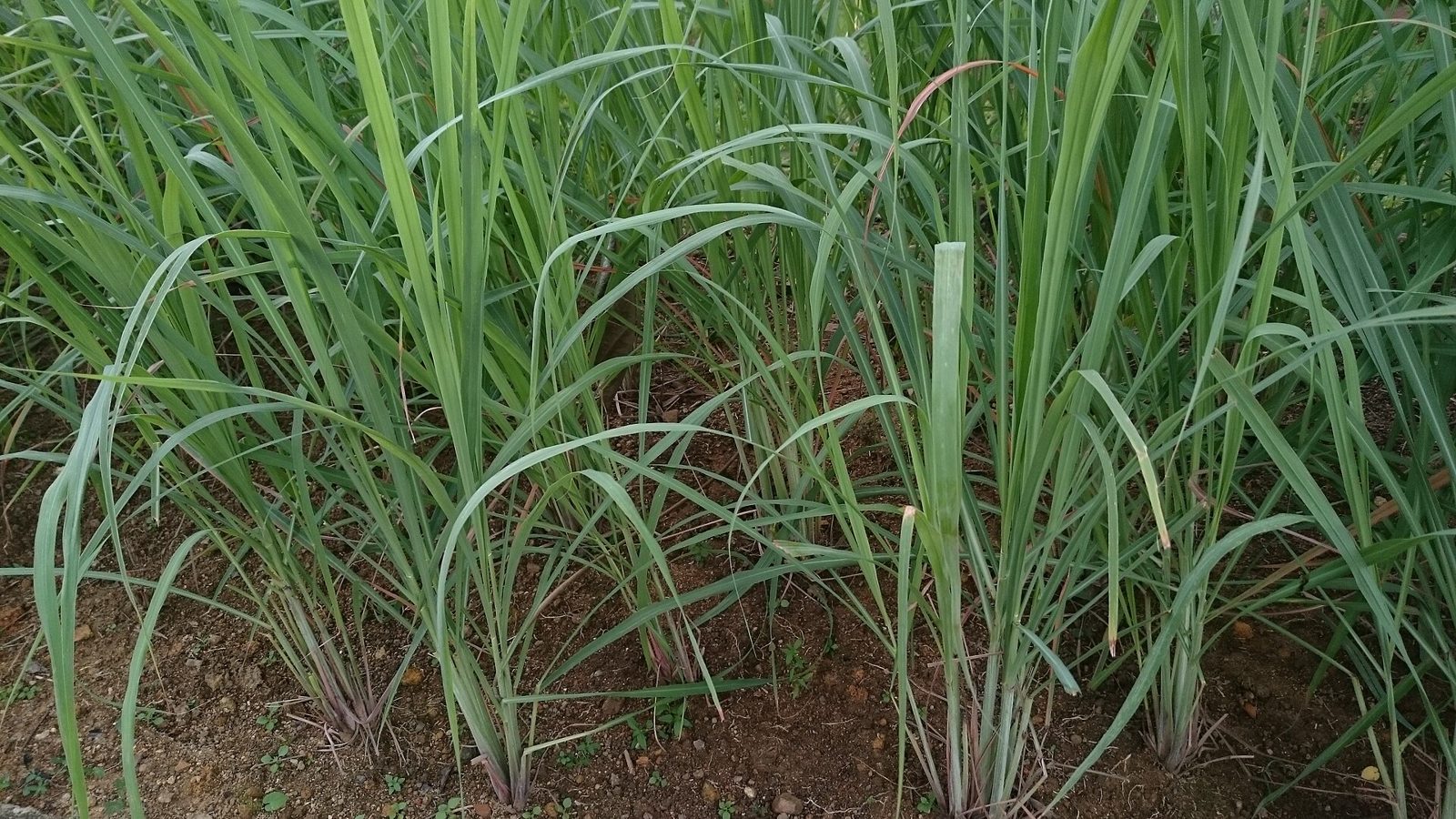
You can often root lemongrass from grocery-store stalks: stand the stalks in water or push them into potting mix, and if enough of the base was left on, they send out roots. The University of Wisconsin says you may be able to root grocery store specimens in water or potting medium “if enough root plate is left on the stem.” If you already have a plant, division is easier and more reliable. This guide is part of our full lemongrass growing guide.
What to buy
The base of the stalk is what matters. The root plate is the base of the stalk, where roots form; Wisconsin says enough of it has to remain on the stem for rooting to work. At the store, choose stalks with the base intact, and skip any that have been trimmed so flush that no solid disk of base is left. The sources give no other buying criteria, such as the best stalk count or thickness for rooting, so we will not make one up.
Root lemongrass in water or in potting mix
Wisconsin names two media, water and potting medium, and does not rank them. Either can work.
- Pick fresh stalks with the base on. The root plate must still be attached to the stem (Wisconsin).
- Choose water or potting mix. Stand the stalks base-down in a glass of water, or set them in a pot of moist potting mix. Both are named in the Wisconsin article.
- Put them somewhere warm and bright. Lemongrass wants warm, humid conditions in full sun to thrive, and nights around 65°F (18°C) are the preference Penn State gives. An indoor windowsill is a sensible place to start.
- Keep the water or mix fresh and damp. Lemongrass needs a great deal of water (Wisconsin), and a rooting stalk should not be left to dry out.
- Pot up once roots appear. Move rooted stalks into a container with well-drained, organic-rich soil. Wisconsin recommends moist loam with high organic matter.
Our sources give no rooting time, no water-change schedule and no planting depth, so judge by what you see: roots growing from the base, and then new leaf growth.
Growing on after rooting
Once the stalks are rooted and potted, treat them as a young lemongrass plant. They need full sun, a great deal of water and warmth. Lemongrass is damaged by frost, so Wisconsin says to place plants outside as soon as the danger of frost is past. If the weather is still cold, keep them in a pot indoors until it passes. Moving a plant gradually from indoor to outdoor conditions is a sensible reverse of Penn State’s advice to acclimate plants gradually to indoor living in autumn.
Rooting is only the start, and harvest takes patience. Wisconsin says to cut stems when they are about ½ inch (1.3 cm) thick, and a freshly rooted stalk is a fraction of that. Our lemongrass harvesting guide covers the cut and storage, and our guide to lemongrass in containers covers pots and winter.
Divide a clump instead
If you have, or can borrow, a mature clump, division is the easier path. Wisconsin says flowers are rare, so propagation by division is the easiest way to include lemongrass in your garden. In practice that means splitting a clump into sections, each with stems and roots, and planting each section on its own.
The sources do not give a month or a tool for dividing, so use the same timing logic as for any move: do it in the warm season when the plant is growing, not close to frost. Water the divisions in well. A plant lifted from the ground needs a great deal of water to settle.
Why not seed?
Wisconsin explains that flowers are rare, which is why division is the easiest route, and neither Wisconsin nor Penn State describes a seed method. Rooted stalks and divisions are pieces of an existing plant, so you get the same lemongrass you already know, with no need to wait for seed to set or sprout.
When it does not root
- The stalk went limp or soft. Start again with fresher stalks that still have the base attached.
- Nothing happened. Check warmth, check that the base is still in water or damp mix, and look for the root plate.
- Roots, then stall. Check light. The sources say full sun.
Rooting is a way to save money and to try the plant before committing a bed to it. If lemongrass appeals, you may also like ginger, which also starts from a grocery-store rhizome; see our guide to growing ginger from store-bought ginger.
Frequently asked questions
Can you regrow lemongrass from grocery-store stalks?
Often. The University of Wisconsin says you may be able to root grocery store specimens in water or potting medium if enough of the root plate is left on the stem.
What is the root plate?
It is the base of the stalk, where roots form. Wisconsin does not define it further, but says enough of the root plate must be left on the stem for rooting in water or potting mix to work.
What is the easiest way to multiply lemongrass?
Division. Wisconsin says flowers are rare, so propagation by division is the easiest way to include lemongrass in your garden.
Can you grow lemongrass from seed?
Our sources describe no seed method. They name rooting store stalks and dividing an existing plant.
Sources
- Lemongrass, University of Wisconsin-Madison Extension Horticulture
- Lemon-Scented Herbs in the Garden and the Kitchen, Penn State Extension