

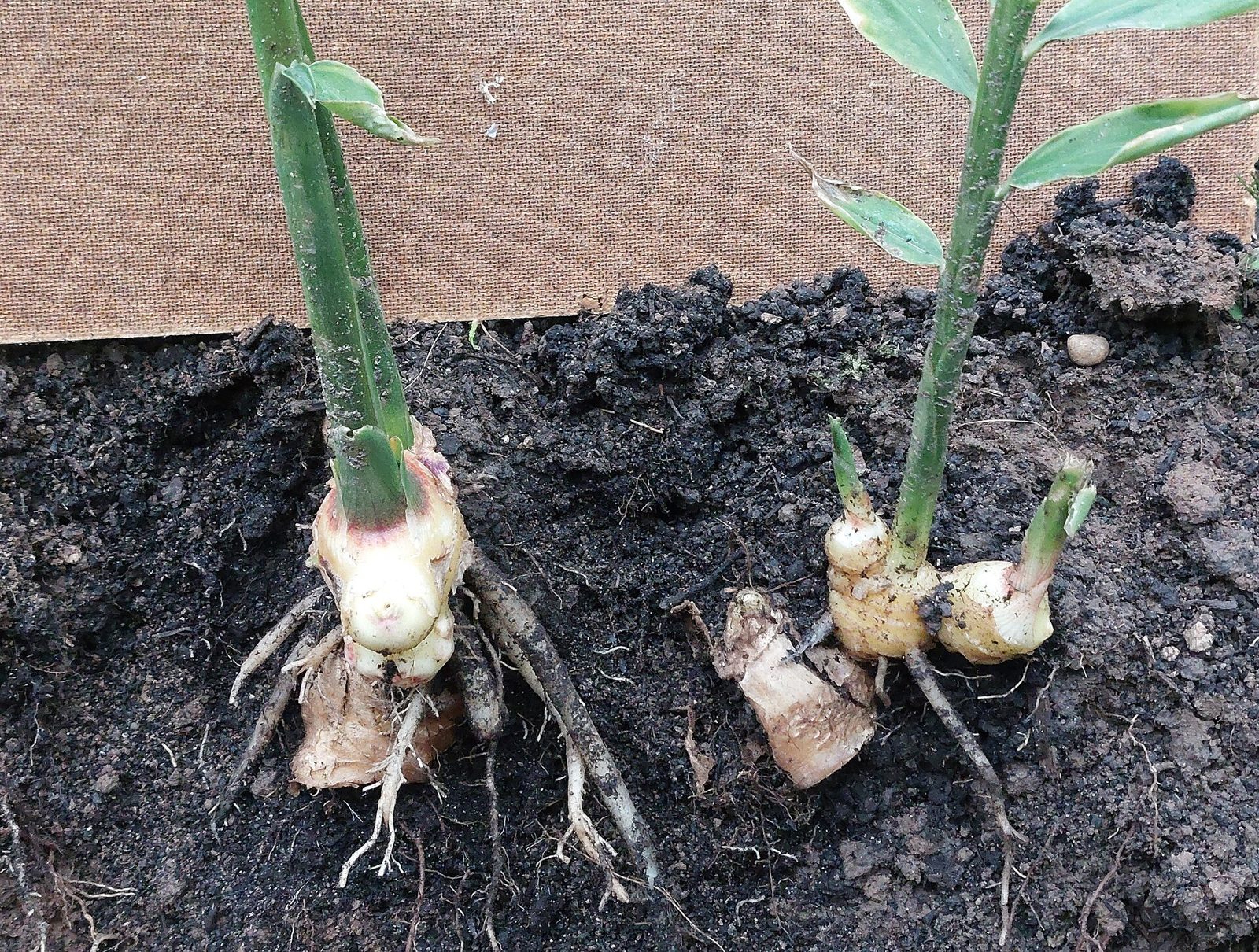
You can grow ginger almost anywhere in the US, but only some places let you do it in the ground. It is a tropical plant that goes dormant and drops its stems when winter days arrive, so in cold-winter regions the realistic way to grow it is in a deep pot, kept outside in the warm months and brought in before the first frost. Plant a piece of grocery-store rhizome in spring, give it warmth, bright light and steady moisture, and expect to wait 8 to 10 months for a full harvest. It is slow rather than hard.
- Days to harvest
- 8–10 months
- Origin
- Asia
- Container friendly
- Yes
- Grown from
- Rhizome pieces, not seed
- Planting depth
- 2–4 in (5–10 cm), buds up
- Spacing
- 6–8 in (15–20 cm) apart
- Sun
- 2–5 hours of direct sun
- Pot size
- 12 in (30 cm) deep, 18 in (45 cm) across
Why grow ginger at home?
Ginger is sold as a dry-skinned root, but the part you eat is a rhizome, a fleshy underground stem, and growing it yourself lets you harvest young ginger as well as mature rhizomes. Penn State points out that if you start your ginger in early spring it can be moved outdoors to harvest “baby” or green ginger. It also asks very little of you in the way of equipment. A rhizome from the kitchen, a deep pot and a warm spot are enough to start, and the plant itself is a tall, leafy clump, so it earns its place on a patio even before harvest.
Where can you grow ginger?
The extension guides we rely on do not give a USDA zone range for ginger, so we will not invent one. What they do say is useful. The University of Hawaii (CTAHR) guide is written for a tropical climate, where ginger is planted in March to May and harvested about nine months later. Penn State, writing for Pennsylvania, says ginger “can be planted in containers and later moved outdoors” in its area, and that night temperatures should not drop below 50°F (10°C). Texas A&M supplies the in-ground planting details used below.
The practical reading for the rest of us: in a frost-free climate you can plant ginger in the ground in spring. Anywhere with freezing winters, plant it in a container, start it early and move it outside once nights stay above 50°F, as Penn State advises. If you want a closer look at pots, see our guide to growing ginger in containers.
A year in the life of a ginger plant
The sources fit together into a simple annual rhythm, with the dates depending on your climate:
- Early spring: start rhizome pieces in containers (Penn State). In Hawaii, planting runs from March to May (CTAHR).
- Once nights stay above 50°F (10°C): move pots outdoors to a warm spot with 2–5 hours of direct sun.
- Growing season: keep the soil from drying out, and mist in dry air (Texas A&M).
- Before the first frost: bring pots inside if you want larger rhizomes (Penn State). Left to winter conditions, the plant goes dormant and loses its stems.
- 8 to 10 months after planting: dig up the whole plant for a full harvest (Texas A&M, Penn State), or about 9 months in the CTAHR guide.
Ginger varieties
None of our three sources names a ginger variety, and the plant is sold simply as ginger, so there is no variety table here. What matters more than the name is the quality of the rhizome you plant. CTAHR warns that because ginger is vegetatively propagated, “it is important to plant seed pieces that are not infected” with bacterial wilt, so choose firm, plump, healthy pieces. Rhizomes from a grocery store can work, with a catch about growth retardant that we cover in how to grow ginger from store-bought ginger.
Ginger planting calendar
| Zones | January | February | March | April | May | June | July | August | September | October | November | December |
|---|---|---|---|---|---|---|---|---|---|---|---|---|
| Zone Hawaii: direct sow Mar–May; harvest Jan–Feb, Dec | January: harvest | February: harvest | March: direct sow | April: direct sow | May: direct sow | December: harvest | ||||||
| Zone Cooler areas: sow indoors Mar–Apr; transplant out May–Jun | March: sow indoors | April: sow indoors | May: transplant out | June: transplant out |
- Sow indoors
- Transplant out
- Direct sow
- Harvest
The two rows are not zones in the usual sense. They are the two regions our sources actually describe. If you garden somewhere between them, use the cooler-area row and let the 50°F night-temperature rule, not the calendar, tell you when to move pots outside. A pot can start indoors weeks before the garden is ready for it.
How to plant ginger
- Choose a plump rhizome with growth buds. Look for firm pieces with small bumps at the tips, which are the growth buds. Texas A&M notes that store ginger is sometimes treated with a growth retardant, so soak the rhizomes in water overnight before planting.
- Cut it into pieces. Cut the rhizome into pieces 1 to 1½ in (2.5–4 cm) long, each with a couple of buds. Texas A&M says to let the cut ends callus over for a few days; CTAHR says to cure seed pieces in a cool, dry place overnight or longer. In pots, CTAHR uses pieces of 2–3 oz (55–85 g).
- Fill a deep container or prepare a bed. Use loamy, organic-rich soil with a pH of 5.5–6.5. For a pot, Penn State wants one at least 12 in (30 cm) deep and 18 in (45 cm) across.
- Plant with the buds pointing up. Set the pieces 2–4 in (5–10 cm) deep and 6–8 in (15–20 cm) apart, growth buds upward, then water.
- Put it somewhere warm and bright. Give it 2–5 hours of direct sun. In a cool region, keep the pot indoors or sheltered until night temperatures stay above 50°F (10°C), then move it outside.
Ginger care
Water
Light and warmth
Soil
Winter
CTAHR also advises keeping potted ginger elevated at least a few feet above ground level. A bench or sturdy shelf does the job.
Common ginger problems
Harvesting ginger
Ginger is harvested by digging up the entire plant (Texas A&M). The best time is when the plant is 8 to 10 months old, though Penn State says you can harvest “baby” or green ginger earlier if you start in early spring. Unpeeled fresh ginger keeps for up to 3 weeks refrigerated or up to 6 months frozen, according to Texas A&M. We cover how to tell baby from mature ginger and how to store both in our ginger harvesting guide.
What our sources do not tell you
Three extension publications are a solid base, but they leave gaps, and we would rather say so than guess. None gives a USDA hardiness zone, a freezing limit, an upper temperature limit, a watering amount in inches or a fertilizer rate. The Texas A&M and Hawaii publications are also older (2010 and 2013). If you grow ginger in a very different climate from Hawaii, Texas or Pennsylvania, treat the month-based timing here as a starting point and let your own frost dates and night temperatures decide.
Grow these next
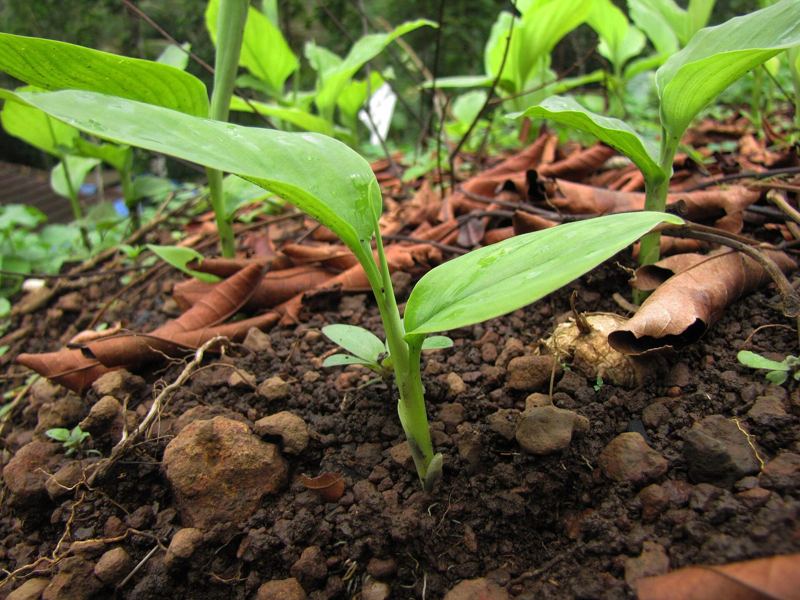
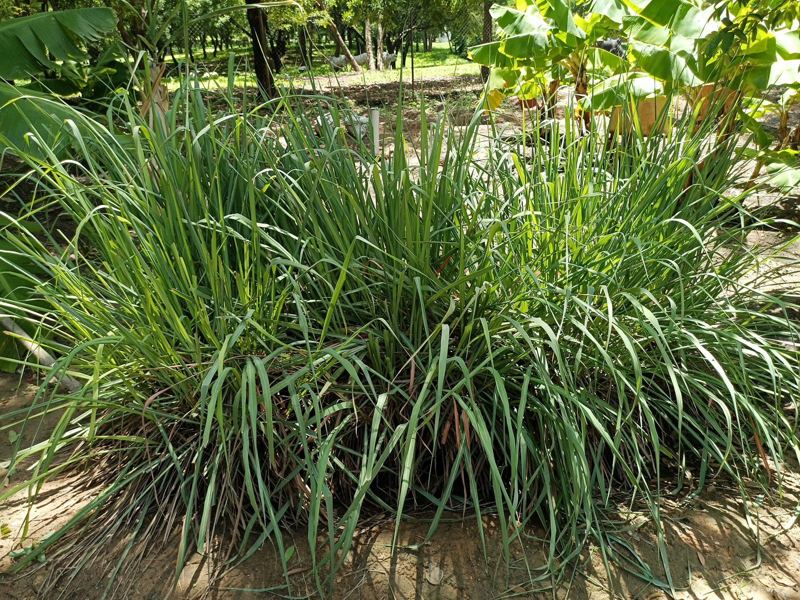
Ginger has close cousins in the kitchen garden. Turmeric is also grown from rhizome pieces and suits the same pots, and lemongrass shares the warm-season, frost-tender habit. All three can sit side by side in a sunny patio container garden.
Garlic is the other kitchen staple in our catalogue, but it runs on the opposite calendar: planted in fall rather than spring, and hardy rather than frost-tender. See our garlic growing guide, or the spice garden collection.
Frequently asked questions
Can you grow ginger from seed?
Not in a home garden. Ginger is vegetatively propagated, which means you plant pieces of rhizome (the fleshy root-like stem), each with a couple of growth buds. Our extension sources describe no seed method at all.
How long does ginger take to grow?
About 8 to 10 months from planting to a full harvest. University of Hawaii (CTAHR) says about 9 months, and Texas A&M and Penn State say 8 to 10. If you start early in spring and move pots outside later, you can dig young "baby" ginger sooner.
How much sun does ginger need?
Texas A&M recommends a site with plenty of light that includes 2 to 5 hours of direct sunlight. Penn State gives the same 2 to 5 hours a day in a warm place.
Can ginger survive winter outdoors?
Ginger goes dormant and loses all its stems when winter days arrive, according to Penn State. Our sources do not give a hardiness zone or a freezing limit, so treat it as frost-tender, and bring pots inside before the first frost if you want larger rhizomes.
Why is my ginger not flowering?
Penn State notes that ginger grown in containers rarely flowers. For most gardeners the rhizome is the crop, so a plant without flowers is not a problem.
Sources
- Growing Ginger, Penn State Extension (York County Master Gardeners)
- Easy Gardening: Ginger (EHT-014), Texas A&M AgriLife Extension
- Ginger Culture in Hawaii in Pots (PD-93), University of Hawaii CTAHR
 Turmeric
 Lemongrass
 Galangal