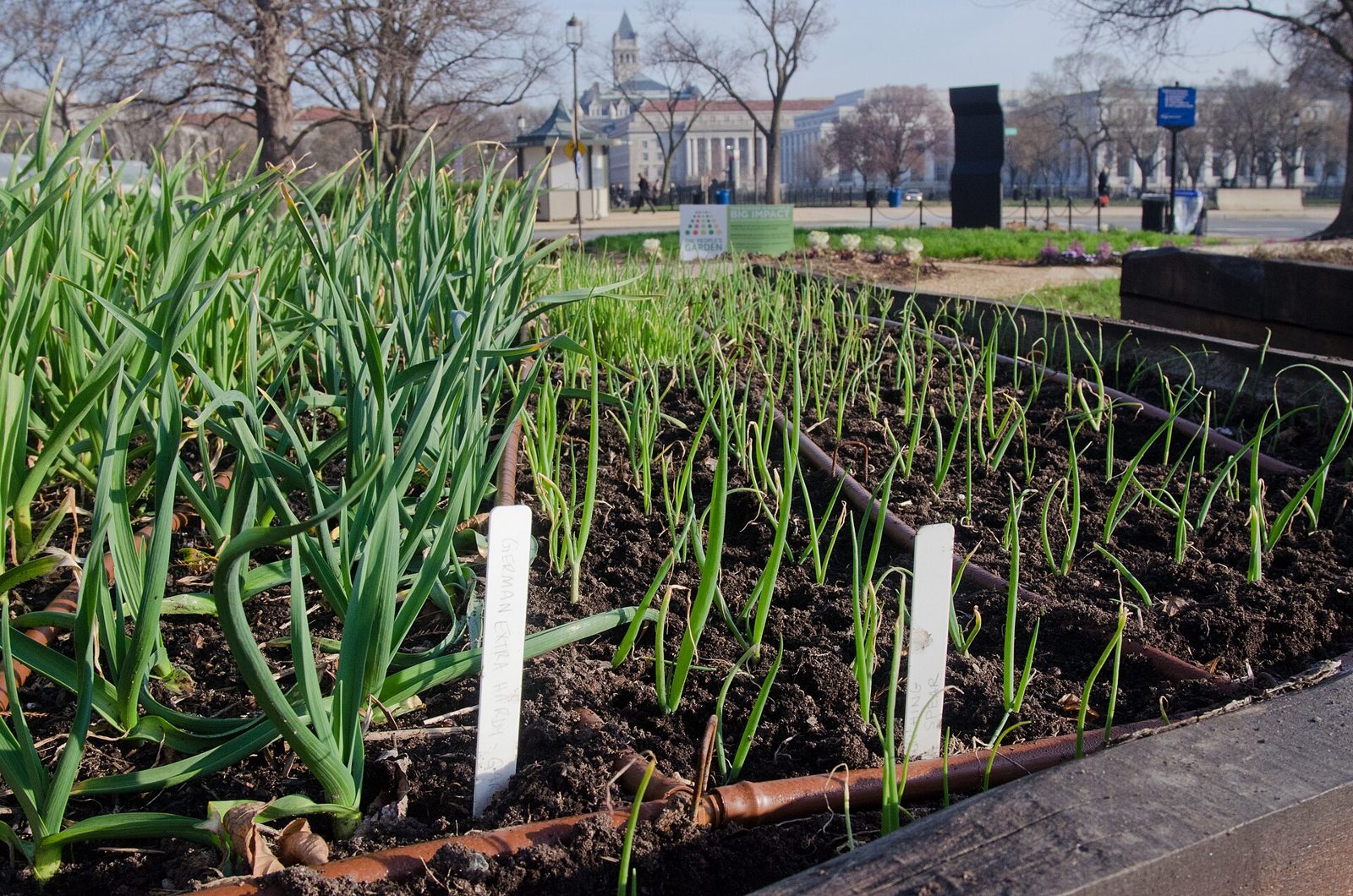
Garlic is a fall-planted crop: push cloves into the soil in autumn, let them sit through winter, and dig the bulbs the following summer. UGA says garlic needs up to 8 months to mature, so this is a crop you plan in October and eat in summer. The needs themselves are modest: full sun, well-drained soil rich in organic matter, and a cold winter. Everything on this page comes from university extension sources, and where they disagree we show both numbers rather than pick a winner.
- Sun
- Full sun
- Water
- Moderate
- Origin
- Asia
- Days to harvest
- Up to 8 months (UGA)
- Planting depth
- 1–1.5 in. (PSU) to 2–3 in. (Cornell)
- Spacing
- 4–6 in. in the row (Cornell) · 6 in. (UGA)
- Season
- Plant in fall · harvest the next summer
- USDA zones
- Not stated by our sources
When to plant garlic
Plant in the fall. Penn State says the cloves should go in early enough that a good root system develops before the ground freezes, and Clemson says shallots and garlic both grow best from a fall planting. The only calendar window our sources give is UGA’s: late September through November in Georgia. For gardens outside Georgia, work backwards from your own first-freeze date, and read our garlic planting time guide for the reasoning.
There is a biological reason for the fall rule. UGA says garlic cloves need 6–8 weeks of cool weather after planting, below 40°F (4°C), to go through vernalization, the chilling that prepares the plant to make a bulb. Bulb growth itself is favored by long days and warm temperatures, so the bulb swells the following spring and early summer.
| Zones | January | February | March | April | May | June | July | August | September | October | November | December |
|---|---|---|---|---|---|---|---|---|---|---|---|---|
| Zone Georgia (UGA): direct sow Sep–Nov; harvest May–Jul | May: harvest | June: harvest | July: harvest | September: direct sow | October: direct sow | November: direct sow |
- Direct sow
- Harvest
Our sources give no month ranges for colder regions, so we have not drawn rows we cannot support. In a freezing climate the rule is the Penn State one: roots first, freeze second.
A year in the life of a garlic bed
Garlic spends most of its life out of sight, which surprises first-timers. Here is the sequence our sources describe.
| Stage | What happens | Source |
|---|---|---|
| Fall planting | Cloves go in early enough to form a good root system before the ground freezes. | Penn State |
| Winter | Cloves need 6–8 weeks of cool weather, below 40°F (4°C), to undergo vernalization. The plant is extremely frost hardy. | UGA |
| Spring | Water one inch (2.5 cm) per week in dry periods through mid-June to ensure good sizing. | Penn State |
| Late spring to summer | Long days and warm temperatures favor bulb growth and development. | UGA |
| Harvest | 40–60 percent of the leaves have yellowed. Up to 8 months from planting. | Penn State, UGA |
| Cure | About three weeks, until the outer two leaves are dry. | Penn State |
Why planting depth varies so much
If you have read three garlic guides and got three different depths, you are not imagining it. Penn State says most garlic cultivars are planted 1–1.5 in. (2.5–4 cm) deep. UGA says 1–3 in. (2.5–8 cm). Cornell says about 2–3 in. (5–8 cm), tips up. These are regional extension recommendations from Pennsylvania, Georgia and New York, and none of them explains the gap. A clove set 2 in. (5 cm) deep sits inside the UGA and Cornell ranges but just below Penn State’s, so if you want a figure that no source calls wrong, that is a reasonable middle, though it is our reading, not a sourced rule. Spacing is similarly spread, from 4–6 in. (10–15 cm) in the row at Cornell to 6 in. (15 cm) at UGA, with rows 12–24 in. (30–60 cm) apart.
Hardneck and softneck garlic
Garlic comes in two groups, and the choice affects flavor, storage and whether you get a scape.
- Hardneck garlic (subspecies ophioscorodon) sends up an elongated flower stalk called a scape. Penn State says the bulbs may be purple, purple striped or white.
- Softneck garlic (subspecies sativum) does not typically make a scape and, per Cornell, is best for long-term storage and braiding.
| Variety | Best for | Days to harvest | Flavor / use | Notes |
|---|---|---|---|---|
| Hardneck | Roja, German Red, Valencia, Continental, Creole (Penn State's examples) | Not stated | Makes a scape; bulbs may be purple, purple striped or white | Subspecies ophioscorodon |
| Softneck | California Early, California Late (Penn State's examples) | Not stated | No scape; best for long-term storage and braiding | Subspecies sativum |
Our sources name these varieties but give no flavor, heat or days-to-harvest data for them, so the table says “not stated” rather than guess. The garlic varieties guide explains the two types in more detail.
How to plant garlic
- Pick a sunny, drained bed. UGA recommends full sun and a well-drained bed with organic matter worked in. Penn State says soil rich in organic matter with a pH of 6.0–6.5 is best. Poorly drained soil invites Fusarium bulb rot.
- Break the bulb into cloves. Garlic does not produce true seed, so you plant cloves. UGA says to choose only the larger outer cloves of your best bulbs.
- Plant them tip up. Cornell says to set each clove with the pointed tip facing up. Depth varies by source: 1–1.5 in. (2.5–4 cm) at Penn State, 1–3 in. (2.5–8 cm) at UGA, 2–3 in. (5–8 cm) at Cornell.
- Space them out. UGA says 6 in. (15 cm) apart with rows 12–14 in. (30–35 cm) apart. Cornell says 4–6 in. (10–15 cm) in the row and 12–24 in. (30–60 cm) between rows.
- Water and wait. Water to settle the cloves. Roots form first, then the cold does its work. Nothing much happens above ground until the weather warms.
Garlic care
Sun
Water
Soil
Cold
Our sources do not cover container growing or starting garlic indoors, so we leave those out rather than invent advice.
Common garlic problems
Harvesting and curing garlic
Penn State says garlic is ready to harvest when 40–60 percent of the leaves have yellowed. Harvest later than that and the bulbs begin to split open.
After digging, cure the bulbs on racks out of direct sun for about three weeks, or until the outer two leaves are completely dry (Penn State). Store cured bulbs at 32–35°F (0–2°C) and 65–75 percent relative humidity. Our garlic harvesting guide covers the steps in order.
If you have room for a second allium, shallots are planted by the same fall-or-spring logic; see our shallot growing guide.
Ginger is the other kitchen staple we cover, on the opposite calendar: it is planted in spring, grown warm and brought indoors before frost. See our ginger growing guide, or the spice garden collection for how the two fit together.
Frequently asked questions
When is the best time to plant garlic?
In the fall. Penn State says to set cloves early enough that a good root system forms before the ground freezes, and Clemson says garlic grows best from a fall planting. In Georgia, UGA puts the window at late September through November.
How deep and how far apart do you plant garlic cloves?
Extension sources disagree on depth. Penn State says 1–1.5 in. (2.5–4 cm), UGA says 1–3 in. (2.5–8 cm) and Cornell says 2–3 in. (5–8 cm), always tips up. Spacing runs from 4–6 in. (10–15 cm) in the row at Cornell to 6 in. (15 cm) at UGA, with rows 12–24 in. (30–60 cm) apart.
Can I plant garlic from the grocery store?
You can plant any garlic clove, because garlic is grown from cloves and does not make true seed. The sources we used advise picking the larger outer cloves of your best bulbs. They do not address supermarket garlic, so treat it as an experiment.
How do I know when garlic is ready to harvest?
Penn State says garlic is ready when 40–60 percent of the leaves have yellowed. Wait too long and the bulbs start to split open. Dig a test bulb a week before you expect to harvest.
How long does garlic take to grow?
UGA says garlic needs up to 8 months to mature, so a fall planting is harvested the following summer. The plant is extremely frost hardy and needs 6–8 weeks of cool weather (below 40°F, 4°C) after planting to form bulbs.
Sources
- Garlic Production, Penn State Extension
- Garlic Production for the Gardener, University of Georgia Extension
- Plan on Garlic This Fall, Cornell CALS Horticulture Section
- Onion, Leek, Shallot and Garlic, Clemson Home & Garden Information Center
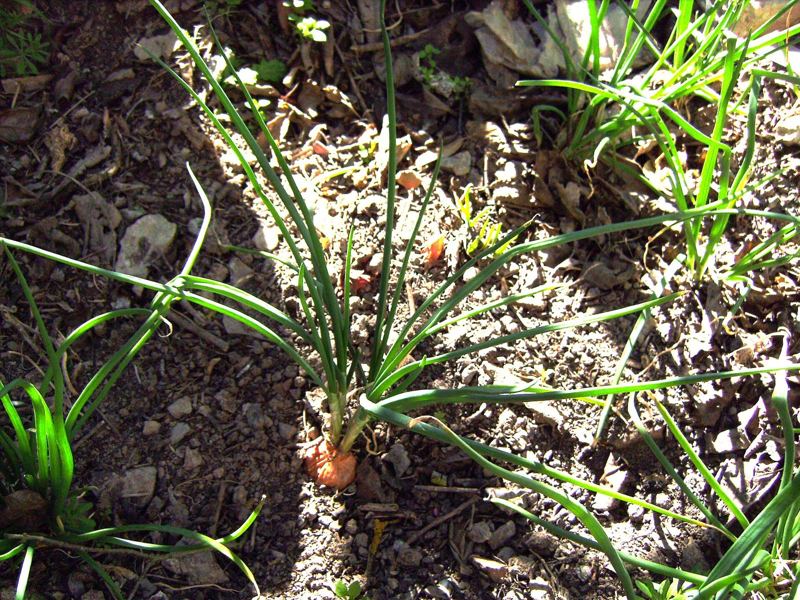 Shallot
 Garlic Chives
 Bunching Onion
 Chinese Leek