
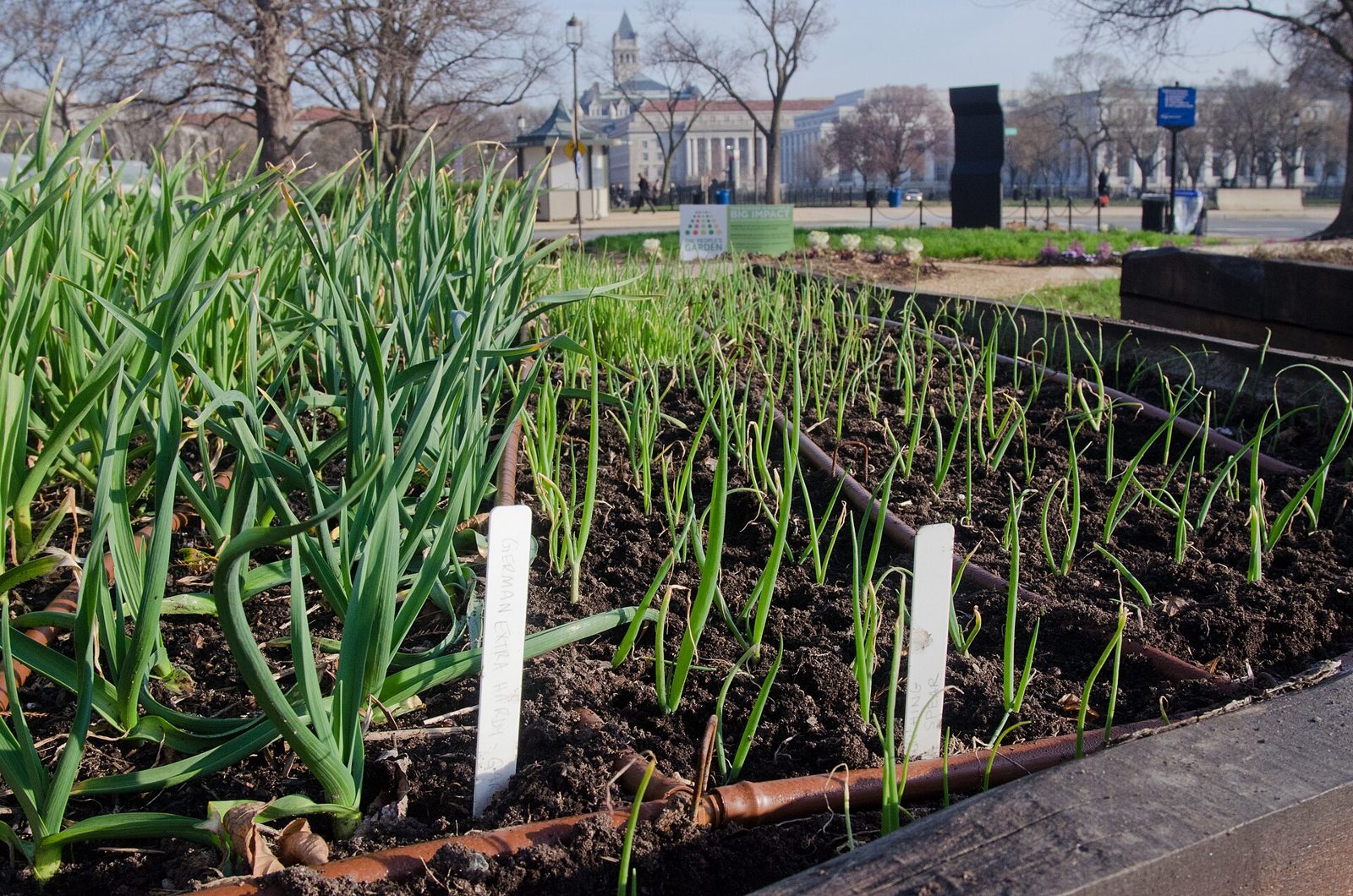
Garlic comes in two types: hardneck, which sends up a flower stalk called a scape, and softneck, which does not and stores best. Cornell puts it plainly: softneck types don’t typically produce a scape and are best for long-term storage and braiding. Everything else, including how to plant and when, is the same for both. Our garlic growing guide covers the rest; this page is the type comparison.
We should be upfront about the limits. Penn State names the varieties below, but our sources give no days to harvest, flavor notes or hardiness ratings for individual varieties. The table shows what is documented and says “not stated” where it is not. We would rather leave a cell honest than fill it with a confident guess.
Hardneck vs softneck at a glance
| Variety | Best for | Days to harvest | Flavor / use | Notes |
|---|---|---|---|---|
| Hardneck | Roja, German Red, Valencia, Continental, Creole | Not stated | Makes a scape; bulbs may be purple, purple striped or white | Subspecies ophioscorodon, also called topset garlic |
| Softneck | California Early, California Late | Not stated | No scape in the usual case; best for long-term storage and braiding | Subspecies sativum, also called artichoke garlic |
Penn State divides garlic into two subspecies: ophioscorodon (hardneck or topset garlic) and sativum (softneck or artichoke garlic). Hardneck garlic produces elongated flower stalks, technically called scapes.
Hardneck garlic
Hardnecks are the garlic that makes a stalk. Penn State says the bulbs may be purple, purple striped or white, and lists these varieties as examples:
- Roja
- German Red
- Valencia
- Continental
- Creole
Because the scape is a flower stalk, hardneck plants put visible effort above ground that softnecks do not. That is the easiest way to tell the two types apart in a bed.
Softneck garlic
Softnecks are the garlic that does not typically make a scape. Cornell says they are best for long-term storage and braiding. Penn State says the types are best represented by two varieties: California Early and California Late.
If you want bulbs to keep through winter and perhaps hang in a braid, the sources point you here.
What each source says
- Penn State divides garlic into the two subspecies, says hardnecks produce elongated flower stalks, and names the example varieties in the table.
- Cornell says softneck types don’t typically produce a scape and are best for long-term storage and braiding.
- UGA does not split the types. It covers the garlic plant as a whole, including the cold period after planting and the need for long days and warm temperatures to form bulbs.
That is the full extent of what these sources say about type differences, which is why we keep the claims short.
How to choose
| If you want… | Choose | Why (source) |
|---|---|---|
| Garlic to store a long time | Softneck | Best for long-term storage and braiding (Cornell) |
| Garlic to braid | Softneck | Same quote |
| A scape on the plant | Hardneck | Hardneck garlic produces elongated flower stalks (Penn State) |
| Purple or purple-striped bulbs | Hardneck | Hardneck may be purple, purple striped or white (Penn State) |
What the sources do not tell us is which varieties suit which zone. Penn State’s names come from an eastern United States production guide, UGA’s from a Georgia one, and neither rates hardiness variety by variety. If you garden somewhere with a hard winter, ask your state extension office which varieties are grown locally.
What is the same for every type
Both types are grown from cloves rather than seed, and UGA says to plant the larger outer cloves of your best bulbs. Both are planted in the fall, early enough for roots to form before the ground freezes (Penn State). UGA calls the plant extremely frost hardy and says it needs up to 8 months to mature.
Plant depth is 1–1.5 in. (2.5–4 cm) at Penn State, 1–3 in. (2.5–8 cm) at UGA and 2–3 in. (5–8 cm) at Cornell. Our when to plant garlic page covers dates and spacing, and the garlic harvesting guide covers digging and curing.
A note on buying
Because garlic is propagated by cloves, the variety you plant is the variety you get. Pick a type for the use you have in mind, then plant the large outer cloves of the best bulbs. Shallot growers face a similar choice between clustering bulbs; see our shallot guide.
Frequently asked questions
What is the difference between hardneck and softneck garlic?
Hardneck garlic (ophioscorodon) produces an elongated flower stalk called a scape. Softneck garlic (sativum) does not typically produce a scape and is best for long-term storage and braiding, according to Cornell and Penn State.
Which type of garlic stores longest?
Softneck. Cornell says softneck types are best for long-term storage and braiding. Our sources give no storage times for hardneck types.
Which garlic varieties are hardneck?
Penn State names Roja, German Red, Valencia, Continental and Creole as examples of hardneck varieties, which may be purple, purple striped or white.
Which garlic varieties are softneck?
Penn State names California Early and California Late as the best-known softneck examples.
Sources
- Garlic Production, Penn State Extension
- Plan on Garlic This Fall, Cornell CALS Horticulture Section
- Garlic Production for the Gardener, University of Georgia Extension