
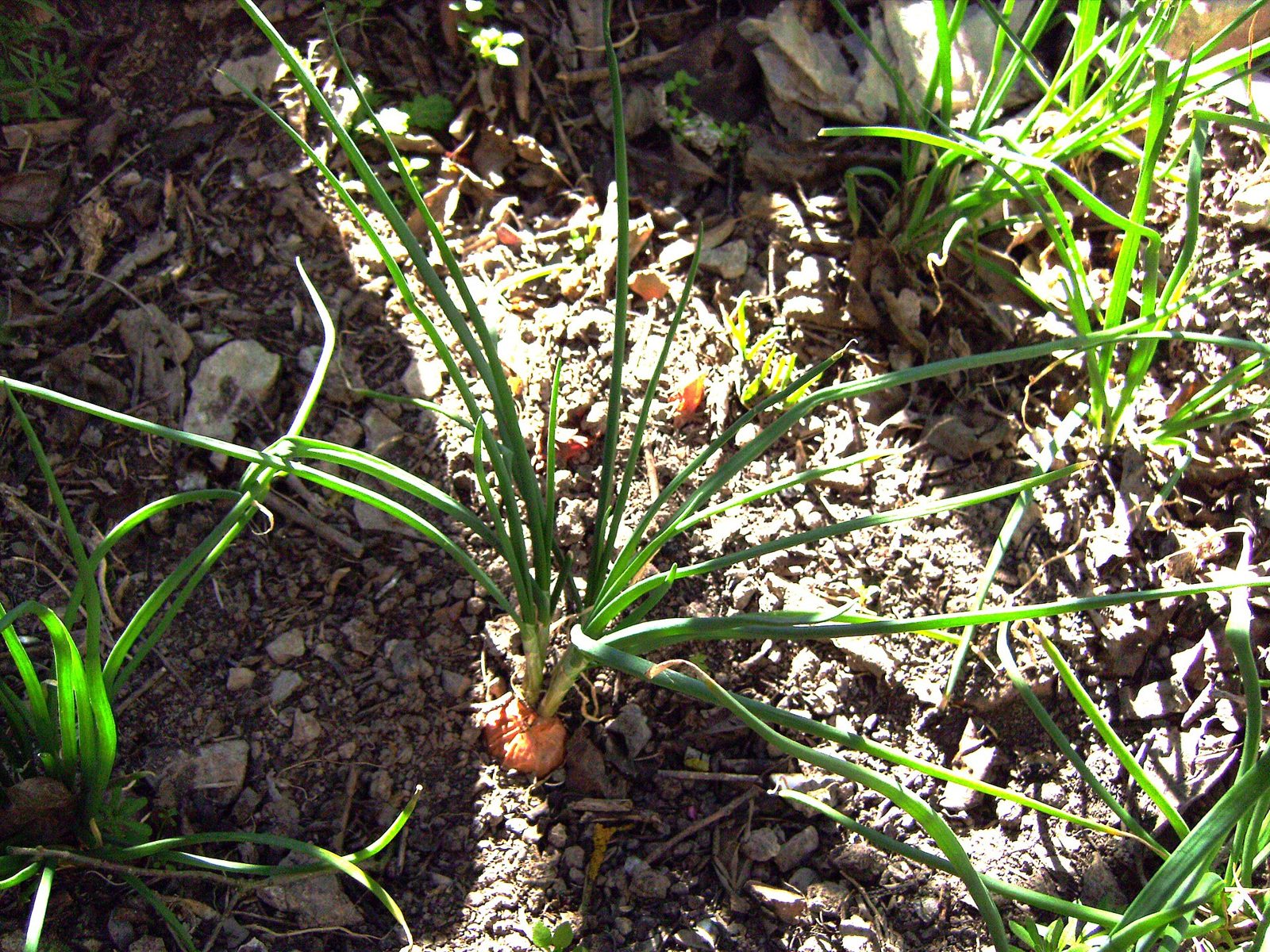
Shallots are grown from bulb sets: plant individual bulbs, called sets, in spring as soon as the soil can be worked, or in fall where winters allow, and each one turns into a cluster. You can eat the green tops about 50–60 days after planting, or wait until the tops fall over in summer and cure dry bulbs that keep for six months or longer. They are close cousins of garlic and onions and share their needs: sun, drained soil and steady moisture. The advice below is from five university extension services, and where they differ we say so.
- Sun
- Sunny site
- Water
- Moderate
- Days to harvest
- 60–75 days (VT) · green tops 50–60 days (USU)
- Origin
- Asia
- Planting depth
- 1–2 in. (USU, VT) · 1–1.5 in. (Arkansas)
- Spacing
- 3–6 in. in the row (USU) · 6–8 in. (Clemson)
- Season
- Cool season, 55–75°F (VT) · spring or fall
- USDA zones
- Not stated by our sources
When to plant shallots
You have two windows, and which one is better depends on your winters.
- Spring. Utah State and Virginia Tech both say to plant as soon as the ground can be worked. Arkansas Extension says planting in February, as soon as the soil can be tilled, gives the best yields.
- Fall. Clemson says shallots and garlic both grow best from a fall planting. Utah State says sets can go in after the first frost for a late-spring harvest, and Virginia Tech says warmer climates plant in fall for winter and spring harvest. In the southern half of Arkansas, late October works.
If you garden in zone 4 or 5 and plant in fall, Utah State advises protecting the bulbs with frost cloth or mulch, because very cold winters reduce yield. Details for both windows are in our shallot planting time guide.
| Zones | January | February | March | April | May | June | July | August | September | October | November | December |
|---|---|---|---|---|---|---|---|---|---|---|---|---|
| Zone Spring sets (Arkansas): direct sow Feb; harvest Jul–Aug | February: direct sow | July: harvest | August: harvest | |||||||||
| Zone Fall sets (S. Arkansas): direct sow Oct; harvest May–Jun | May: harvest | June: harvest | October: direct sow |
- Direct sow
- Harvest
Shallot varieties
Utah State lists French Red, Gray Griselle and Dutch Yellow as common varieties and says French Red is the most commonly sold. Seed-grown types are a separate group.
| Variety | Best for | Days to harvest | Flavor / use | Notes |
|---|---|---|---|---|
| French Red | Sets · most common variety (Utah State) | Varies by variety (USU) | Not stated | Named by Utah State |
| Gray Griselle | Sets (Utah State) | Varies by variety (USU) | Not stated | Named by Utah State |
| Dutch Yellow | Sets (Utah State) | Varies by variety (USU) | Not stated | Named by Utah State |
| Matador | Growing from seed (Arkansas) | Not stated | Long- to mid-day French type, reddish-brown thick skins, round | Forms few clusters; excellent keeper; easy from seed (Arkansas) |
| Prisma, Ambition | Growing from seed (Arkansas) | Not stated | Not stated | Seed-grown hybrids named by Arkansas |
Sets or seed?
Most shallots are grown from sets. Utah State says shallots are generally planted as bulb sets but can also be planted as seed, which begins to emerge 10–14 days after planting. A planted set makes a cluster. Arkansas Extension says shallots produce a cluster of bulbs from a single planted bulb, and Virginia Tech says to divide any clumps you buy into individual sets first.
Seed is a different route with a different clock. Arkansas Extension says seed-grown shallots respond to day length and need planting early enough in spring that the lengthening days of summer trigger bulb formation. Its examples are hybrids such as Matador, Prisma and Ambition. That is why seed is a spring job, while sets also have a fall window.
One more point in favor of sets: Utah State says properly stored shallot bulbs can be replanted in the spring, so a harvest can seed the following year’s bed.
How spacing shapes the crop
Spacing is a choice with consequences. Utah State says high density planting results in smaller, single bulbs, while wide spacing results in bulb clusters. The recommended in-row distances run from 3–4 in. (8–10 cm) at Arkansas Extension to 6–8 in. (15–20 cm) at Clemson. If you want many small bulbs, go tight; if you want clumps, give them room.
How to plant shallots
- Prepare a rich, loose bed. Virginia Tech says shallots like a rich, loose soil and to mix plenty of compost or other organic matter into the bed before planting. Utah State says they grow in all soil types provided the soil is rich in organic matter, well drained, moist and fertile.
- Separate the sets. If shallots for planting are sold in clumps, divide them into individual sets before planting (Virginia Tech).
- Plant them pointed end up. Virginia Tech says the tip should be just below the soil line or barely poking through. Depth is 1–2 in. (2.5–5 cm) at Utah State, Virginia Tech and Clemson, or 1–1.5 in. (2.5–4 cm) at Arkansas Extension. Virginia Tech warns that planting too deeply can cause bulb rot.
- Choose a spacing for the result you want. Utah State says 3–6 in. (8–15 cm) in rows 12–18 in. (30–45 cm) apart. Virginia Tech says 4–6 in. (10–15 cm) by 12–18 in. Clemson says 6–8 in. (15–20 cm) in the row, and Arkansas says 3–4 in. (8–10 cm) with 12–24 in. (30–60 cm) between rows. Utah State adds that high density gives smaller single bulbs and wide spacing gives clusters.
- Protect fall plantings in cold zones. Utah State advises frost cloth or mulch for fall-planted bulbs in zones 4 or 5.
Shallot care
Water
Soil
Temperature
Fertilizer
Our sources do not cover growing shallots in containers or starting them indoors, so we leave those out.
Common shallot problems
Harvesting and storing shallots
For green shallots, Virginia Tech says to harvest when the tops are 6–8 in. (15–20 cm) tall, about 6 weeks after planting. Utah State says 50–60 days. For dry bulbs, harvest after the tops of the plants fall over (Utah State). Virginia Tech adds that the bulbs should be 1–1.5 in. (2.5–4 cm) across, usually in mid- to late summer.
Cure the bulbs 1–2 weeks in a warm, dry place until the skins are papery (Utah State, Iowa State; Virginia Tech says about a week), trim the tops and store them in a cool, dry area at 32–40°F (0–4°C) and 60–70 percent relative humidity. Properly cured and stored, they keep six months or longer. Our shallot harvesting guide goes through each step.
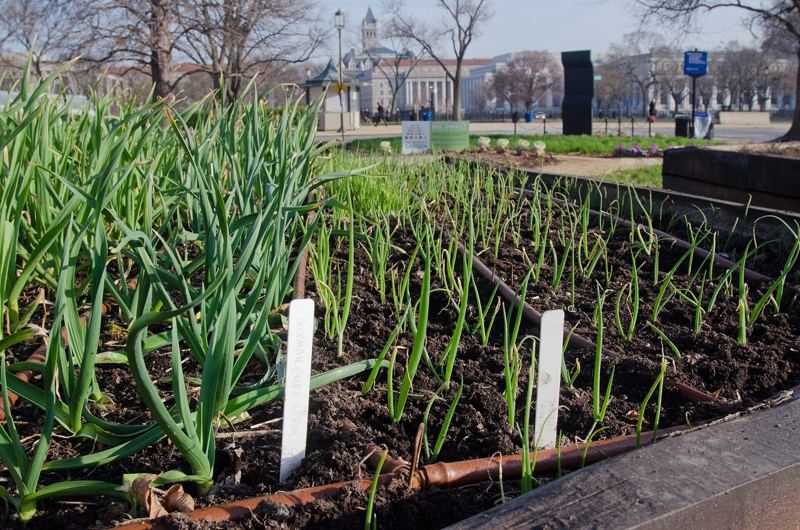
Garlic is the natural companion: it is also fall-planted, and our garlic growing guide covers it from clove to cured bulb.
Frequently asked questions
Can you grow shallots from a store-bought shallot?
Utah State says properly stored shallot bulbs can be replanted in the spring, and each planted bulb makes a cluster. Our sources do not address supermarket shallots specifically, so treat that as an experiment.
How long do shallots take to grow?
Virginia Tech gives 60–75 days to maturity. Utah State says green tops can be harvested about 50–60 days after planting. Dry bulbs come at the end of the season once the tops die down (Clemson), usually mid- to late summer (Virginia Tech), or late spring from a fall planting (Utah State).
Do shallots grow in clusters?
Yes. Arkansas Extension says shallots produce a cluster of bulbs from a single planted bulb. Utah State says tight spacing gives smaller single bulbs while wide spacing gives clusters.
How should I store shallots?
Cure them for 1–2 weeks in a warm, dry place until the skins are papery, trim the tops, then store in mesh bags at 32–40°F (0–4°C) and 60–70 percent humidity. Iowa State and Virginia Tech say they keep six months or longer.
Can shallots be grown from seed?
Yes. Utah State says shallots are generally planted as bulb sets but can be planted as seed, which emerges 10–14 days after planting. Arkansas says seed-grown shallots need planting early enough in spring to respond to lengthening days, and names hybrids such as Matador, Prisma and Ambition.
Sources
- How to Grow Shallots in Your Garden, Utah State University Extension
- Home Gardening Series: Shallots (FSA6095), University of Arkansas Cooperative Extension
- Onions, Garlic, and Shallots (SPES-788), Virginia Cooperative Extension
- Onion, Leek, Shallot and Garlic, Clemson Home & Garden Information Center
- How do I harvest, dry, and store shallots?, Iowa State University Extension
 Garlic
 Bunching Onion
 Chinese Leek
 Garlic Chives