
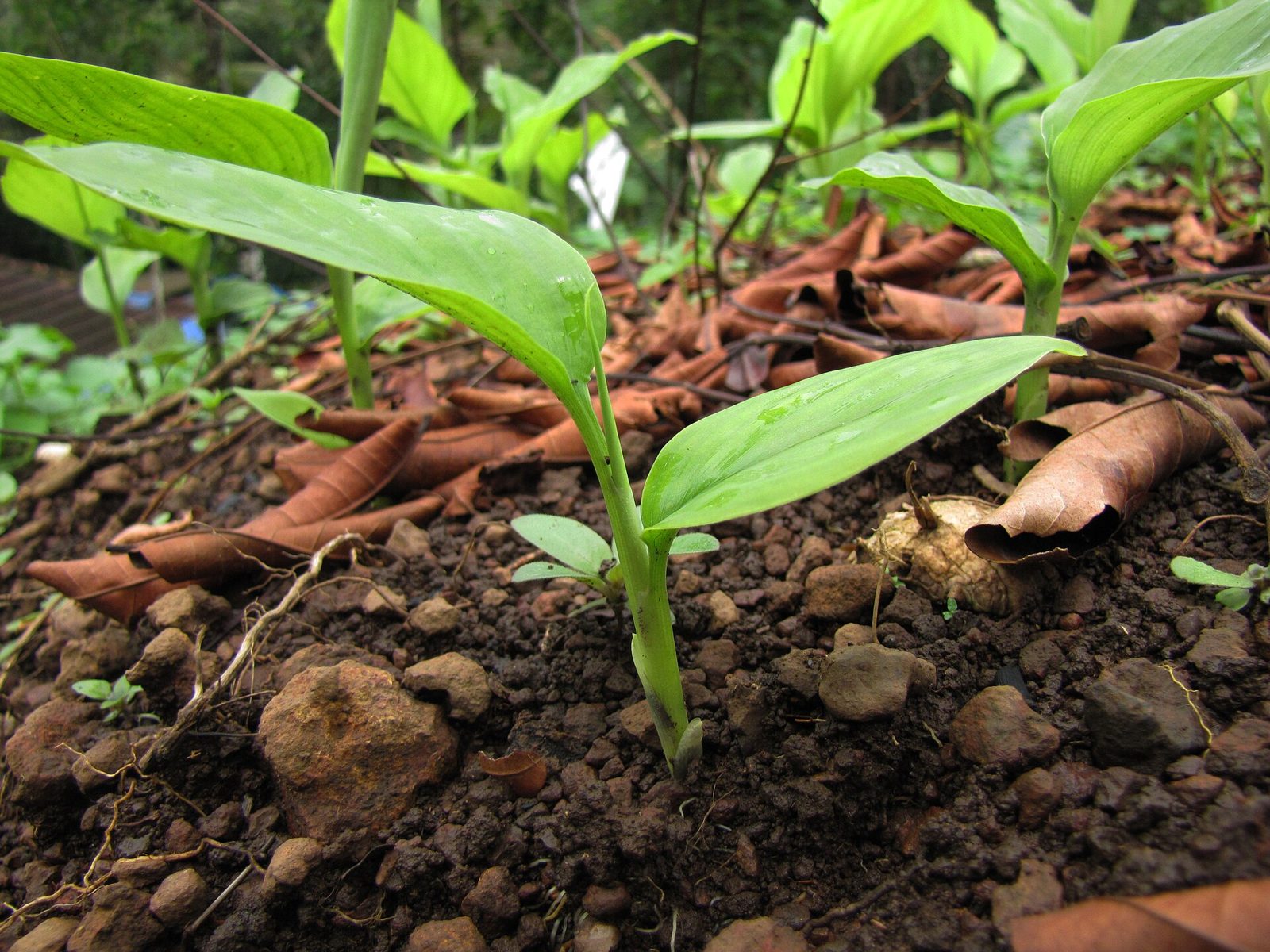
You can grow turmeric in the US, but only some regions can keep it going all year. Penn State Extension says it is a perennial in hot, humid regions, USDA zones 8 to 11, and can be grown as an annual in the ground or in a container elsewhere. Plant plump rhizome pieces in spring in warm, well-drained, fertile soil, water it generously and wait. The crop is the rhizome, and it is ready when the leaves dry out and wilt in the fall. It is slow and thirsty, not difficult.
- USDA zones
- Perennial in 8–11 · annual or pot elsewhere
- Water
- 1.5–2 in (4–5 cm) a week
- Origin
- Asia
- Container friendly
- Yes
- Sun
- Full sun (CTAHR) or morning sun, afternoon shade (Penn State)
- Best temperature
- 68–86°F (20–30°C)
- Planting depth
- 3–4 in (8–10 cm), up to 6 in
- Seed pieces
- 1–1.5 in (2.5–4 cm), one bud or more
- Harvest
- When leaves dry and wilt in fall
Why grow turmeric
Turmeric is the source of the spice used in cooking. Penn State explains that the rhizomes are the edible part of the plant and are boiled, dried, peeled and then ground to produce it. Growing it yourself gives you fresh rhizomes, and a large, handsome tropical plant that Penn State describes as growing 3 to 4 feet (0.9–1.2 m) high and wide. The honest picture is that turmeric is a long-season, warm-climate crop, so expect effort and patience.
Where can you grow turmeric?
Penn State: perennial in USDA zones 8 to 11. In cooler areas, it can be grown as an annual, in the ground or in a container. The University of Hawaii (CTAHR) guide is aimed at commercial growers in a tropical climate, so its numbers apply most directly to Hawaii and similar conditions. CTAHR gives 68 to 86°F (20–30°C) as the temperature range at which turmeric grows best. The sources give no frost tolerance, so plan to protect it from freezing: in a pot, bring it indoors; in the ground outside zones 8 to 11, expect it to behave as an annual. Our turmeric in containers guide covers pots in detail.
Turmeric varieties
Our sources name only cultivars grown in Hawaii. CTAHR says ’Ōlena is the local Hawaiian turmeric, brought to the islands by early Polynesian voyagers, and lists introduced cultivars including ‘BKK’, ‘Hawaiian Red’ and ‘Indira/Yellow’. It gives no days to harvest, flavor or yield figures for any of them, so the table is a list, not a ranking.
| Variety | Best for | Origin | Grown in | What CTAHR says |
|---|---|---|---|---|
| 'Ōlena | Hawaii | Local Hawaiian turmeric | Hawaii | Brought to the islands by early Polynesian voyagers |
| 'BKK' | Hawaii | Introduced cultivar | Hawaii | Listed among introduced cultivars |
| 'Hawaiian Red' | Hawaii | Introduced cultivar | Hawaii | Listed among introduced cultivars |
| 'Indira/Yellow' | Hawaii | Introduced cultivar | Hawaii | Listed among introduced cultivars |
None of these is sold widely to home gardeners as a named line, and the sources do not say where to buy them, so choose healthy rhizomes from a source you trust. Whatever the name, plant rhizome pieces that are plump and have buds. For how, see growing turmeric from grocery rhizomes.
A year in the life of a turmeric plant
CTAHR compares turmeric growth to taro: considerable leafy growth during the first five months, then the foliage declines and the rhizomes enlarge below ground. That is why the harvest sign is dying leaves. A season therefore runs like this:
- Spring: plant rhizome pieces (Penn State), or March to June in Hawaii (CTAHR).
- First five months: leaves and stems grow vigorously, so keep the plant watered. CTAHR gives water guidance for the first 8 months.
- Late in the season: leaves begin to dry out and wilt while the rhizomes bulk up.
- Fall in cooler climates, January to March in Hawaii: dig the rhizomes.
Turmeric planting calendar
| Zones | January | February | March | April | May | June | July | August | September | October | November | December |
|---|---|---|---|---|---|---|---|---|---|---|---|---|
| Zone Hawaii: direct sow Mar–Jun; harvest Jan–Mar | January: harvest | February: harvest | March: direct sow, harvest | April: direct sow | May: direct sow | June: direct sow | ||||||
| Zone Spring / fall: direct sow Mar–May; harvest Sep–Nov | March: direct sow | April: direct sow | May: direct sow | September: harvest | October: harvest | November: harvest |
- Direct sow
- Harvest
The two rows show how different climates behave. CTAHR describes about five months of vegetative growth followed by foliage decline while rhizomes enlarge, so in Hawaii the crop is dug from January to March. Penn State’s cold-season guidance is the opposite: dig in fall when the leaves wilt. Do not mix them up: follow the row that fits your climate.
In the ground or in a pot?
In zones 8 to 11, the ground is possible and the plant is perennial (Penn State). Everywhere else, you have two choices: an annual in the ground, or a container, which Penn State also allows. Pots have a catch: Penn State warns that the rhizomes get thick and the plant may need repotting frequently, so start with a roomy pot and watch for crowding. In the ground, give the plant a mounded bed if your soil is heavy clay or drains poorly (CTAHR).
How to plant turmeric
- Choose seed pieces. Penn State says to replant 1- to 1½-inch (2.5–4 cm) rhizomes with at least one bud, or “eye,” in spring. Pieces of at least 1 oz (30 g) are ideal, since seed-piece size and yield are positively correlated (Penn State). Mother corms are preferred because they give the highest yields.
- Prepare the bed or pot. CTAHR says turmeric grows best in well-drained, fertile soil and benefits from bed preparation. In heavy clay or poorly drained soil, it strongly recommends mounded beds.
- Plant 3 to 4 inches deep. CTAHR plants commercially at 3 to 4 inches (8–10 cm), and up to 6 inches (15 cm) deep.
- Water in and keep it moist. CTAHR describes about 1.5 to 2 inches (4–5 cm) of water a week, with irrigation every 5 to 7 days, through the first 8 months of growth.
Turmeric care
Water
Sun
Soil
Spacing
Which sun advice should you follow? The two sources are not contradictory so much as written for different places. CTAHR is describing Hawaii and says full sun suits turmeric best at 68 to 86°F (20–30°C), with up to 40 percent shade tolerated. Penn State, writing for a home garden, prefers morning sun and afternoon shade. If your summers stay within that temperature band, full sun is fine. If your hottest weeks go above it, give the plant afternoon shade, which both sources can support.
Starting from the grocery store. Turmeric rhizomes sold as food can be planted as seed pieces. The sources do not discuss treated or untreated store rhizomes, so choose pieces that are plump and have visible buds, and read our grocery rhizome guide before you plant.
Common turmeric problems
All three are documented in Hawaii. The sources do not say how common they are in other states.
Harvesting turmeric
Penn State says to dig up and harvest the rhizomes in the fall, when the leaves begin to dry out and wilt. In Hawaii, harvest is typically January to March, and some producers begin at early foliage die-back to reach market sooner, although some growers have reported bitterness in young turmeric harvested early. Store rhizomes in a cool, dry place out of the sun, at 50 to 60°F (10–16°C), and never below 50°F. See our turmeric harvesting guide for the full routine.
What our sources do not tell you
Neither source gives a day count to harvest, a frost tolerance, a start-indoors date, a soil pH number or a pot size. CTAHR’s guide is a commercial one, written for Hawaii. Treat its irrigation and depth figures as a benchmark, not a garden rule.
Grow these next
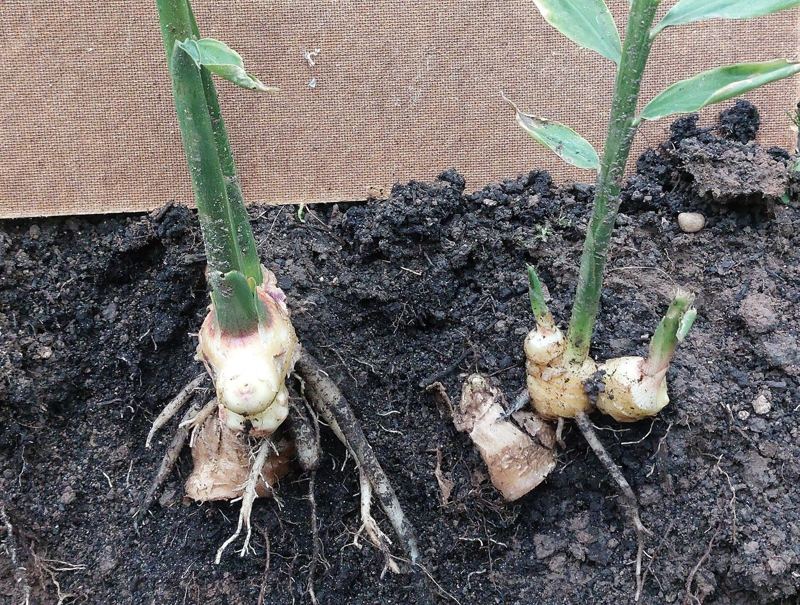
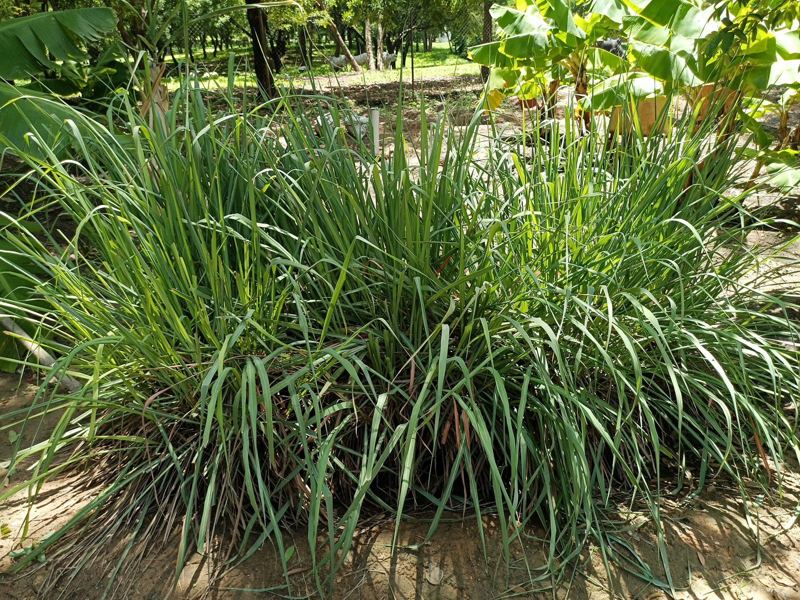
Turmeric is grown from rhizome pieces, as ginger is, and suits similar pots and warm spots: see our ginger growing guide and lemongrass guide for the other warm-season herbs in this collection.
Frequently asked questions
What zones can you grow turmeric in?
Penn State Extension says turmeric is a perennial in hot and humid regions, USDA Plant Hardiness Zones 8 to 11. In other areas it can be grown as an annual in the ground or in a container.
How long does turmeric take to grow?
No fetched source gives a day count. The University of Hawaii (CTAHR) says turmeric puts on considerable leafy growth in its first five months, then the foliage declines while the rhizomes enlarge underground. In Hawaii it is planted in March to June and harvested January to March, and Penn State says to dig in the fall when the leaves dry out and wilt.
Does turmeric need full sun?
Sources differ. CTAHR says turmeric grows best in full sun at 68 to 86°F (20–30°C) but tolerates up to 40 percent shade. Penn State says it prefers full sun in the morning and shade in the afternoon.
Can I grow turmeric in a pot?
Yes. Penn State says it can be grown as an annual in the ground or in a container. The rhizomes get thick, so the plant may need to be repotted frequently.
Can I plant grocery-store turmeric?
Penn State describes planting 1 to 1½ inch (2.5–4 cm) rhizome pieces with at least one bud, or eye, in spring. It does not address store-bought turmeric specifically, so choose pieces that are plump and have visible buds.
Sources
- Hawai'i Turmeric Production Guidelines (VC-9), University of Hawaii CTAHR
- 2026 Herb of the Year, Turmeric, Penn State Extension
 Ginger
 Lemongrass
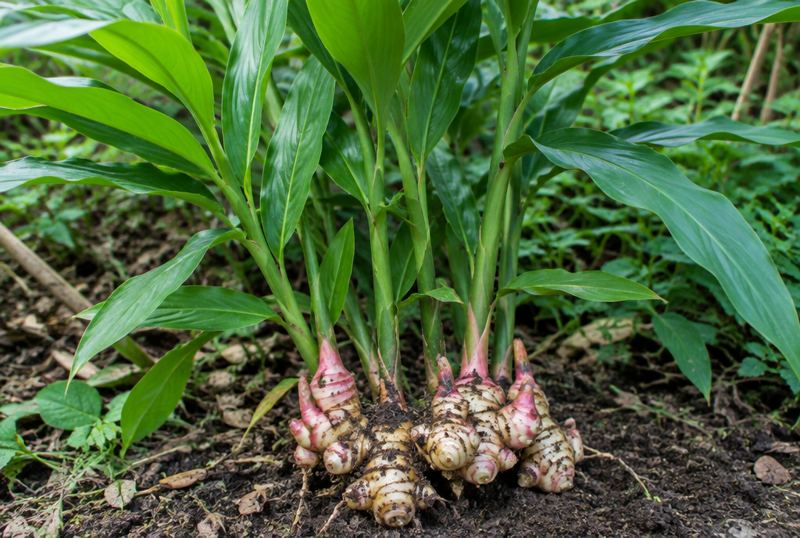 Galangal
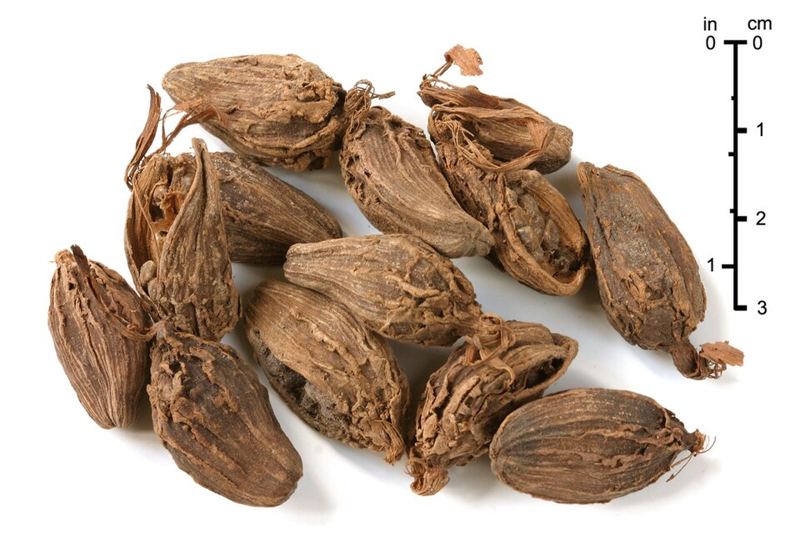 Cardamom