

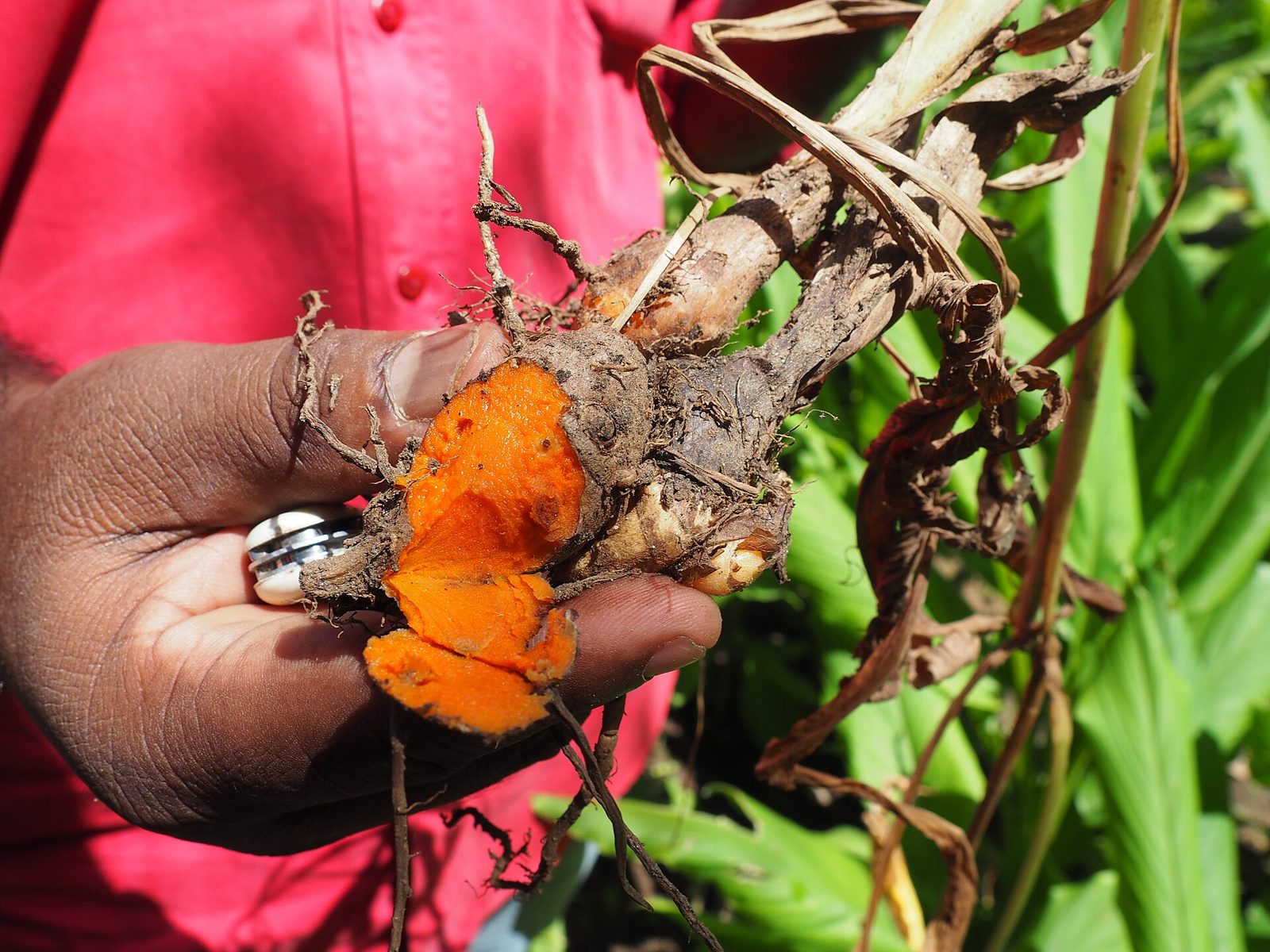
Turmeric is grown from rhizome pieces, so a plump rhizome with buds is exactly what you plant. Penn State says to replant rhizomes 1 to 1½ inches (2.5–4 cm) long that have at least one bud, or “eye,” in the spring, and CTAHR says to plant them 3 to 4 inches (8–10 cm) deep. Neither source mentions grocery-store turmeric, so we will say what is known, what is not, and how to give a store rhizome the best chance. This is a supporting guide to our full turmeric growing guide.
What to look for in a rhizome
Penn State’s advice has three parts that are easy to apply to a store rhizome:
- A bud. Each seed piece should have at least one bud, or eye.
- Some size. Pieces of at least 30 grams (1 ounce) are ideal, since seed-piece size and yield are positively correlated.
- The mother corm, if you can get it. Penn State says mother corms (the swollen base just below the shoot) are preferred because they give the highest yields, and they are generally less marketable than finger rhizomes. A grocery store usually sells the fingers, so do not worry if you cannot find one.
Choose firm, plump rhizomes that show small buds. The sources do not say whether supermarket turmeric has been treated with anything, as Texas A&M says of ginger, so we cannot say whether soaking helps. If a piece has failed to sprout after a long wait, try a different one.
How to plant a grocery-store turmeric rhizome
- Choose and cut your seed pieces. Look for pieces 1 to 1½ in (2.5–4 cm) long with at least one bud, ideally about 1 oz (30 g) or more (Penn State). A larger piece can be left whole.
- Wait for spring. Penn State says to replant in the spring. In Hawaii, planting normally occurs from March to June (CTAHR). Turmeric grows best at 68 to 86°F (20–30°C), so do not plant into cold soil.
- Prepare a well-drained, fertile spot. CTAHR says turmeric grows best in well-drained, fertile soil, and highly recommends mounded beds in heavy clay or poorly drained soil. Penn State describes rich, slightly acidic soil.
- Plant 3 to 4 inches deep. The CTAHR commercial figure is 3 to 4 inches (8–10 cm), and up to 6 inches (15 cm). For a pot, choose a roomy container, because the rhizomes get thick (Penn State).
- Water, and keep watering. CTAHR describes 1.5 to 2 inches (4–5 cm) a week for the first 8 months, applied every 5 to 7 days. Our container guide shows how to adapt this to a pot.
Where to put it
The sun advice is split. CTAHR says full sun, tolerating up to 40 percent shade, and Penn State says full sun in the morning and shade in the afternoon. In a mild climate, full sun is a good place to start. In a hot one, give it afternoon shade. In a container, it can sit where you can adjust the light, and our turmeric in containers guide covers pots.
If you plant in the ground, Penn State gives 6 to 12 feet (1.8–3.7 m) as the spacing in the ground, for plants that grow 3 to 4 feet (0.9–1.2 m) high and wide. CTAHR says spacing varies with equipment, harvest methods and weed management, since its guide is commercial. A single rhizome in a pot sidesteps the question.
What to expect after planting
Our sources give no sprouting time. What they do give is the plant’s pattern: CTAHR says considerable vegetative growth during the first five months, then a decline of foliage and enlargement of rhizomes below ground. Penn State says to dig in the fall, when the leaves begin to dry out and wilt. So the leaves come first, and the rhizomes are the late reward. Read the whole sequence in our turmeric harvesting guide.
What can go wrong
CTAHR says several pathogens have been observed on turmeric in Hawaii, including Pythium, Rhizoctonia and Fusarium, which all lead to rhizome rot. That is one more reason to start with a healthy, firm rhizome and well-drained soil. Bacterial wilt, caused by Ralstonia solanacearum, and root-knot nematode damage are also documented there. If you have grown ginger, the same care applies: see how to grow ginger from store-bought ginger for the parallel steps.
The short version
Pick a plump piece with a bud, plant it in spring 3 to 4 inches (8–10 cm) deep in well-drained, fertile soil, water it every 5 to 7 days and wait for the leaves to dry out and wilt in the fall. That is the whole method, and patience is the main ingredient.
Turmeric is one of four crops our guides start from grocery-store pieces, with ginger, lemongrass and sweet potato: see how to grow sweet potato slips or the regrow-from-kitchen-scraps collection.
Frequently asked questions
Can you grow turmeric from grocery-store turmeric?
You can plant turmeric rhizomes, which is how the crop is grown. Penn State says to replant 1- to 1½-inch (2.5–4 cm) rhizomes with at least one bud, or eye, in spring. It does not discuss store-bought rhizomes, so pick plump ones with visible buds.
How big should a turmeric seed piece be?
Penn State says seed pieces weighing at least 30 grams (1 ounce) are ideal, as seed piece size and yield are positively correlated.
How deep do you plant turmeric rhizomes?
CTAHR says that for commercial production in Hawaii, turmeric is generally planted 3 to 4 inches (8–10 cm) deep, although it can be as deep as 6 inches (15 cm).
When do you plant turmeric?
In the spring, according to Penn State. In Hawaii, CTAHR says planting normally occurs from March to June.
Sources
- 2026 Herb of the Year, Turmeric, Penn State Extension
- Hawai'i Turmeric Production Guidelines (VC-9), University of Hawaii CTAHR