Harvest garlic when 40–60 percent of the leaves have yellowed, cure the bulbs for about three weeks until the outer two leaves are completely dry, then store them cool at 32–35°F (0–2°C). That is Penn State’s schedule, and it is the one worth following. The timing matters more than any other step: bulbs left in the ground too long start to split open. This guide belongs to our garlic growing guide.
When to harvest garlic
Garlic that went in the ground in fall is ready the following summer. UGA says garlic requires up to 8 months to mature, so a clove planted in October is ready around June at the latest. Do not trust a date, though. Trust the leaves.
Penn State’s test: garlic is ready to harvest when 40–60 percent of the leaves have yellowed. Check as the season turns, because the same source says bulbs that are harvested too late will start to split open.
Penn State recommends one inch (2.5 cm) of water per week during dry periods through mid-June to ensure good sizing. That is guidance for the growing season; our sources do not say when to stop watering before harvest, so follow the weather.
How to harvest garlic
- Check the leaves. Count the yellowed leaves on a few plants. Wait for 40–60 percent, no more.
- Lift the bulbs. Our sources do not describe the digging technique, so we will not invent one. Loosen the soil beside the row and lift the whole plant, bulb included.
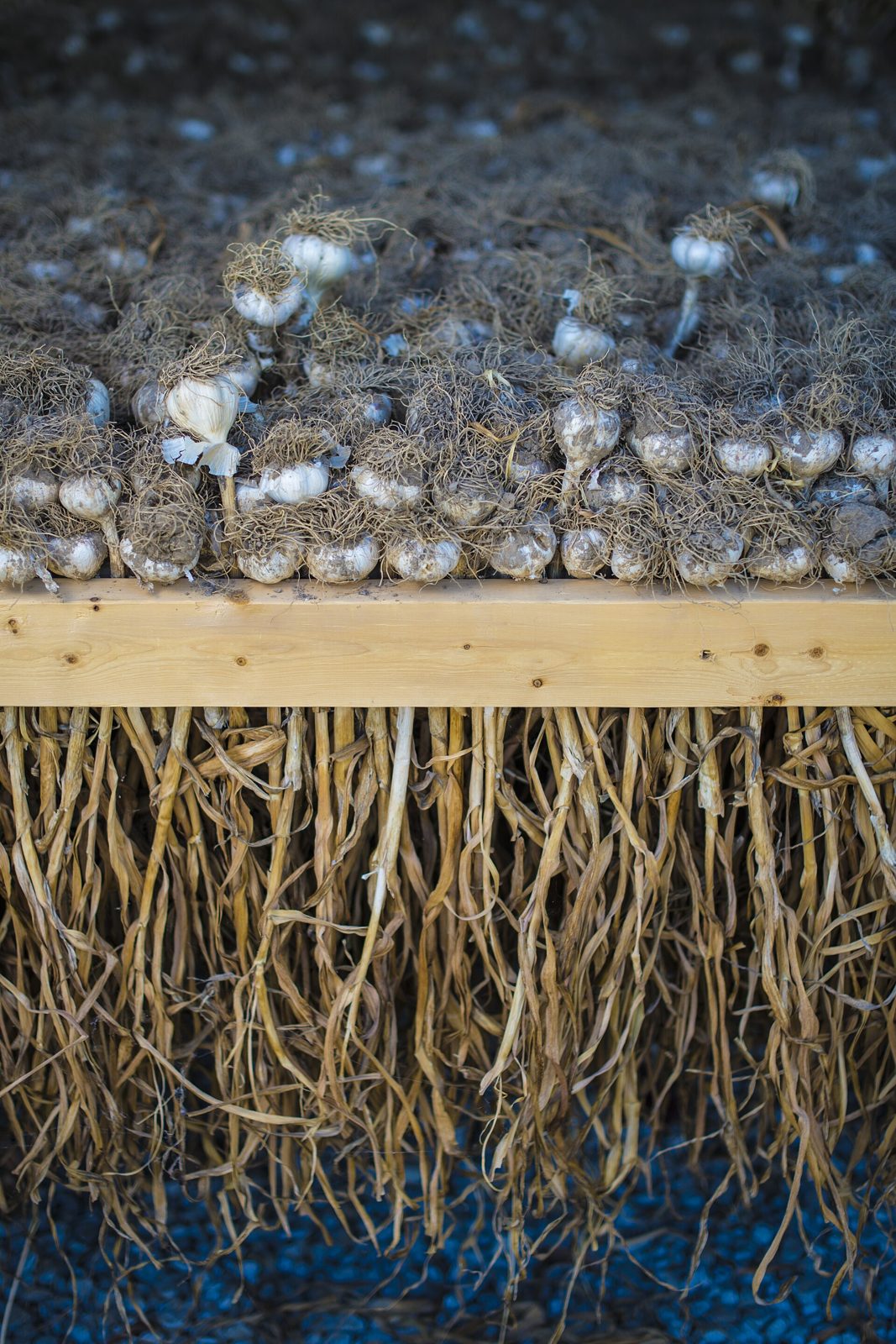
- Move them to racks. Penn State cures garlic on racks out of direct sun. Keep the plants whole while they dry.
- Cure until the outer leaves are dry. About three weeks, or until the outer two leaves are completely dry.
How to cure garlic
Cure the bulbs on racks out of direct sun for approximately three weeks, or until the outer two leaves are completely dry (Penn State). The leaves, not the calendar, tell you when it is finished.
How to store garlic
Store cured bulbs at 32–35°F (0–2°C) and 65–75 percent relative humidity (Penn State). Our sources give those two numbers, not a particular room, so match them to the coolest, driest space you have.
Which type you grew matters for storage. Cornell says softneck types are best for long-term storage and braiding. Our sources give no storage time for hardneck types. Our types of garlic guide explains the difference.
From planting to pantry
A fall planting follows a long, predictable path. Roots form before the ground freezes (Penn State). Cold weather does its work over winter (UGA says 6–8 weeks below 40°F, 4°C). Bulbs grow as days lengthen and warm up (UGA). Harvest comes when 40–60 percent of the leaves have yellowed (Penn State), up to 8 months after planting (UGA). Then comes about three weeks of curing, and storage at 32–35°F (0–2°C).
Saving cloves for the next planting
Garlic does not produce true seed and is propagated by planting cloves (UGA). UGA recommends the larger outer cloves of your best bulbs for planting, so set a few of your best aside when you cure. Fall is the planting season, and our when to plant garlic guide covers the dates.
Troubleshooting
- Bulbs split open. Harvested too late (Penn State). Use the leaf test next year.
- Small bulbs. Penn State links consistent water through mid-June to good sizing. Poorly drained soil also causes trouble, as Fusarium bulb rot is a major problem there.
- Pests. Allium leaf miner and onion thrips are the major insect pests in the eastern United States (Penn State).
Growing shallots as well? They are dug when the tops fall over, a different cue; see our shallot harvesting guide.
Frequently asked questions
How do you know when garlic is ready to harvest?
Penn State says garlic is ready when 40–60 percent of the leaves have yellowed. Bulbs harvested too late will start to split open.
How long does garlic need to cure?
Penn State says about three weeks, or until the outer two leaves are completely dry, with the bulbs on racks out of direct sun.
How should garlic be stored?
Penn State says store cured garlic at 32–35°F (0–2°C) and 65–75 percent relative humidity. Cornell says softneck types are best for long-term storage and braiding.
What happens if I harvest garlic too late?
The bulbs start to split open, according to Penn State. Dig a test bulb as the leaves begin to yellow so you can catch the window.
Sources
- Garlic Production, Penn State Extension
- Plan on Garlic This Fall, Cornell CALS Horticulture Section
- Garlic Production for the Gardener, University of Georgia Extension