
Of the ten vegetables we cover, ginger, lemongrass, turmeric, sweet potato and luffa have pot guidance in our sources, and okra and peanut do not. Garlic, shallot and edamame are not covered in pots either. This guide rolls up what each page says, with the exact numbers where a source gives them, and says plainly where a pot size would be a guess. Frost-tender plants are the best match for containers, because you can carry them in before the first frost.
What is documented, crop by crop
| Crop | In a pot? | What the sources give | Guide |
|---|---|---|---|
| Ginger | Yes | Pot at least 12 in. (30 cm) deep and 18 in. (45 cm) across (Penn State) | Ginger in pots |
| Lemongrass | Yes, below zone 8 | Hardy only to zone 8 (Penn State); no pot size | Lemongrass in pots |
| Turmeric | Yes, outside zones 8–11 | No pot size; rhizomes get thick, so repot often (Penn State) | Turmeric in pots |
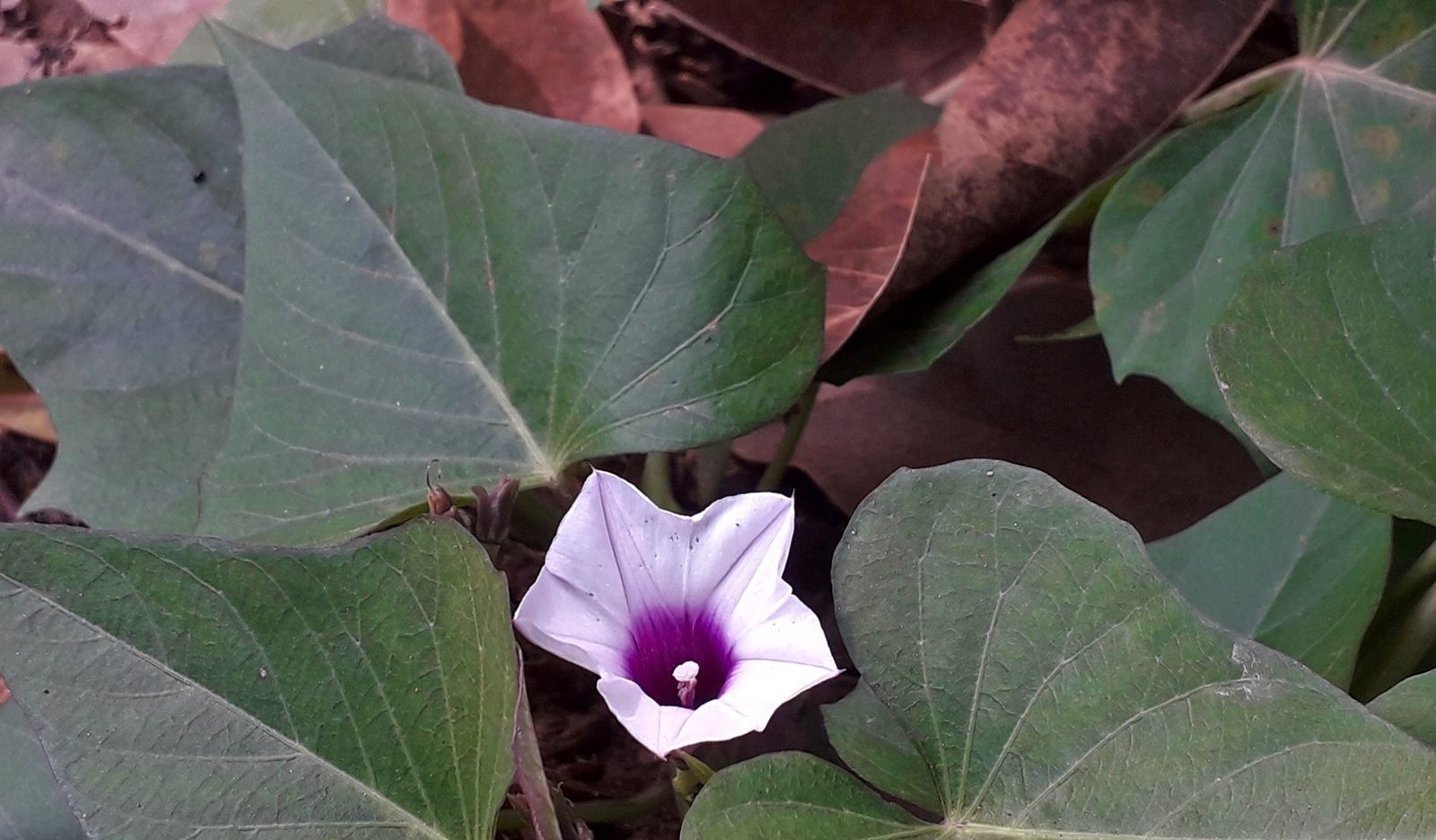
| Sweet potato | Yes, large pots | Bush types Porto Rico and Vardaman spread about 2 ft (60 cm) (Penn State); no volume | Sweet potato in pots |
| Luffa | Yes | 2–5 gallon (8–19 L) containers (UF/IFAS); sturdy trellis | Luffa |
| Okra | Not addressed | Needs and a reasoned plan, no sourced pot advice | Okra in containers |
| Peanut | Not addressed | Plant size 9 in. to 1.5 ft (23–46 cm); no pot advice | Peanuts in containers |
| Garlic, shallot, edamame | Not covered | Our sources leave containers out | Garlic, shallot, edamame |
The three frost-tender pot plants
Ginger is the easiest case. Penn State says it can be planted in containers and moved outdoors, starting early in spring and putting pots out once nights stay at or above 50°F (10°C). CTAHR advises keeping pots elevated, and Texas A&M asks for 2 to 5 hours of direct sun. Bring pots in before the first frost for larger rhizomes (Penn State).
Turmeric is a perennial in zones 8 to 11, and Penn State says it can be grown as an annual or in a container elsewhere. Our sources give no pot size. They do say the plant reaches 3 to 4 ft (0.9–1.2 m) and that the rhizomes thicken, so choose a large, deep pot with drainage holes and plan to repot.
Lemongrass needs a great deal of water and full sun (Wisconsin), and frost kills or severely damages it. Penn State says to acclimate it to indoor living gradually. The sources give no pot size, so use a container big enough for a clump.
Two vines and a bush
Sweet potato vines can reach 20 ft (6 m) on standard types, so Penn State points to bush varieties for containers. Penn State says growing in raised beds or large containers also keeps rodents out. It gives no pot volume, so we do not.
Luffa is the one crop in our set with a stated container size. UF/IFAS says 2 to 5 gallons (8–19 L). The vines still climb, so a pot needs a sturdy trellis, and the sources describe a plant that wants high moisture and good drainage. Treat container luffa as best for eating-size gourds at 6–8 in. (15–20 cm), because our sources give no pot size for sponge-sized fruit.
Soil, water and sun in a pot
The sources give needs, not recipes, so here is what is documented.
- Drainage. Penn State’s ginger pot needs drainage holes, and UF/IFAS says excessive water is detrimental to luffa. Poorly drained soil also raises disease risk for the crops we grow in beds.
- Soil. Penn State gives loamy, organic-rich soil at pH 5.5–6.5 for ginger. Wisconsin says moist loam with high organic matter for lemongrass. Penn State says sweet potatoes need loose, well-drained soil.
- Water. Pots dry faster than beds, which our pages say for every pot crop. Penn State says to water newly planted sweet potato slips every day for the first two weeks. The sources give no pot watering schedule in inches or days.
- Sun. Ginger takes 2 to 5 hours of direct sun (Texas A&M). Lemongrass wants full sun (Wisconsin). Luffa wants at least 6 hours (NC State). Turmeric’s sources split: full sun (CTAHR) or morning sun and afternoon shade (Penn State).
Harvest and winter from a pot
Ginger takes 8 to 10 months, so a potted plant goes through the cool season before you dig it. Penn State says it loses all its stems in winter, so a bare pot is normal. Turmeric is dug in fall when the leaves dry out and wilt, and in a pot you can tip the whole container out. Sweet potatoes are dug 90 to 120 days after planting before the first killing frost (Penn State, Clemson, UGA). Tipping the pot onto a tarp is our suggestion, not a sourced step.
What we cannot tell you
Okra and peanut. None of our sources says whether either can grow in a container. Our okra page reasons that a pot can offer warmth and drainage, and our peanut page notes that pegs cannot survive high soil temperatures (NC State), which a sun-baked pot may cause. Both are our reasoning, labeled as such, not extension advice.
Garlic, shallot and edamame. Their sources leave containers out, so we give no advice.
Pot volumes in general. Apart from ginger’s dimensions and luffa’s 2–5 gallons, we have no sourced volumes, plant counts per pot or yields.
How to choose
- Cold winters, small space: ginger, turmeric or lemongrass in a pot you can carry in.
- A trellis and a sunny patio: luffa in a 2–5 gallon pot, picked young.
- No ground at all: a bush sweet potato in a large pot.
- Want to try okra or peanut anyway? Read the pages above and treat the first season as a trial.
Looking for more to put in pots? See the spice garden collection. For soil warmth in a pot, which follows the air closely, see our guide to soil temperature for planting.
Frequently asked questions
What is the best vegetable to grow in a pot from our list?
Ginger has the clearest pot guidance. Penn State recommends a container at least 12 in. (30 cm) deep and 18 in. (45 cm) across, and CTAHR has an entire guide to growing ginger in pots. Luffa has a stated size too, 2 to 5 gallons (UF/IFAS), but it needs a trellis.
Can I grow okra or peanuts in containers?
Our sources do not say. None of the okra or peanut sources we used addresses containers, so we give no pot size and no yield. Both pages list what the plants need so you can judge whether a pot could meet it.
Do container plants need winter care?
Ginger, turmeric and lemongrass are frost-tender. Penn State says to bring ginger pots inside before the first frost, and to acclimate lemongrass to indoor living gradually. For turmeric we give no frost tolerance, so treat it as frost-tender.
Sources
- Growing Ginger, Penn State Extension (York County Master Gardeners)
- Ginger Culture in Hawaii in Pots (PD-93), University of Hawaii CTAHR
- 2026 Herb of the Year, Turmeric, Penn State Extension
- Lemongrass, University of Wisconsin-Madison Extension Horticulture
- Sweet Potatoes, a Winning Vine for Your Garden, Penn State Extension
- Luffa, an Asian Vegetable Emerging in Florida (HS1285), UF/IFAS Extension (EDIS)