

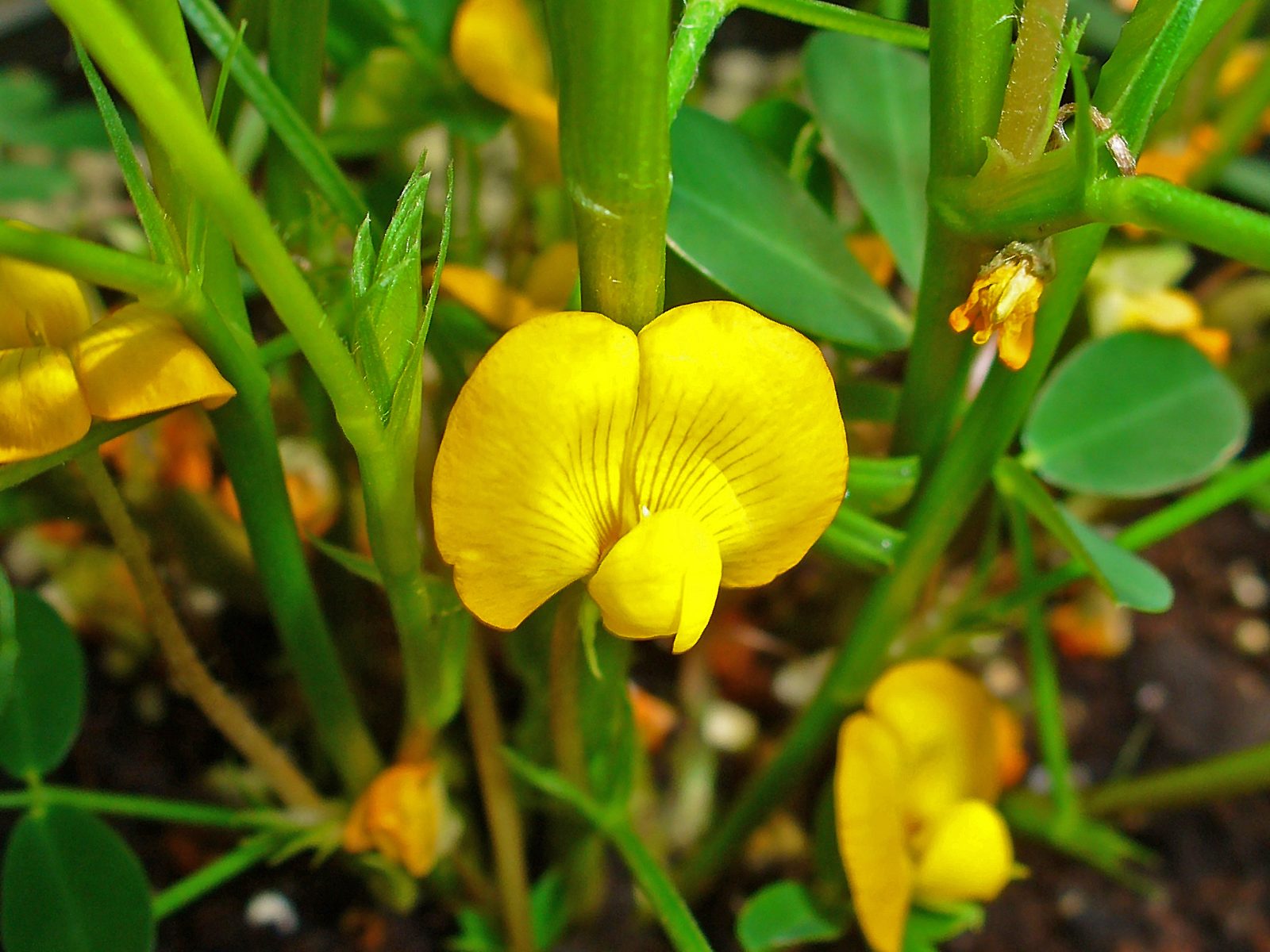
For okra, sweet potato and peanut the shared rule is soil of at least 65°F (18°C), measured about 4 in. (10 cm) down. Our sources agree on that figure and differ on the details, so this guide shows who says what. Warm-season crops sown into cold soil rot or fail to come up. Garlic and shallot are the opposite: they go in cold and need it. For dates that follow from these numbers, see our vegetable planting calendar.
What each source says
| Crop | Soil or temperature figure | Source |
|---|---|---|
| Okra | Plant only when soil is at least 65°F at 4 in. (10 cm); hold off if cooler | UGA, Clemson |
| Okra | Best germination 70–95°F (21–35°C); grows best at 75–90°F (24–32°C) | Clemson |
| Okra | From seed, keep temperatures above 55°F (13°C) or start indoors | NC State |
| Sweet potato | Soil above 65°F (18°C) | Clemson, Penn State |
| Sweet potato | Soil should reach 70°F (21°C) | UGA |
| Sweet potato | Soil below 50°F (10°C) leads to root rot | Penn State |
| Peanut | 65°F at 4 in. at noon for three days | NC State |
| Peanut | Daily 68°F (20°C) average for three consecutive days | UGA |
| Turmeric | Grows best at 68–86°F (20–30°C) | CTAHR |
| Lemongrass | Prefers nights around 65°F (18°C) | Penn State |
| Ginger | Move pots out once nights stay at or above 50°F (10°C) | Penn State |
The turmeric, lemongrass and ginger figures are growing or night-air temperatures, not soil readings, so we list them for comparison only.
Where the sources disagree
Sweet potato: 65°F or 70°F. Clemson and Penn State say above 65°F, and UGA says 70°F. Our sources do not explain the gap. Penn State calls sweet potatoes very sensitive to cool soil, so the safer reading is to wait for 70°F if your season allows. Our sweet potato guide shows the full comparison.
Peanut: a spot reading or an average. NC State asks for 65°F at noon, three days running. UGA asks for a 68°F daily average for three days. A noon reading is usually warmer than a daily average, which is our reading, so the two are not the same test. NC State also says temperatures need to stay above 65°F for germination to proceed at an acceptable rate. See how to grow peanuts.
Okra: planting versus growing. The 65°F figure is for planting. Clemson’s higher figures describe where seed germinates best and where the plant grows best. Our okra guide has the details.
How to measure soil temperature
Our sources give the depth and the timing, not the tool. UGA (okra) and NC State (peanut) both use 4 in. (10 cm). NC State specifies noon, and both peanut sources want the reading to hold for three days. Push a soil thermometer in to that depth. That is the practical step, and it is our suggestion, not a quote from the sources. Take the reading on several days before you sow, at the same time each day. If you are under the number, wait.
What happens in cold soil
- Okra. Clemson says cold, wet soil promotes the root-decay diseases that kill seedlings.
- Sweet potato. Penn State says soil colder than 50°F (10°C) leads to root rot.
- Peanut. NC State says germination is too slow below 65°F. It also says pegs cannot survive high soil temperatures, so heat can hurt later in the season.
Crops that go in cold
Garlic. UGA says the cloves need 6 to 8 weeks of cool weather after planting, below 40°F (4°C), to be vernalized. Penn State says to plant early enough that a good root system forms before the ground freezes. See when to plant garlic.
Shallot. Utah State and Virginia Tech say to plant sets as soon as the ground can be worked in spring. Virginia Tech lists cool conditions, 55–75°F (13–24°C), as the shallot’s preference, and Clemson says fall planting works best. Our sources give no planting soil temperature for shallot. See when to plant shallots.
Crops where our sources give no soil number
Edamame: Utah State says only to plant after danger of frost is past. Luffa: Clemson says to start in warm soil in late spring, but our sources give no minimum soil temperature. Plant luffa and edamame by frost date and wait for warm weather, and use the 65°F rule as a sensible check, which is our reading and not sourced advice for these two.
Why the numbers differ
Our sources come from different states and different purposes. The okra figures are from Georgia and South Carolina, the sweet potato figures from Pennsylvania, South Carolina and Georgia, and the peanut figures from North Carolina, Georgia and Florida. Many peanut guides are written for commercial fields, as our peanut page notes. None of the sources tests its number against the others, so the gap between 65°F and 70°F is a range to choose within, not an error.
A checklist before you sow
- Read the soil, not the air. Our sources give soil depth, 4 in. (10 cm), for okra and peanut.
- Check the frost rule too. Soil temperature and frost date are separate tests. Both should pass.
- For sweet potato, plant slips, not seed. The temperature applies to the slips going into the ground. See how to make slips.
- Cold snap after planting? Our sources give no rescue method, so we do not offer one. Penn State says slips can wait in pots, warm and watered, until the soil catches up.
- Warm soil is not enough for a fall crop. Texas A&M says a fall okra crop should go in at least 3 months before the first fall frost.
Short version
Warm-season crops: wait for 65°F at 4 in., or higher if you can. Sweet potato is safest at 70°F. Peanut wants three days in a row. Cool-season alliums: plant cold. Read our post on heat-tolerant vegetables for how these crops handle summer.
Frequently asked questions
What soil temperature should I plant okra, sweet potatoes and peanuts at?
At least 65°F (18°C) at about 4 in. (10 cm) deep is the shared figure. UGA says okra needs 65°F at 4 in., Clemson and Penn State say sweet potato soil should be above 65°F, and NC State says peanuts need 65°F at 4 in. at noon for three days.
Do sweet potatoes need 65°F or 70°F soil?
Sources differ. Clemson and Penn State use 65°F (18°C), while UGA says the soil should reach 70°F (21°C). Penn State also says soil below 50°F (10°C) leads to root rot. If you can wait for the higher number, you satisfy all three.
Which vegetables go in when the soil is cold?
Garlic goes in during fall and needs 6 to 8 weeks below 40°F (4°C) after planting (UGA). Shallot sets go in as soon as the ground can be worked in spring, or in fall where winters are mild, and Virginia Tech lists 55 to 75°F (13–24°C) as the cool-season range.
Sources
- Home Garden Okra, University of Georgia Extension
- How to Grow Okra in South Carolina, Clemson Home & Garden Information Center
- Sweet Potatoes, a Winning Vine for Your Garden, Penn State Extension
- Arachis hypogaea (Peanut), NC State Extension Gardener Plant Toolbox
- Preparing for Peanut Planting Season, University of Georgia Extension
- Garlic Production for the Gardener, University of Georgia Extension