

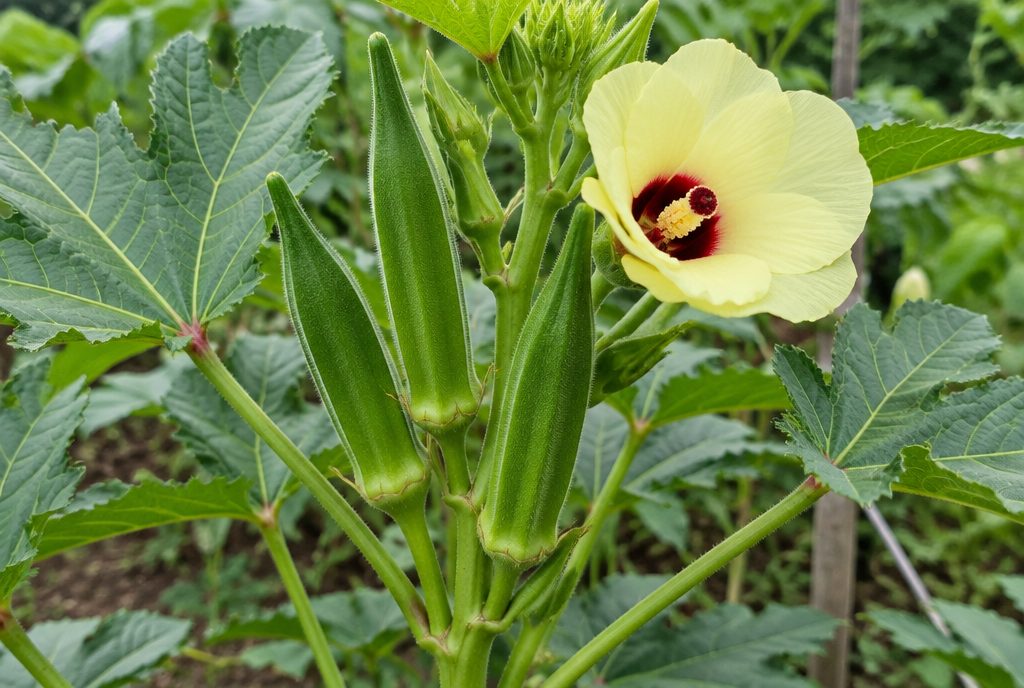
Use a planting calendar as a starting point, then move every date to your own last-frost date and soil temperature. A calendar made for Georgia is wrong for Minnesota, and our sources are regional extension guides, so each row below comes from a real place or a stated frost rule. This guide shows how to read the bands, puts the windows for our ten crops side by side, and explains how to shift each one. For the soil rule behind most of the warm-season dates, see our guide to soil temperature for planting.
How to read our calendars
Each calendar is a table with a column per month and up to four bands.
- Sow indoors (hatched): seed, or slips, started under cover.
- Transplant out (solid): seedlings or slips moved to the garden.
- Direct sow (dotted): seed, cloves, sets or pieces planted where they grow.
- Harvest (striped): when picking or digging starts. Picking can continue after the band ends.
A blank cell means our sources give no figure, not that the crop is out of season. Months are approximate, and many are our conversion from a frost-relative rule. The note under each calendar says which.
Fall-planted crops
Garlic and shallot go in before winter. The garlic row is UGA’s late September through November window for Georgia, and the harvest months are our arithmetic from “up to 8 months to mature”. The shallot rows are Arkansas Extension’s dates.
| Zones | January | February | March | April | May | June | July | August | September | October | November | December |
|---|---|---|---|---|---|---|---|---|---|---|---|---|
| Zone Garlic · Georgia: direct sow Sep–Nov; harvest May–Jul | May: harvest | June: harvest | July: harvest | September: direct sow | October: direct sow | November: direct sow | ||||||
| Zone Shallot · spring: direct sow Feb; harvest Jul–Aug | February: direct sow | July: harvest | August: harvest | |||||||||
| Zone Shallot · fall: direct sow Oct; harvest May–Jun | May: harvest | June: harvest | October: direct sow |
- Direct sow
- Harvest
Read more in when to plant garlic and when to plant shallots.
Warm-season crops
These wait for warm soil or the end of frost. Rows are either a place (South Carolina, Florida, Iowa), a last-frost date (Apr 15, May 15, Mar 15), or the date the soil reaches 65°F (peanut).
| Zones | January | February | March | April | May | June | July | August | September | October | November | December |
|---|---|---|---|---|---|---|---|---|---|---|---|---|
| Zone Okra · S.C.: direct sow May–Jul; harvest Jul–Sep | May: direct sow | June: direct sow | July: direct sow, harvest | August: harvest | September: harvest | |||||||
| Zone Okra · Apr 15: direct sow May; harvest Jul | May: direct sow | July: harvest | ||||||||||
| Zone Okra · May 15: direct sow Jun; harvest Aug | June: direct sow | August: harvest | ||||||||||
| Zone S. potato · Mar 15: sow indoors Feb–Mar; transplant out Apr; harvest Jul–Aug | February: sow indoors | March: sow indoors | April: transplant out | July: harvest | August: harvest | |||||||
| Zone S. potato · Apr 15: sow indoors Mar–Apr; transplant out May; harvest Aug–Sep | March: sow indoors | April: sow indoors | May: transplant out | August: harvest | September: harvest | |||||||
| Zone S. potato · May 15: sow indoors Apr–May; transplant out Jun; harvest Sep–Oct | April: sow indoors | May: sow indoors | June: transplant out | September: harvest | October: harvest | |||||||
| Zone Peanut · mid-Apr: direct sow Apr; harvest Aug–Sep | April: direct sow | August: harvest | September: harvest | |||||||||
| Zone Peanut · mid-May: direct sow May; harvest Sep–Oct | May: direct sow | September: harvest | October: harvest | |||||||||
| Zone Peanut · Jun 1: direct sow Jun; harvest Oct | June: direct sow | October: harvest | ||||||||||
| Zone Edamame · Iowa: direct sow May–Jun; harvest Aug–Sep | May: direct sow | June: direct sow | August: harvest | September: harvest | ||||||||
| Zone Luffa · Florida: direct sow Mar–Jul | March: direct sow | April: direct sow | May: direct sow | June: direct sow | July: direct sow | |||||||
| Zone Luffa · cooler: sow indoors Mar–Apr; direct sow May–Jun | March: sow indoors | April: sow indoors | May: direct sow | June: direct sow |
- Sow indoors
- Transplant out
- Direct sow
- Harvest
Each crop’s full reasoning is on its page: okra, sweet potato, peanut, edamame and luffa.
Herbs and spices
Ginger, turmeric and lemongrass are frost-tender. Our sources give Hawaii windows, a spring and fall conversion for turmeric, and a frost rule for lemongrass.
| Zones | January | February | March | April | May | June | July | August | September | October | November | December |
|---|---|---|---|---|---|---|---|---|---|---|---|---|
| Zone Ginger · Hawaii: direct sow Mar–May; harvest Jan–Feb, Dec | January: harvest | February: harvest | March: direct sow | April: direct sow | May: direct sow | December: harvest | ||||||
| Zone Ginger · cooler: sow indoors Mar–Apr; transplant out May–Jun | March: sow indoors | April: sow indoors | May: transplant out | June: transplant out | ||||||||
| Zone Turmeric · Hawaii: direct sow Mar–Jun; harvest Jan–Mar | January: harvest | February: harvest | March: direct sow, harvest | April: direct sow | May: direct sow | June: direct sow | ||||||
| Zone Turmeric · spr/fall: direct sow Mar–May; harvest Sep–Nov | March: direct sow | April: direct sow | May: direct sow | September: harvest | October: harvest | November: harvest | ||||||
| Zone Lemongrass · cold: transplant out May–Jun | May: transplant out | June: transplant out |
- Sow indoors
- Transplant out
- Direct sow
- Harvest
See ginger, turmeric and lemongrass for the sources behind each row.
How to adjust by last-frost date
Most of the crops above give a rule relative to frost rather than a date. Apply the rule to your own last-frost date. The last column is a worked example for a last frost on May 1, and it is our arithmetic, not a quote.
| Crop | Rule from our sources | Example, last frost May 1 |
|---|---|---|
| Okra | Direct sow 2–3 weeks after the last frost (Texas A&M); first pods 60–70 days after planting (Clemson, UGA) | Sow May 15–22; first pods about Jul 14–31 |
| Sweet potato | Plant slips 3–4 weeks after the frost-free date; start slips 6–8 weeks before planting; dig 90–120 days after planting (Penn State) | Plant May 22–29; start slips Mar 27–Apr 17; dig Aug 20–Sep 26 |
| Luffa | Start seeds indoors 6–8 weeks before the last frost (Illinois) | Start Mar 6–20; set out after frost |
| Edamame | Sow after danger of frost is past; pods 70–90 days later (Utah State) | Sow May 1 or later; sown May 1, pods about Jul 10–30 |
| Lemongrass | Put plants out as soon as the danger of frost is past (Wisconsin) | May 1 or later |
| Ginger | Move pots out once nights stay at or above 50°F (Penn State) | Follow nights, not the date |
| Garlic | Plant early enough for roots to form before the ground freezes (Penn State) | Count back from your first fall freeze |
Peanut and okra also depend on soil temperature. If the frost rule says go but the soil is cold, wait. Okra needs soil of at least 65°F (18°C) at 4 in. (10 cm) (UGA), and peanut seed wants 65°F at that depth at noon for three days (NC State).
Build your own calendar in five steps
- Find your last-frost date. Penn State says your county extension office or the National Weather Service gives your frost-free date.
- Find your first fall freeze. Your state extension office publishes the average. Garlic and shallot are counted back from it.
- Pick the crop’s rule from the table above, and count forward or back from the frost date.
- Check the soil before you sow okra, sweet potato or peanut. If the soil is below 65°F (18°C) at 4 in. (10 cm), wait, whatever the date says.
- Compare your dates with the nearest row. If they differ by more than a few weeks, trust your frost rule and ask a local extension office, because our rows come from specific places.
If you garden between two rows, our ginger guide gives the best rule: use the cooler-area row and let the night temperature, not the calendar, tell you when to move pots outside.
Mistakes a calendar can cause
- Copying another region’s dates. Our garlic page warns against copying Georgia’s dates into a colder state. The principle that travels is Penn State’s: roots before the freeze.
- Sowing by the date. A warm week in April does not mean the soil is ready. Okra seedlings in cold, wet soil are the ones root-decay diseases kill (Clemson).
- Forgetting the harvest deadline. Sweet potatoes come out before the first killing frost (Penn State) and luffa gourds before frost ruins them (Illinois), so count forward as well as back.
What our calendars leave out
We would rather show a gap than a guess. Edamame is one trial, and Utah State says only to plant after frost. Luffa has no harvest months, because gourds can take up to 200 days and must come in before frost. Ginger and turmeric in cooler areas have no harvest band, since no source names a month. Turmeric gives no month for sowing indoors. Where you see a blank, use the crop’s own page and your local extension office.
Next steps
Pick a crop from the calendar, open its page and read its “what the sources disagree on” table. If you want to see how fast each crop moves from planting to harvest, read our post on the fastest growing vegetables. If it is fall, see what to plant in November.
Frequently asked questions
How do I find my last-frost date?
Penn State says your county extension office or the National Weather Service site gives your frost-free date. Use that date, not the month names on a calendar, to shift the windows below.
Why do the calendars show regions instead of USDA zones?
Our sources give month windows for places such as Georgia, South Carolina, Hawaii and Iowa, or rules relative to frost. They do not give windows by zone, so we show their rows rather than invent zone ranges.
Why do some crops have no harvest band?
Where a source gives no harvest month or day count we leave the band out. Lemongrass is one example, because Wisconsin says to cut stems when they are about ½ in. (1.3 cm) thick and gives no season.
Sources
- How to Grow Okra in South Carolina, Clemson Home & Garden Information Center
- Easy Gardening: Okra (EHT-058), Texas A&M AgriLife Extension
- Sweet Potatoes, a Winning Vine for Your Garden, Penn State Extension
- Growing Loofa Gourds, University of Illinois Extension
- What Is Edamame and Should I Grow It?, Utah State University Extension
- Garlic Production for the Gardener, University of Georgia Extension