
In November the vegetable you plant from our guides is garlic, plus shallot sets if your winters are mild, and the rest of the job is bringing in what frost would kill. Garlic needs a cold winter, and our sources say to set cloves early enough for roots to form before the ground freezes. Ginger, turmeric, lemongrass, sweet potato, peanut and luffa are the opposite, and November is their harvest-or-rescue month. This post covers both halves, using only what our extension sources say.
Garlic: plant before the ground freezes
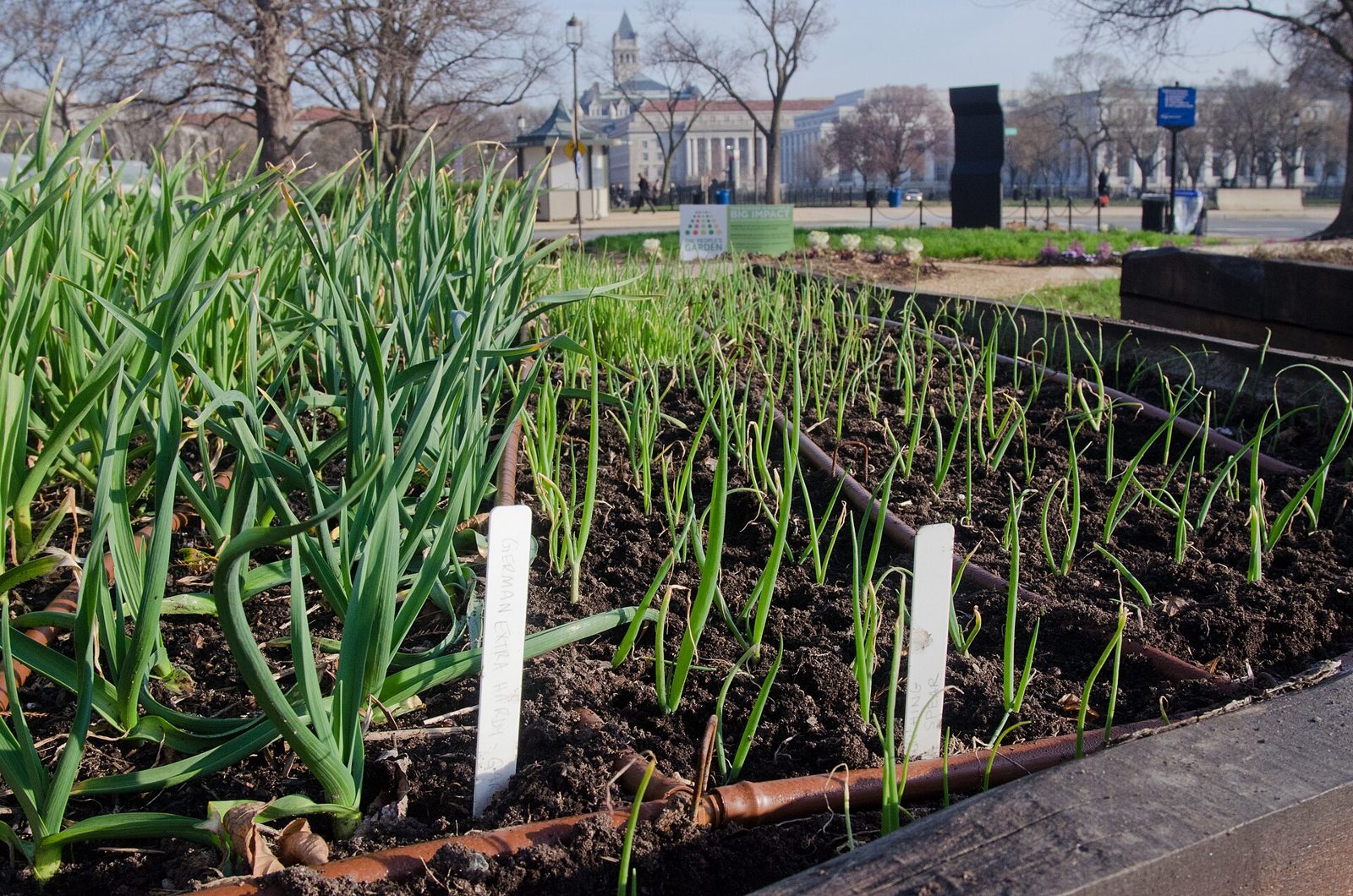
The rule is Penn State’s: plant garlic early enough that a good root system develops before the ground freezes. Clemson says garlic and shallots both grow best from a fall planting. The only calendar window in our sources is UGA’s, late September through November for Georgia.
| Source | Where | What it says |
|---|---|---|
| UGA Extension | Georgia | Late September through November is the time to plant garlic |
| Penn State Extension | Pennsylvania and the East | Set cloves early enough that roots form before the ground freezes |
| Clemson HGIC | South Carolina | Garlic and shallots grow best from a fall planting |
None of these is a national rule, so do not copy Georgia’s dates into a colder state. Look up your average first fall freeze and plant so the cloves can root before it. UGA says the cloves also need 6 to 8 weeks below 40°F (4°C) after planting, so a mild winter is not ideal for them. On planting day:
- Choose large outer cloves from your best bulbs (UGA), pointed tip up (Cornell).
- Depth: 1–1.5 in. (Penn State), 1–3 in. (UGA) or 2–3 in. (Cornell).
- Spacing: 6 in. in rows 12–14 in. apart (UGA), or 4–6 in. in the row (Cornell).
- Soil: full sun and well-drained soil rich in organic matter, pH 6.0–6.5 (Penn State).
Our garlic guide has the full steps, and when to plant garlic shows how to set your own date. Harvest comes the following summer, up to 8 months after planting (UGA).
Shallots: fall sets in mild winters
Utah State says sets can be planted in autumn after the first frost for a late-spring harvest, and Virginia Tech says warmer climates plant in fall for winter and spring harvest. Arkansas Extension says the southern half of that state plants in late October. Our sources give no November date for any region, so treat late October as the latest sourced one.
The catch is winter. Utah State says fall-planted sets can overwinter, but very cold winters can reduce yield, and in zones 4 or 5 it advises frost cloth or mulch. Where winters are hard, plant in spring as soon as the ground can be worked. Details are in our shallot planting time guide and the shallot guide.
On planting day, Virginia Tech says to divide shallot clumps into single sets and plant them pointed end up, 1–2 in. (2.5–5 cm) deep. Planting too deep can cause bulb rot.
Before frost: what to do with the frost-tender crops
| Crop | November job | Source |
|---|---|---|
| Turmeric | Dig the rhizomes when the leaves begin to dry out and wilt; store at 50–60°F (10–16°C), never below 50°F | Penn State, CTAHR |
| Ginger | Move pots inside before the first frost for larger rhizomes, or lift rhizomes and store them in a brown paper bag in a cool, dry place | Penn State |
| Lemongrass | Harvest or dig before nights reach freezing, or acclimate the plant gradually to indoor living | Wisconsin, Penn State |
| Sweet potato | Dig before the first killing frost; if a light frost burns the leaves, dig at once; cure before storing | Penn State |
| Peanut | Check pods first; dig at once if the plants have yellowed and lost most leaves | Clemson |
| Luffa | Harvest before frost, which can ruin unharvested gourds | Illinois |
Two details are worth knowing. Penn State says ginger goes dormant and loses all its stems in winter, so a bare pot is normal. For peanuts, NC State’s Plant Toolbox says to dig after the first fall frost, while Clemson says to harvest at once if the plants have yellowed and lost most of their leaves, so use the pod check in our peanut harvesting guide rather than the date.
Sweet potatoes need curing. Clemson says 85°F (29°C) and 90 percent humidity for one week, and Penn State says 80–85°F for two weeks. Store them at 50–60°F, never in the refrigerator (Clemson).
What not to plant in November
Okra, sweet potato, peanut, luffa and edamame are warm-soil, frost-sensitive crops in our guides. Texas A&M says a fall okra crop must go in at least 3 months before the first fall frost, so by November that window has usually closed. This is our arithmetic, and it depends on your first-freeze date. Sweet potatoes need 90 to 120 days from planting to harvest (Penn State), which in November leaves no time.
A short November plan
- Look up your first fall freeze.
- Plant garlic, and shallot sets if your winters are mild.
- Dig turmeric, sweet potato and peanut by the signs on the plants, not the calendar.
- Bring ginger and lemongrass pots indoors.
- Note your dates, and compare with what to plant in fall.
For all ten crops side by side, see our vegetable planting calendar.
Frequently asked questions
Is November too late to plant garlic?
It depends on your first fall freeze. Penn State says to plant early enough that a good root system forms before the ground freezes, and UGA gives late September through November for Georgia. Our sources give no number of weeks before frost, so check your own date.
Can I plant shallots in November?
In mild winters, yes. Clemson says shallots grow best from a fall planting, Virginia Tech says warmer climates plant in fall, and Arkansas Extension gives late October for the southern half of that state. In zones 4 or 5, Utah State advises frost cloth or mulch over fall bulbs.
What do I do with ginger, turmeric and lemongrass before frost?
Bring ginger pots inside before the first frost (Penn State). Dig turmeric when the leaves dry out and wilt (Penn State). Harvest or dig lemongrass before overnight temperatures reach freezing (Wisconsin), or acclimate it gradually to indoor living (Penn State).
Can I still plant okra or sweet potatoes in November?
Our sources do not support it. Texas A&M says a fall okra crop should be planted at least 3 months before the first fall frost, and sweet potatoes must be dug before the first killing frost (Penn State). Both are warm-soil crops.
Sources
- Garlic Production, Penn State Extension
- Garlic Production for the Gardener, University of Georgia Extension
- How to Grow Shallots in Your Garden, Utah State University Extension
- Home Gardening Series: Shallots (FSA6095), University of Arkansas Cooperative Extension
- Growing Ginger, Penn State Extension (York County Master Gardeners)
- Lemongrass, University of Wisconsin-Madison Extension Horticulture
- 2026 Herb of the Year, Turmeric, Penn State Extension