

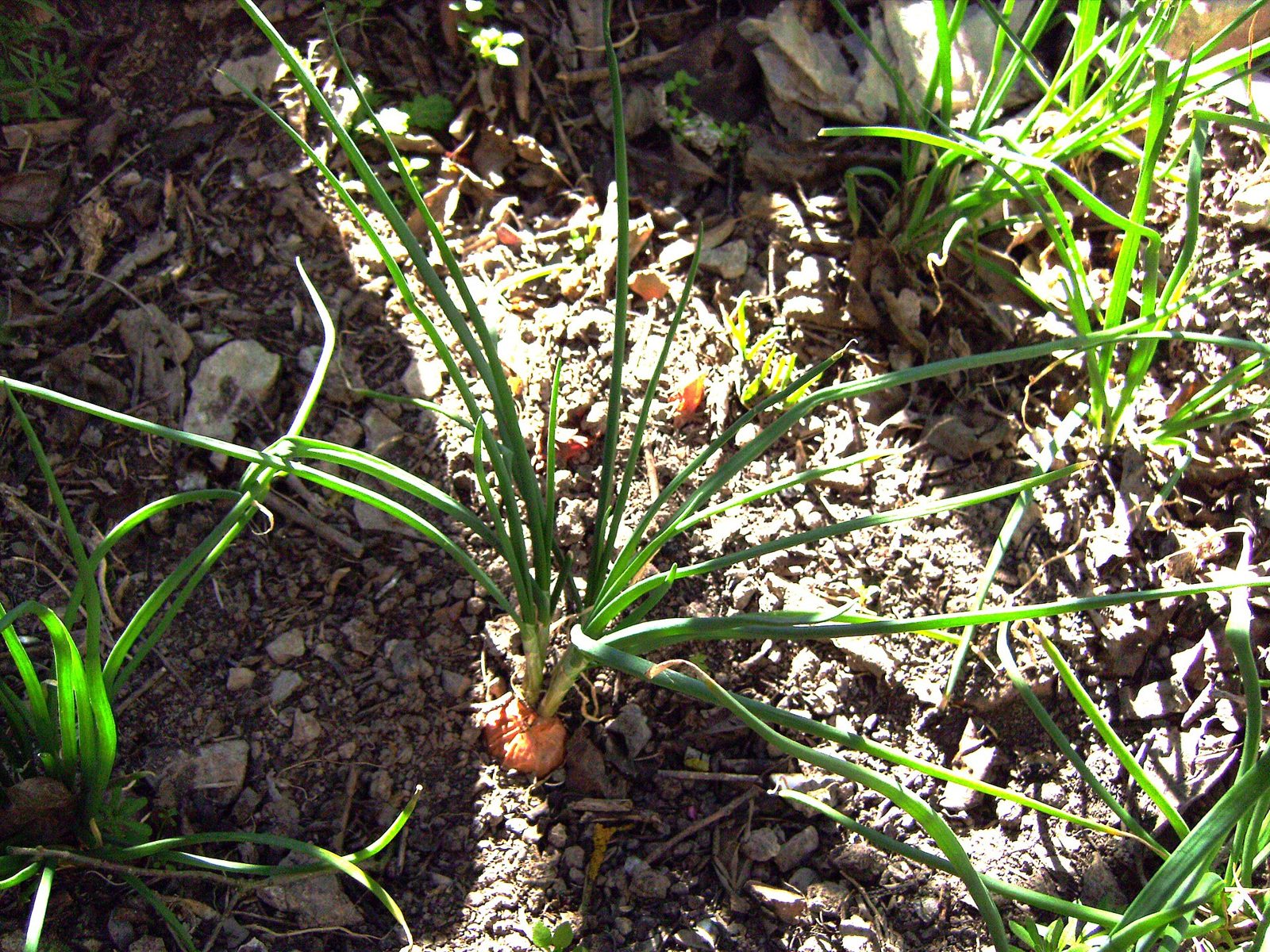
Our launch guides cover two vegetables you plant in fall, garlic and shallot, and one that can have a late-summer planting for a fall harvest, okra. That is a short list, and we would rather say so than pad it. We have written ten crops so far, and most of them are warm-season plants that stop at the first frost. This post covers what our extension sources say about the fall plantings, and where to look for the rest.
Fall plantings at a glance
| Crop | When in fall | What you get | Source |
|---|---|---|---|
| Garlic | Early enough for roots before the ground freezes; late September to November in Georgia | Bulbs the next summer, up to 8 months later | Penn State, UGA |
| Shallot | After the first frost in mild winters; late October in southern Arkansas | A late-spring harvest | Utah State, Arkansas |
| Okra | At least 3 months before the first fall frost | A fall pod crop | Texas A&M |
Garlic
Garlic is the classic fall crop, and its biology explains why. UGA says the cloves need 6 to 8 weeks of cool weather after planting, below 40°F (4°C), to prepare the plant to make a bulb, and that long days and warm temperatures then drive bulb growth in spring. Plant in fall and both halves line up. Choose between hardneck, which makes a scape, and softneck, which Cornell says is best for long-term storage and braiding (our garlic varieties guide compares them). Penn State says garlic is ready when 40 to 60 percent of the leaves have yellowed, and bulbs left longer start to split. Our garlic planting time guide shows how to set your own date.
Shallots
Shallots give you a choice that garlic does not. Clemson says they grow best from a fall planting, but Utah State says very cold winters can reduce the yield of fall-planted sets.
| Your situation | Plant | Source |
|---|---|---|
| Winters freeze the ground hard (zones 4–5) | Spring, or fall with frost cloth or mulch | Utah State |
| Winters are mild | Fall, harvest in late spring | Clemson, Virginia Tech, Utah State |
| You are growing from seed | Early spring | Arkansas Extension |
Fall sets are harvested earlier than spring ones: late spring against mid- to late summer (Utah State, Virginia Tech). Green tops can be cut to thin the bed when they are 6–8 in. (15–20 cm) tall (Utah State). Our shallot planting time guide has the rest.
Okra, if your season is long
Okra is the surprise on this list. It is a heat crop, but Texas A&M says a fall crop can be planted at least 3 months before the first fall frost. Clemson says okra grows best at 75–90°F, and our sources give pods 60 to 70 days after planting (Clemson, UGA). That arithmetic works only in places where frost comes late. Treat it as a long-season option, not a fall default. See when to plant okra and our guide to soil temperature for planting.
A fall planting checklist
- Garlic: large outer cloves, tip up, 1–1.5 in. deep (Penn State) to 2–3 in. (Cornell), 4–6 in. apart (Cornell) or 6 in. (UGA). Full sun and well-drained soil.
- Shallot: divide clumps into single sets, pointed end up, 1–2 in. deep (Virginia Tech, Utah State). Virginia Tech warns that planting too deep can cause bulb rot.
- Spacing for shallot: 3–6 in. in the row (Utah State) or 6–8 in. (Clemson). Utah State says dense planting gives smaller, single bulbs and wide spacing gives clusters.
- Cold zones: frost cloth or mulch over fall shallot bulbs in zones 4 or 5 (Utah State).
What a fall planting looks like by spring
Garlic spends the winter quiet. UGA calls it extremely frost hardy, so cold alone is no reason to worry. In spring, Penn State says to give it one inch (2.5 cm) of water a week in dry periods through mid-June for good sizing. Shallots from fall sets are harvested in late spring (Utah State).
Can you plant garlic in spring instead?
Our sources recommend fall planting and do not report on spring-planted garlic, so we cannot promise what a spring crop looks like. What they do establish is the cold requirement: if cloves miss the 6 to 8 weeks of cool weather after planting that UGA describes, they miss a step in the plant’s cycle. Treat any spring garlic as an experiment, and keep your main planting for fall.
What we do not cover yet
Cool-season crops such as bok choy, napa cabbage, gai lan and daikon are in our plan, but their guides are not published, so we make no claims about them. Until they are, the honest fall list from this catalogue is garlic, shallot and a late okra planting. For fall in other categories, ask your state extension office.
Which fall crop for which garden
- Cold winters: garlic, which UGA calls extremely frost hardy, and spring-planted shallots.
- Mild winters: garlic and fall-planted shallot sets, both harvested the next spring or summer.
- Long, late-frost seasons: a late okra crop on top, if you can fit the 3-month rule.
What to do instead in November
If frost has already arrived where you live, the job is rescue, not planting. See what to plant in November for the dig-and-store list for ginger, turmeric, lemongrass, sweet potato, peanut and luffa. For all ten crops side by side, use the vegetable planting calendar.
Frequently asked questions
What is the easiest vegetable to plant in fall?
Garlic. You push cloves into the soil, and UGA calls the plant extremely frost hardy. Plant early enough for roots to form before the ground freezes (Penn State), and expect to dig bulbs the following summer, up to 8 months after planting (UGA).
Should I plant shallots in fall or spring?
In mild winters, fall, for a late-spring harvest (Utah State, Clemson). In zones 4 or 5, spring, or fall with frost cloth or mulch (Utah State). If you are unsure, plant some sets in fall and keep some back for spring.
Can I plant okra in fall?
In a long-season climate, as a late-summer planting for a fall crop. Texas A&M says to plant a fall okra crop at least 3 months before the first fall frost, and Clemson says okra grows best between 75°F and 90°F (24–32°C).
Sources
- Garlic Production, Penn State Extension
- Garlic Production for the Gardener, University of Georgia Extension
- Onion, Leek, Shallot and Garlic, Clemson Home & Garden Information Center
- How to Grow Shallots in Your Garden, Utah State University Extension
- Easy Gardening: Okra (EHT-058), Texas A&M AgriLife Extension