

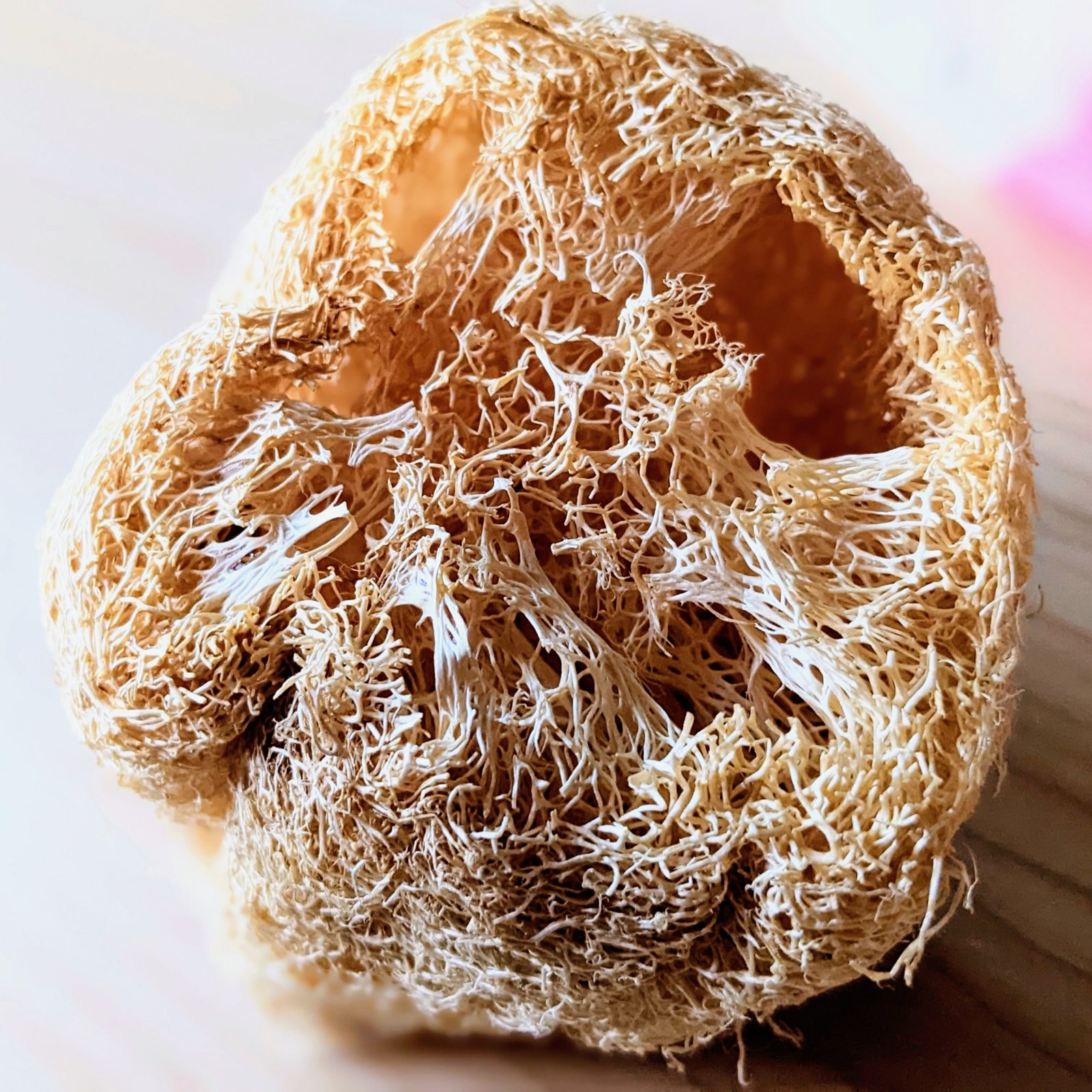
Harvest luffa young, at 6 to 8 inches (15–20 cm), to eat like zucchini, or leave it on the vine until the skin feels loose and brittle to make a sponge. You cannot do both with the same gourd, so decide which you want before the vines set fruit. Sponges need the long season: Illinois says luffas can take up to 200 days to mature. This guide covers both harvests, and how to process luffa sponges. It belongs to our main luffa growing guide.
Eating luffa or sponge luffa at a glance
- To eat: 6 to 8 inches (15–20 cm) long, tender, raw or cooked (Illinois, Clemson).
- For sponges: skin loose and brittle around the hardened fibers, gourds up to 2 feet (60 cm), up to 200 days (Clemson, Illinois).
- Either way: harvest before the first frost.
Harvesting young luffa to eat
Illinois says luffa picked at around 6 to 8 inches (15–20 cm) is “pretty like a zucchini,” and Clemson says that when harvested young, they are tender enough to be eaten raw or cooked, as you would squash or eggplant. That is the early harvest: pick small, and pick often, because a gourd left on the vine heads toward sponge stage and out of eating range.
Our sources give no days-to-harvest figure for young luffa and no taste or texture description beyond comparing it with squash and zucchini, so we do not make claims about them. You can eat some and leave others to mature, provided you do not pick the gourds you are saving for sponges.
When luffa sponges are ready
Clemson’s test is touch: luffa sponges are ready to harvest when the skin feels loose and brittle around the hardened fibers inside. Illinois adds that gourds left to become loofas may reach up to 2 feet (60 cm) in length, requiring the long growing season to gain size and slowly dry out on the vine. The gourds need support for this, since Illinois says a trellis or support structure is required so ripening gourds can freely hang and slowly dry with exposure to air.
The deadline is frost. Illinois says luffa must be harvested before a frost because cold can ruin unharvested loofas, and NC State says sponge gourd needs a frost-free season of at least four months. If frost is forecast and your gourds are not yet loose and brittle, harvest them anyway rather than risk losing them. Our sources do not say what a frost-picked gourd is worth as a sponge.
How to make a luffa sponge
- Pick mature gourds. Choose gourds whose skin feels loose and brittle around the hardened fibers (Clemson).
- Peel off the skin. Clemson says to peel the skin off.
- Shake the seeds out. Shake the seeds loose and save some for next year (Clemson). Our guide to growing luffa from seed shows how to start them.
- Remove stains. Clemson says to dip the gourd in a bucket of 10 parts water to 1 part bleach for about an hour to remove any stains.
- Dry and harden. Allow the sponge to dry. It is then left out to further dry and harden, creating the multiuse sponge material we see marketed as loofas (Clemson).
Wear gloves for the bleach step and rinse well. The Clemson text gives the ratio and the time but does not describe rinsing, so follow the safety label on your bleach and let the sponge dry fully before use.
What the sources do not cover
Clemson’s instructions stop at “allow to dry.” No source gives a drying time, a drying location beyond “left out,” or a way to tell when a sponge is dry enough to store. The practical test is that the sponge feels hard and light, which is our judgment, not a quote. UF/IFAS and NC State add nothing on processing.
Luffa sponge questions
Can I eat a luffa that has gone past young? Our sources describe eating only the young fruit, at 6 to 8 inches. They say nothing about eating mature gourds, so treat those as sponge material.
What size do sponge gourds reach? Illinois says up to 2 feet (60 cm) when left to become loofas.
Do I need to save seed from my sponges? Clemson says to save some for next year. Seeds are also readily available in most garden catalogs.
Where to go next
For the season-long plan, from seed to trellis to harvest, read the full luffa guide. Our edamame harvesting guide is a good model for a crop where timing the pick is everything.
Frequently asked questions
When do you harvest luffa to eat?
When it is young, around 6 to 8 inches (15–20 cm) long. The University of Illinois says it is like a zucchini at that size, and Clemson says young luffa is tender enough to eat raw or cooked, as you would squash or eggplant.
When are luffa sponges ready to harvest?
Clemson says luffa sponges are ready to harvest when the skin feels loose and brittle around the hardened fibers inside.
How do you turn luffa into a sponge?
Clemson says to peel the skin off, shake the seeds loose, dip the gourd in a bucket of 10 parts water to 1 part bleach for about an hour to remove stains, and let it dry. It is then left out to dry and harden.
Should I harvest luffa before frost?
Yes. Illinois says luffa must be harvested before a frost, because cold can ruin unharvested loofas.
Sources
- Growing Luffa, Clemson Home and Garden Information Center
- Growing Loofa Gourds, University of Illinois Extension
- Luffa, UF/IFAS Gardening Solutions