

From our list, shallots are the fastest, with green tops ready about 50 to 60 days after planting, then okra and edamame, all inside about 90 days. At the slow end sit garlic and ginger, which take most of a year. Sweet potato, peanut and luffa fall between. This post ranks our ten crops fast to slow, with every source’s number, because these figures vary by region and the spread is part of the answer.
Fast to slow
| Rank | Crop | Days or months to harvest | Source |
|---|---|---|---|
| 1 | Shallot | Green tops 50–60 days · bulbs 60–75 days | Utah State · Virginia Tech |
| 2 | Okra | First pods 60–70 days | Clemson, UGA (NC State: about 4 months) |
| 3 | Edamame | 70–90 days after planting | Utah State |
| 4 | Sweet potato | 90–120 days from planting slips | Penn State, Clemson, UGA |
| 5 | Peanut | 120–150 days · green boiling 90–110 | NC State · Clemson |
| 6 | Luffa | Up to 200 days for mature gourds · eat young at 6–8 in. | Illinois, NC State |
| 7 | Garlic | Up to 8 months from fall planting | UGA |
| 8 | Ginger | 8–10 months | Texas A&M, Penn State |
| — | Turmeric | No day count; most of a year in Hawaii | CTAHR |
| — | Lemongrass | No day count; cut when stems are about ½ in. thick | Wisconsin |
Turmeric and lemongrass sit at the bottom unranked because our sources give no number we could compare.
The quickest three
Shallot. Utah State says green tops can be cut about 50 to 60 days after planting, when they are 6–8 in. (15–20 cm) tall, and Virginia Tech gives 60 to 75 days to maturity, varying by variety. Dry bulbs come when the tops fall over. See the shallot guide.
Okra. Clemson and UGA say 60 to 70 days after planting to pods of 2–3 in. (5–8 cm), and Clemson says to pick at least every two days. NC State is more cautious: pods reach 3 in. about 4 months after sowing. NC State’s number fits a slow, cool start better than a hot one, though its page does not say so. Our okra guide shows both.
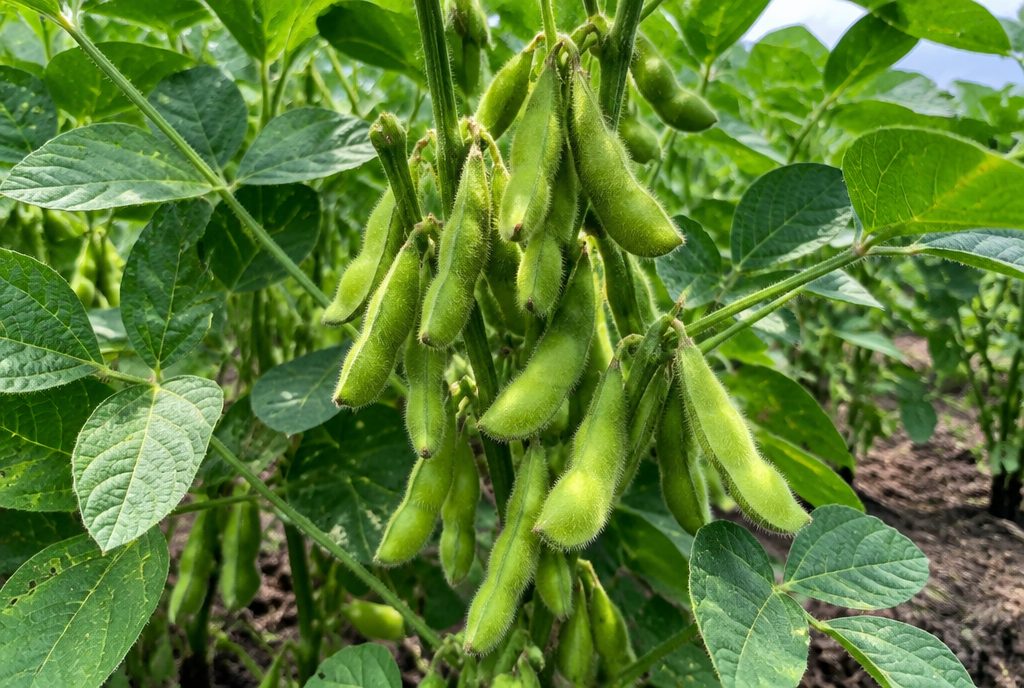
Edamame. Utah State gives 70 to 90 days after planting. The one Iowa State trial we use took 83 to 92 days from planting to harvest, so expect the top of the range in a real garden. Our edamame guide has the arithmetic.
The middle
Sweet potato takes 90 to 120 days from slips (Penn State, Clemson, UGA). Clemson lists Beauregard at 90–100 days, Covington at 95–110 and Vardaman at 100, so a named slip in a short season can save weeks. Peanut takes 120 to 150 days (NC State) or 135–155 for runners (UF/IFAS). Clemson says green boiling peanuts can be ready in 90 to 110 days. Luffa has no day count for eating-size gourds, which you pick at 6–8 in. (15–20 cm). Mature gourds for sponges can take up to 200 days, and NC State says the plant needs at least four months frost-free.
The slow end
Garlic is planted in fall and dug the next summer, up to 8 months later (UGA). Ginger needs 8 to 10 months (Texas A&M, Penn State), and CTAHR says about 9 months. Penn State says a spring start can be moved outdoors for baby ginger, which is the earlier option. Turmeric is dug when the leaves dry out and wilt, and in Hawaii that is January to March after March to June planting (CTAHR).
How to read these numbers
Every figure is from a regional extension source, and the sources do not all measure the same thing. Some count to the first edible pick, such as okra pods or shallot tops, and some count to full maturity, such as peanut pods or garlic bulbs. Some are commercial or trial figures, like the single Iowa State edamame trial. A day count is a guide for planning, not a promise. In every case, the plant, not the calendar, has the last word: pick okra at 2–3 in., dig peanuts after the pod check, and harvest garlic when 40 to 60 percent of the leaves have yellowed (Penn State).
Fast does not mean easy
Three things change how fast a crop feels.
- Soil temperature. Okra, sweet potato and peanut start counting when you plant into warm soil, 65°F (18°C) or more at 4 in. See soil temperature for planting.
- The start of the count. Garlic and shallot are planted months before harvest, so the day count is not a spring-to-summer sprint.
- Picking pace. Okra must be picked at least every two days once it starts (Clemson), so fast growth means regular work.
Getting a harvest sooner
- Pick the quick crop first. Shallot tops and edamame fill a short window.
- Choose the faster variety. Beauregard is the quickest sweet potato Clemson lists.
- Stagger the sowing. The Iowa trial planted over two weeks to spread the harvest, and our edamame harvesting guide shows a staggered plan.
- Start luffa indoors. Illinois says 6 to 8 weeks before the last frost.
For dates in your region, see the vegetable planting calendar.
Frequently asked questions
What is the fastest vegetable to harvest from our list?
Shallot green tops, about 50 to 60 days after planting (Utah State), with mature bulbs at 60 to 75 days (Virginia Tech). Okra is close, with first pods 60 to 70 days after planting (Clemson, UGA), though NC State says about 4 months.
What is the slowest vegetable on our list?
Ginger, at 8 to 10 months to a full harvest (Texas A&M, Penn State), and garlic, at up to 8 months from fall planting (UGA). Luffa gourds left to dry into sponges can take up to 200 days (Illinois).
Does fast growing mean an early start?
Not always. Okra, sweet potato and peanut wait for warm soil, so their day counts start at planting, not at the first warm day. Garlic and shallot are planted months before the harvest, so the calendar start is not the day count.
Sources
- How to Grow Shallots in Your Garden, Utah State University Extension
- Onions, Garlic, and Shallots (SPES-788), Virginia Cooperative Extension
- How to Grow Okra in South Carolina, Clemson Home & Garden Information Center
- Abelmoschus esculentus (Okra), NC State Extension Gardener Plant Toolbox
- What Is Edamame and Should I Grow It?, Utah State University Extension
- Sweet Potato, Clemson Home & Garden Information Center
- Garlic Production for the Gardener, University of Georgia Extension
- Easy Gardening: Ginger (EHT-014), Texas A&M AgriLife Extension