

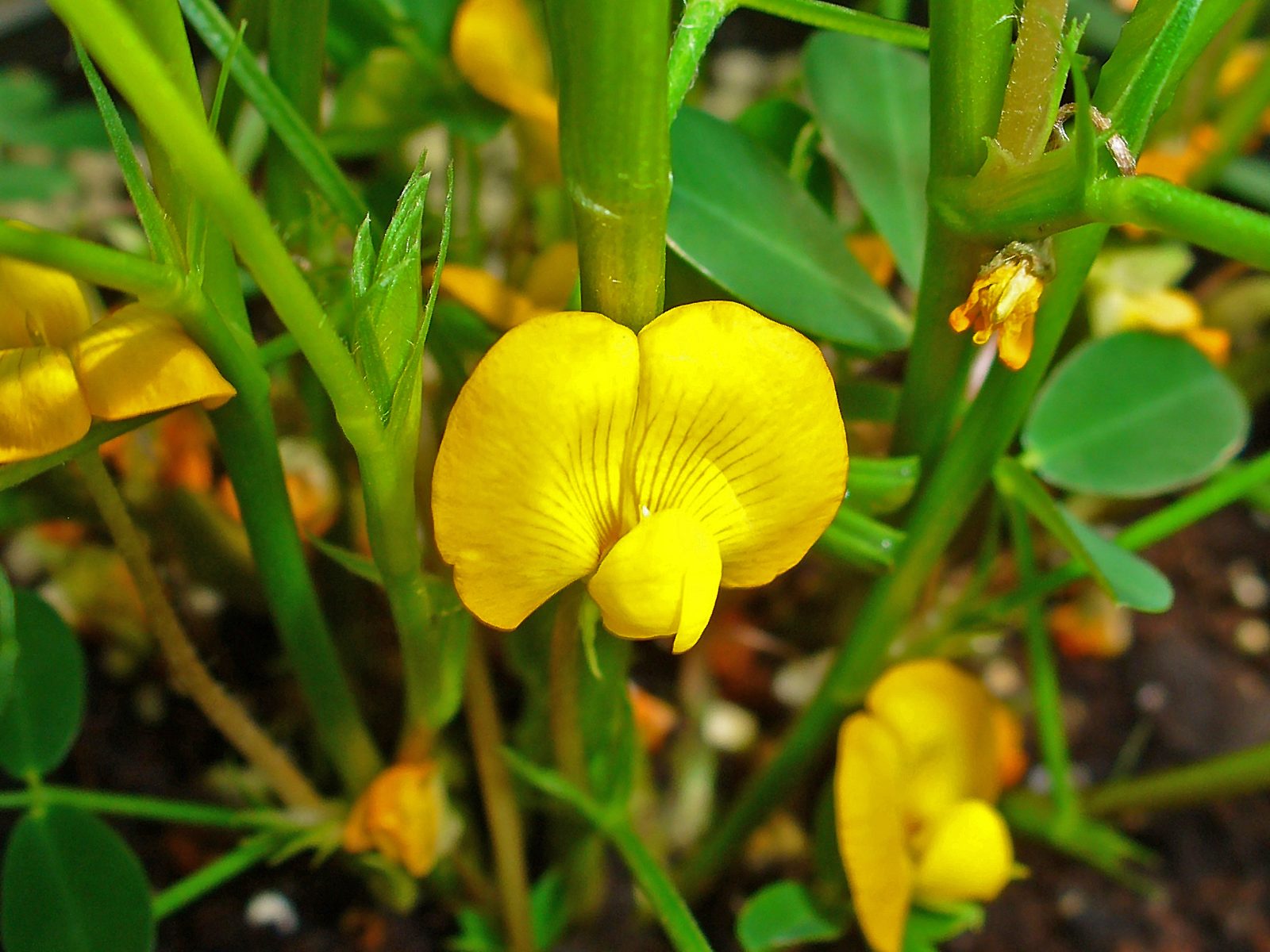
Peanuts do not grow on trees. A peanut plant is a low legume whose yellow flowers form above ground, then send a stem called a peg down into the soil, where the pod grows and ripens. UF/IFAS Gardening Solutions calls this habit geocarpy: the plant flowers aboveground, but the fruit forms and matures underground. The whole cycle takes about 120 to 150 days from planting (NC State’s Plant Toolbox). For the growing method, start with our peanut growing guide.
Do peanuts grow on trees?
No, and the confusion is understandable, because walnuts, almonds and pecans do. A peanut is not a tree nut. UF/IFAS says the nuts are legume pods like peas and beans, but unlike other legumes they mature underground. The plant itself is small: NC State’s Plant Toolbox lists a height of 9 in. to 1.5 ft (23–46 cm) and a width of the same, and says it grows as an erect or runner form. Its species name, hypogaea, means “under the earth”.
The peanut life cycle, stage by stage
| Stage | Timing | What happens | Source |
|---|---|---|---|
| Planting | When soil reaches 65°F (18°C) | Seed goes in 2–3 in. deep. | NC State, Clemson |
| Flowering | About 40 days after planting | Orange-veined yellow, self-pollinating flowers appear near the base of the plant. | NC State Toolbox |
| Pegging | 60–110 days after planting | The peg grows down and away from the plant into the soil. | Clemson, NC State Toolbox |
| Pod development | Underground, after the peg enters the soil | The peg and developing pod absorb calcium directly from the soil. | NC State |
| Maturity | 120–150 days after planting | Pods ripen. | NC State Toolbox |
| Harvest | After the first fall frost, or when pods are mature | Dig the plants, then cure. | NC State Toolbox, Clemson |
Step 1: The flower
NC State’s Plant Toolbox says the flowers are orange-veined, yellow and self-pollinating, produced near the base of the plant about 40 days after planting, and that in North Carolina they typically bloom from July to September. The flowers pollinate themselves, so the plant does not depend on a second plant for pollen.
Step 2: The peg
Here the peanut becomes strange. UF/IFAS Gardening Solutions says that once the flowers begin to fade, a self-pollinated peanut ovary forms, commonly called a peg. This peg grows downward and enters the soil, and only underground do the peanuts begin to form. NC State’s Plant Toolbox says the flower stems, once the flowers are fertilized, begin to grow into the soil where the irregularly ovoid seed pod develops.
Water matters most now. Clemson says water is the most common limiting factor in peanut production, and that it is most critical from 60 to 110 days after planting, as the pegs enter the soil and the pod begins to develop. Clemson also says to avoid wetting the leaves when watering.
Step 3: The pod
Underground, the pod fills. NC State says the peg and developing pod absorb calcium directly from the soil, so calcium must be readily available in the pegging zone, and that when soils have high temperatures, pegs cannot survive. Rapid canopy closure results in cooler soil temperatures in the pegging zone. So a canopy that closes quickly helps the pegs.
Why all the pods mature together
UF/IFAS Gardening Solutions says the plants continue to grow and flower while pods form, but your peanuts should all be ready to harvest at about the same time. The first pegs that form mature more slowly than those that form later.
Peanut or groundnut?
NC State’s Plant Toolbox lists many common names for the same plant, among them groundnut, goober, monkey nut and earthnut, all of which describe the same underground habit.
What this means for growing peanuts
- Plant when the soil is warm. Peanuts are not frost-hardy and suit areas with long warm summers (NC State Toolbox).
- Water well in the pegging window, 60–110 days after planting (Clemson).
- Keep calcium available and soil cool. Pegs need calcium and cannot survive high soil temperatures (NC State).
- Check the pods before digging. Dig when most pods are filled with the kernel but not dark inside the hull (Clemson). Our peanut harvesting guide explains the test.
Where this sits in the garden
Sweet potatoes also produce underground, but by a different mechanism: they grow from slips. See the sweet potato guide to compare. If you are growing in a pot, check peanuts in containers.
Frequently asked questions
Do peanuts grow on trees?
No. A peanut plant is low-growing; NC State's Plant Toolbox lists its height at 9 in. to 1.5 ft (23–46 cm). Its flowers are above ground, but the pods form and mature underground, which is why the species name hypogaea means "under the earth".
What is a peanut peg?
After the yellow flower is fertilized, the flower stem, called a peg, grows down and away from the plant into the soil. The pod develops from the peg's tip underground (NC State Plant Toolbox, UF/IFAS Gardening Solutions).
How long is the peanut plant lifecycle?
Pods typically ripen 120–150 days after planting (NC State Plant Toolbox). UF/IFAS says runner peanuts mature in about 135 to 155 days, and Clemson says green boiling peanuts take 90–110 days.
Are peanuts nuts or beans?
Botanically, they are legumes. UF/IFAS Gardening Solutions says the nuts are legume pods like peas and beans, but unlike other legumes, they mature underground.
Why do my peanuts have empty shells?
Our sources do not diagnose it, but they do say the peg and developing pod absorb calcium directly from soil, so calcium must be readily available, and that pegs cannot survive high soil temperatures (NC State).
Sources
- Arachis hypogaea (Peanut), NC State Extension Gardener Plant Toolbox
- Peanuts, UF/IFAS Gardening Solutions
- Peanut Production Practices (2024 Peanut Information), NC State Extension
- Peanut, Clemson Home & Garden Information Center